Italy, Sicily, Sardinia and Corsica by Bike

Expedition — Italy · Sicily · Sardinia · Corsica — April–May 2026

Italy, Sicily, Sardinia and Corsica by Bike

More than 3,000 km. Five weeks. Two heavily loaded bikes. The big dress rehearsal before RISE Season 2.

Distance

3,000+ km

Duration

5 weeks

Loaded bikes

37.5 & 38.5 kg

Reading time

14 min

On April 24, 2026, we left from the Chartreuse mountains for our longest bike journey so far. Five weeks ahead of us, two heavily loaded bikes, way too much gear to test, and one simple idea: find out if we could really film the next season of RISE while moving as much as possible by bike.

So this journey was not only an adventure. It was a full dress rehearsal. Testing the bikes, the camping setup, the cameras, the paragliding gear, the rhythm of life, fatigue, unexpected problems, and our ability to meet people on the road without losing the feeling of the journey itself.
The journey

Route at a glance

Start
Chartreuse mountains, France.
Direction
Turin, then night train to Lecce.
Crossing
Puglia, Basilicata, Calabria, Sicily, Sardinia, Corsica.
Return
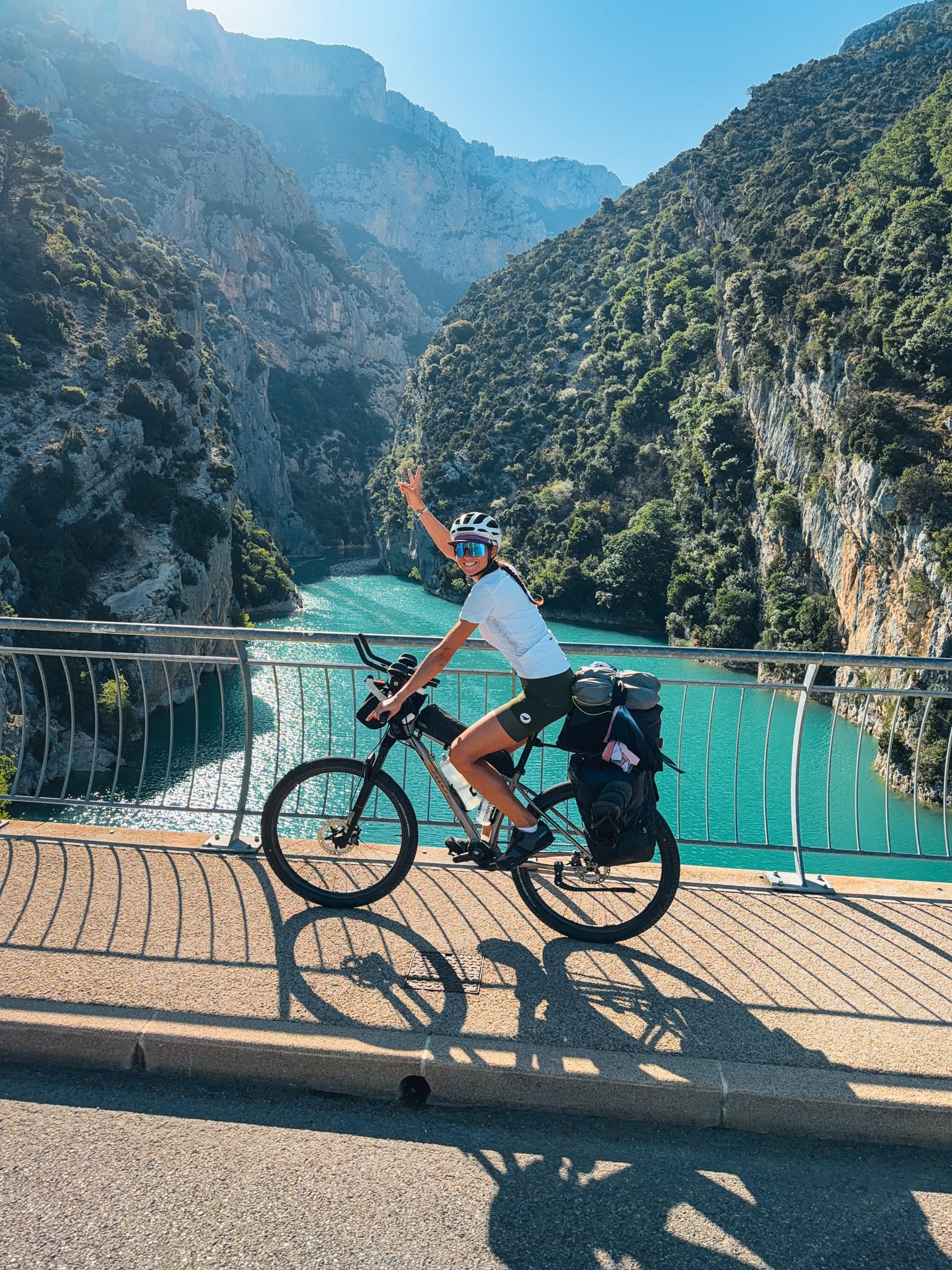
Toulon, Verdon Gorge, Mont Ventoux, Méouge, Dévoluy, home.
Loaded bikes
37.5 kg and 38.5 kg at the start.
Purpose
Test all the gear for RISE Season 2 and meet farmers along the way.

Route map

Five weeks across four lands

Leaving unprepared, as usual

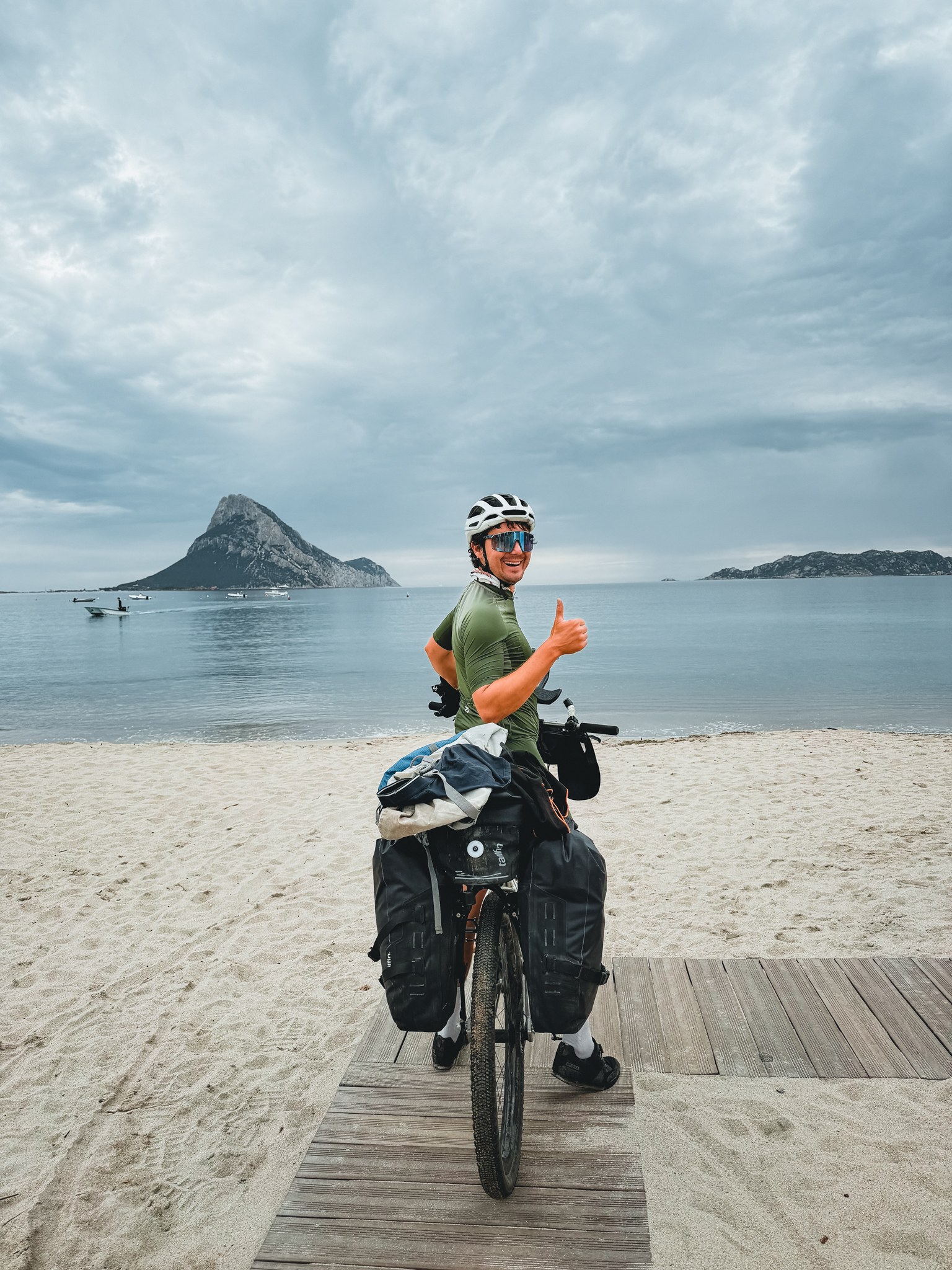
The last days before departure were intense. As often, we finished everything in a rush, with that strange feeling of being both extremely excited and not ready at all. Before leaving, we weighed the bikes: 37.5 kg for one, 38.5 kg for the other. Heavy. Very heavy.

But once we started pedaling, everything came back. The feeling of freedom. The sound of the tires on the road. The idea that, for a few weeks, each day would simply unfold at the rhythm of the bikes.

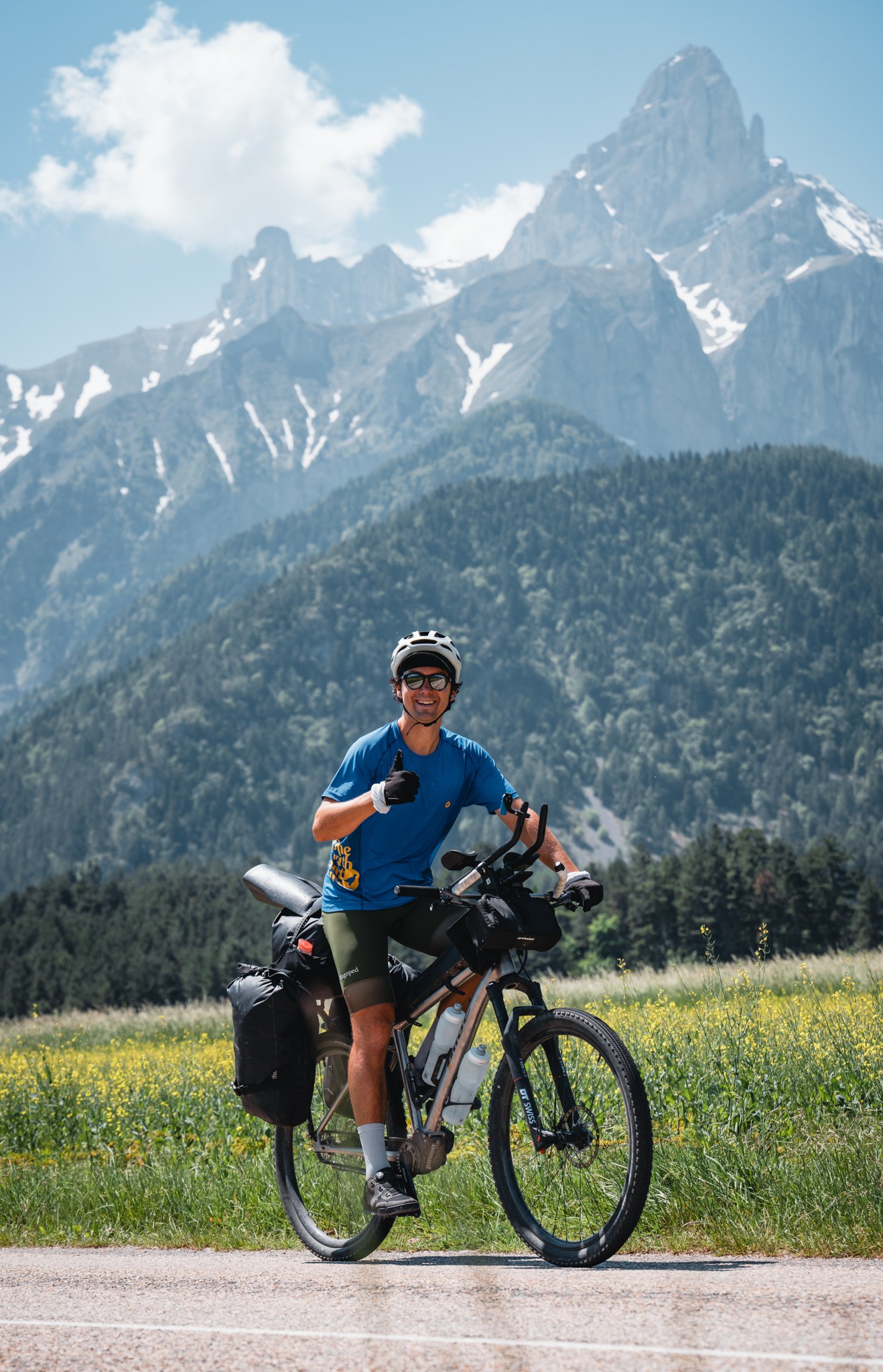
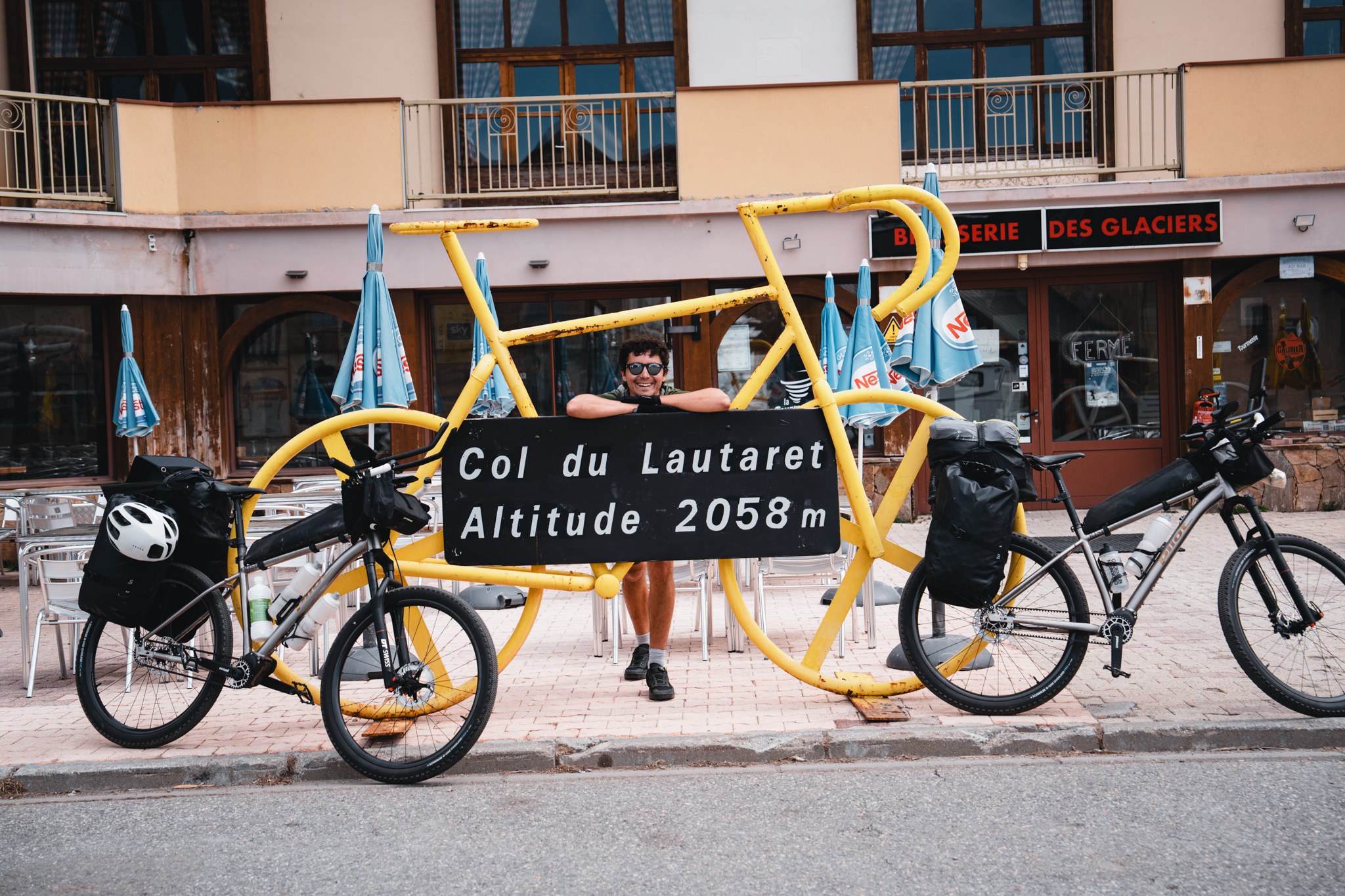
Our first mission was to reach Turin in two and a half days to catch a night train to Lecce. At that time of year, the Mont-Cenis pass was still closed, so we crossed via Lautaret and Montgenèvre. On the way, we even managed to fly above La Grave, taking off at 3,200 meters. A start exactly the way we like it: a little chaotic, very loaded, but already magical.

Leaving with fully loaded bikes
Crossing Col du Lautaret with loaded bikes
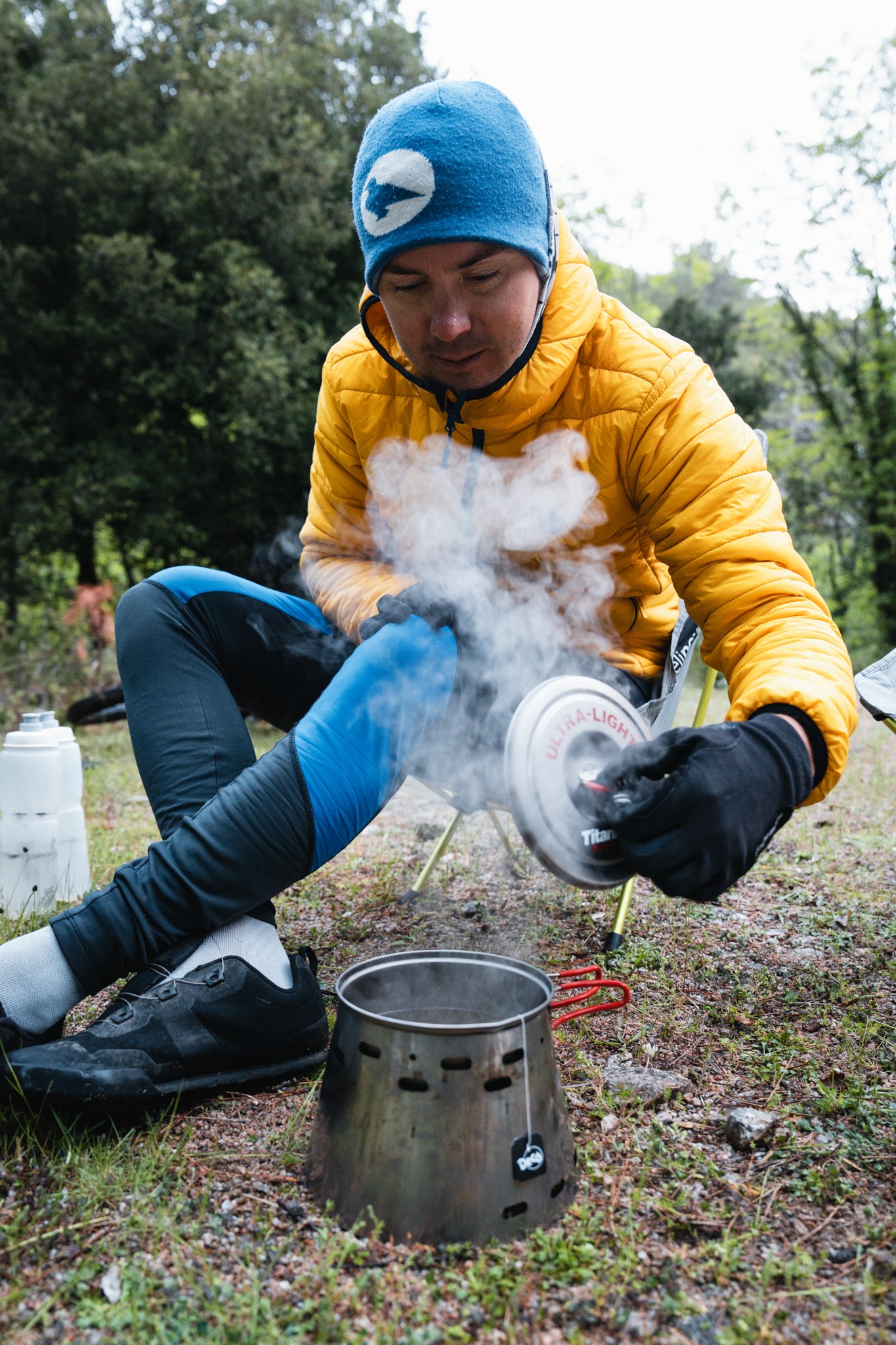
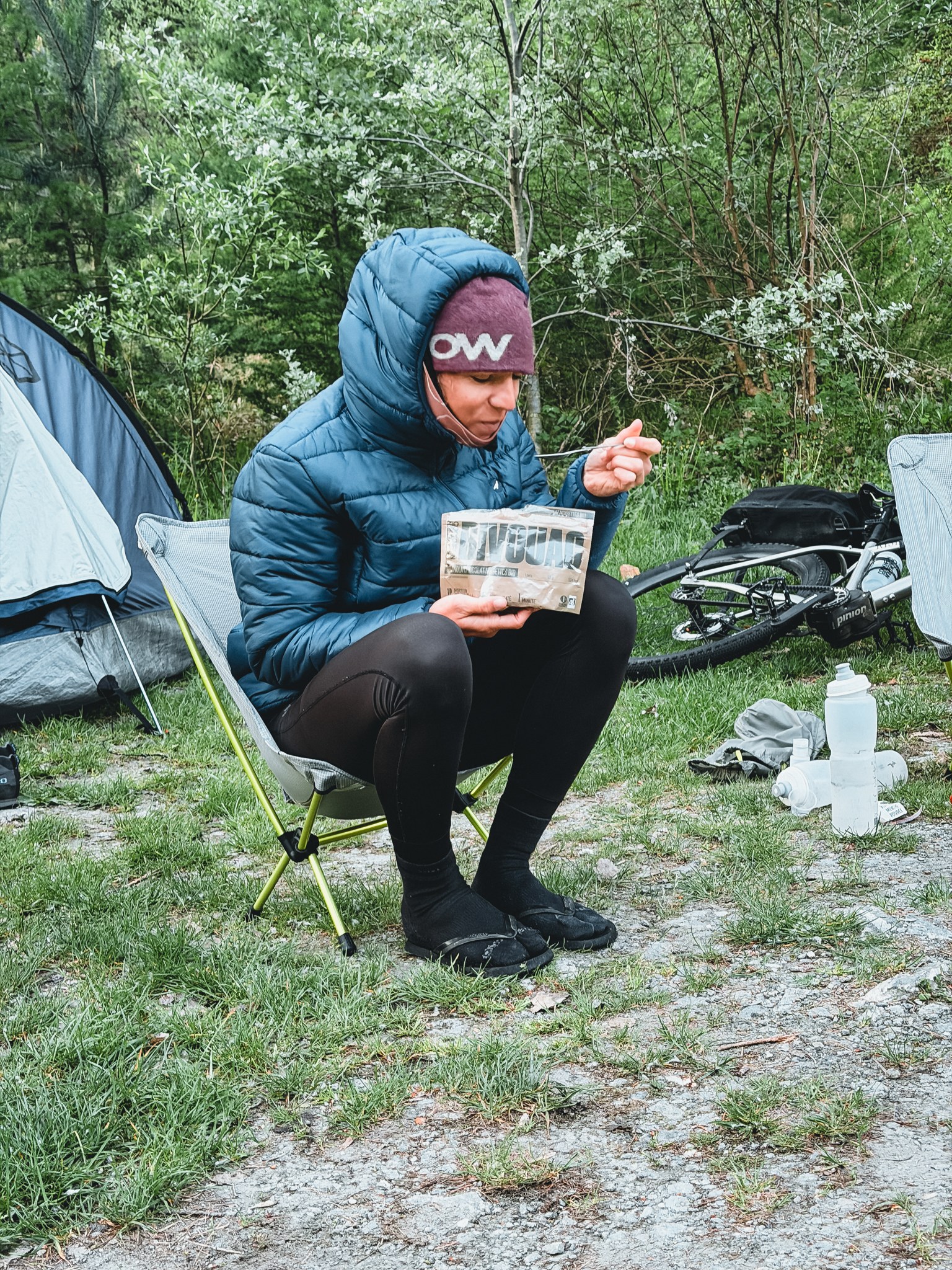
First bivouacs, first simple meals

Southern Italy, white villages and dead olive trees

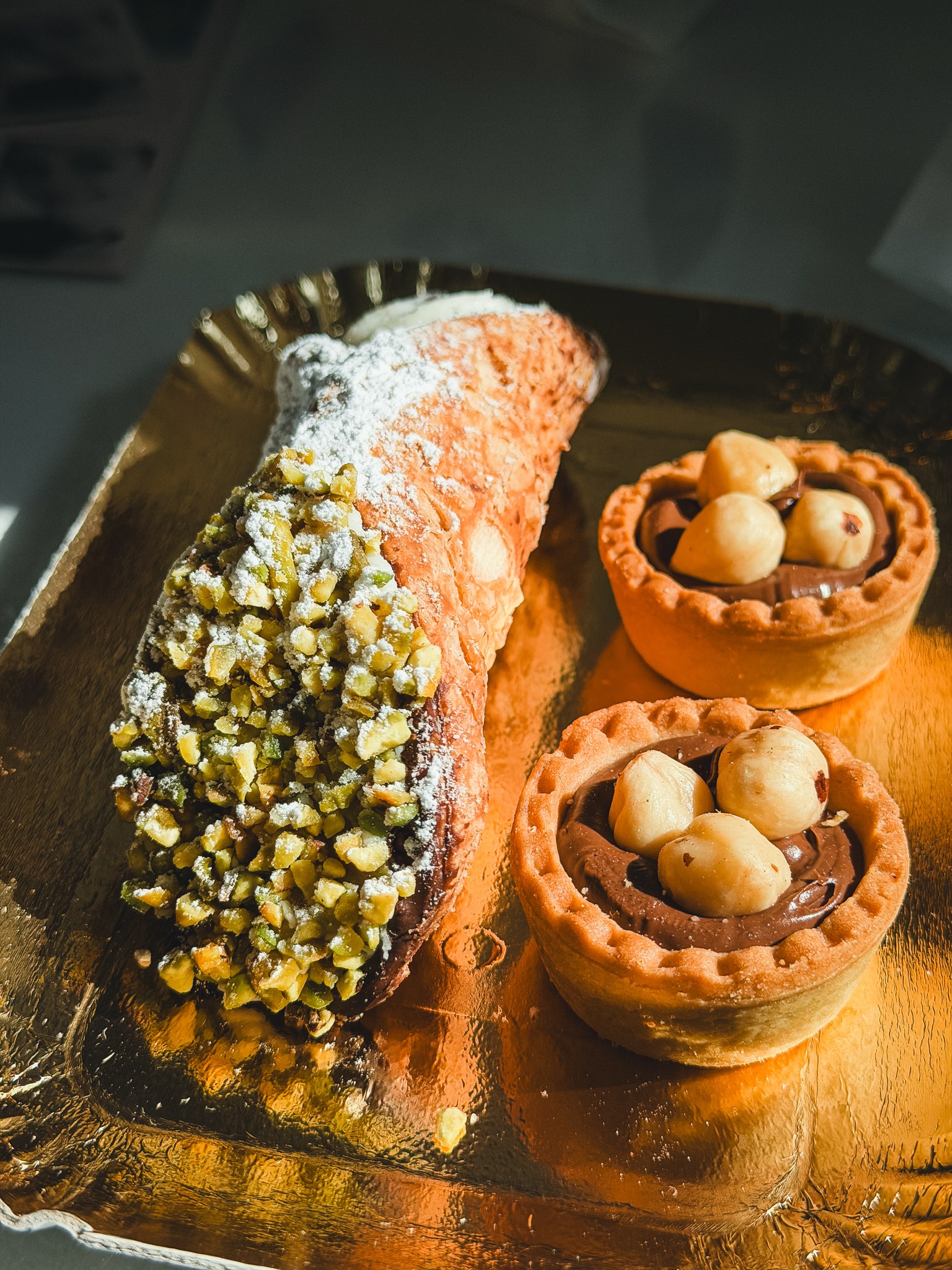
In Turin, we had a little time to spare. We visited the city, tasted our first cannoli, then started the great puzzle of fitting both bikes into our night train cabin. Next stop: Lecce, in Puglia.

When we arrived, it was almost 30 degrees. The streets were beautiful, the façades bright, and on the cathedral square, a French couple who followed us on social media came to say hello after spotting us at the station. We talked for more than an hour. The journey started with an unexpected encounter.

The first days in Puglia were harder than expected. Nicolas was in the middle of a grass pollen allergy. Swollen eyes, runny nose, constant sneezing. Even with treatment, it was exhausting. We also had to find our rhythm with bikes this heavy.

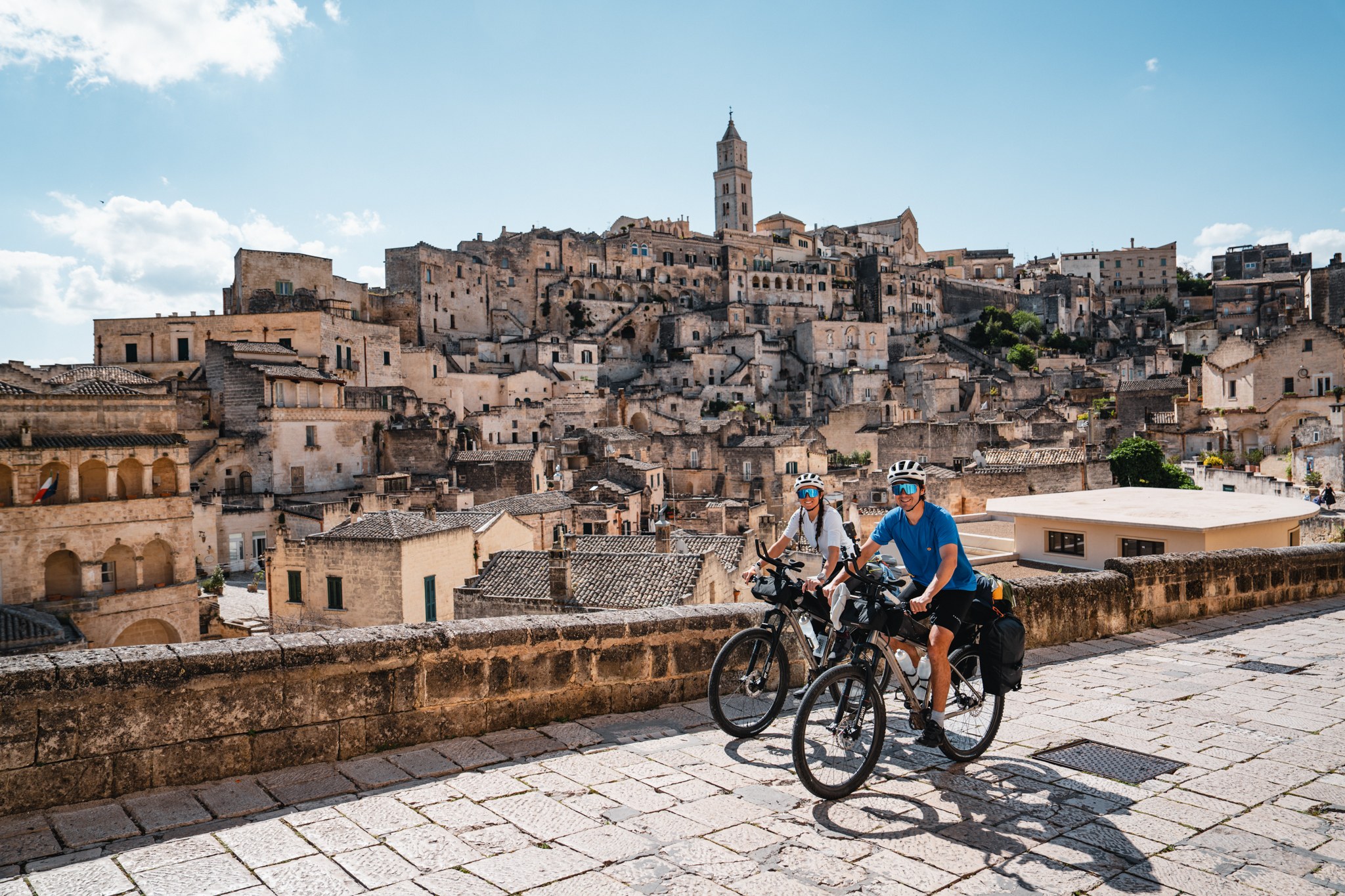
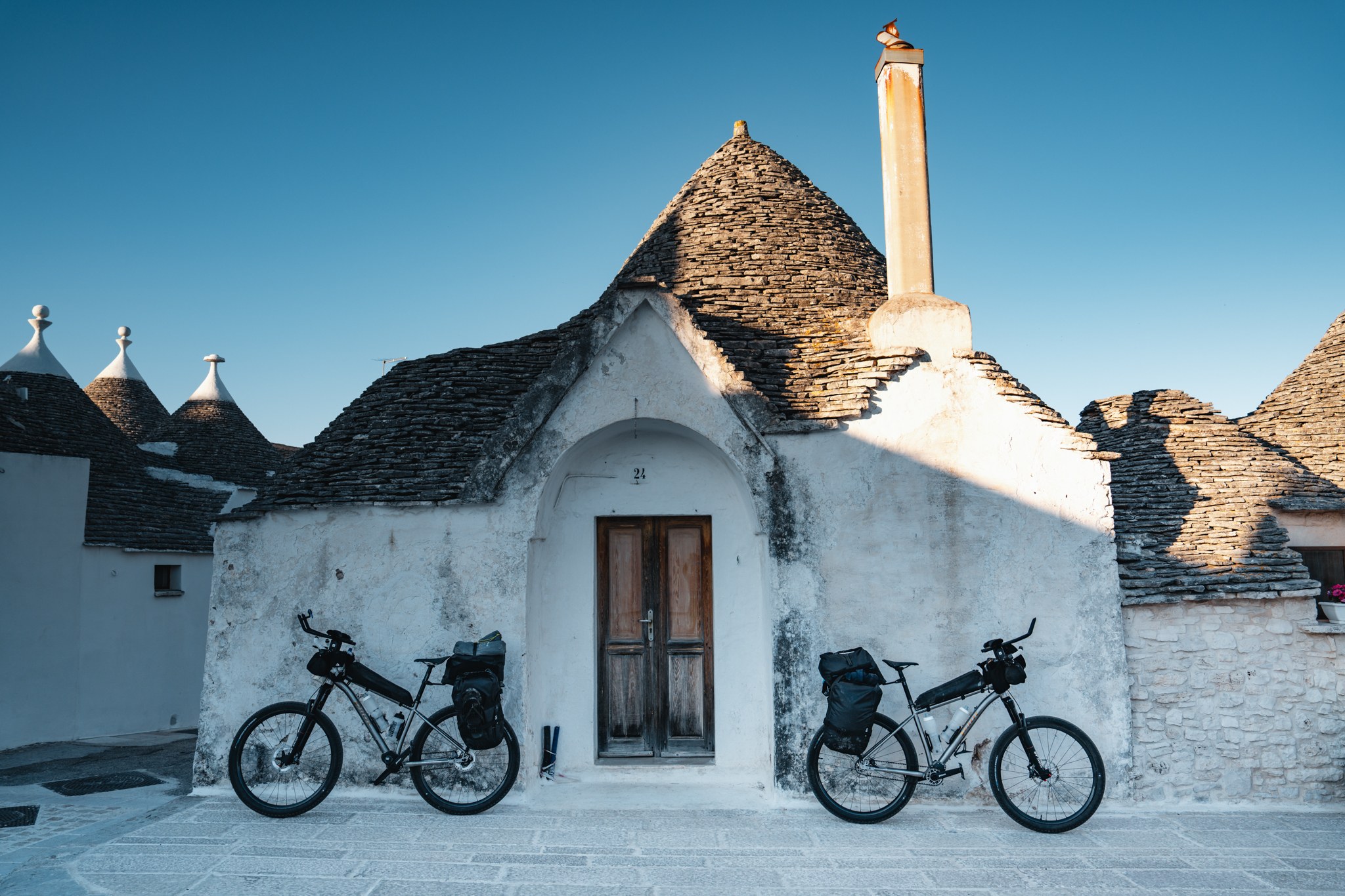
We crossed Alberobello, Matera, beautiful villages, but also kilometers of olive groves dried out by Xylella fastidiosa. More than 20 million trees are said to have died in this region. We spoke with farmers to understand how they are adapting: moving away from monocultures, mixing olive trees with vines, almond trees and fig trees, planting more resistant olive varieties. Already, the trip was connecting with what we had come to do: listen, understand, and see what is changing on the ground.

Matera by bike
The trulli of Alberobello
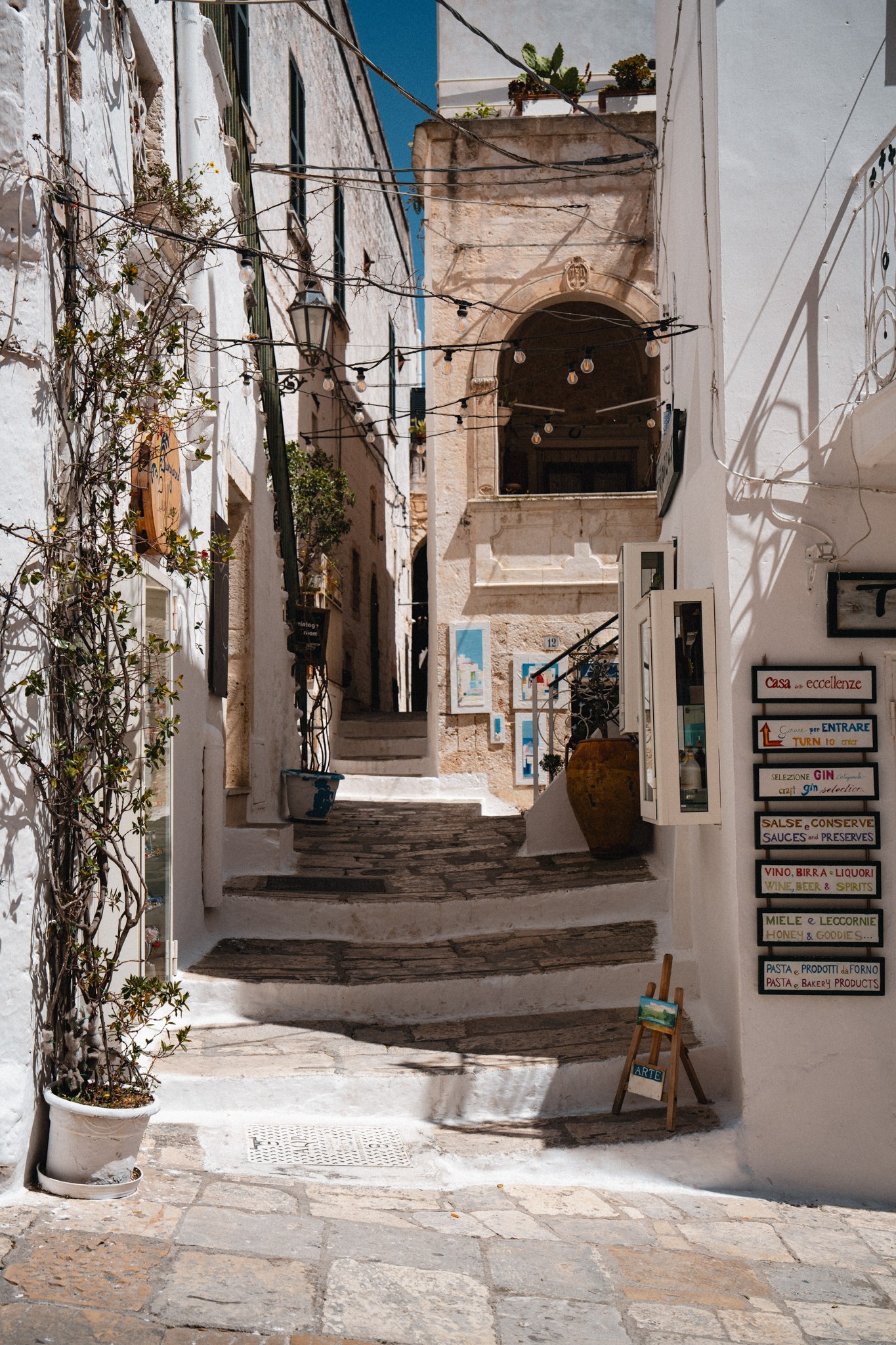
Details from the alleys of southern Italy
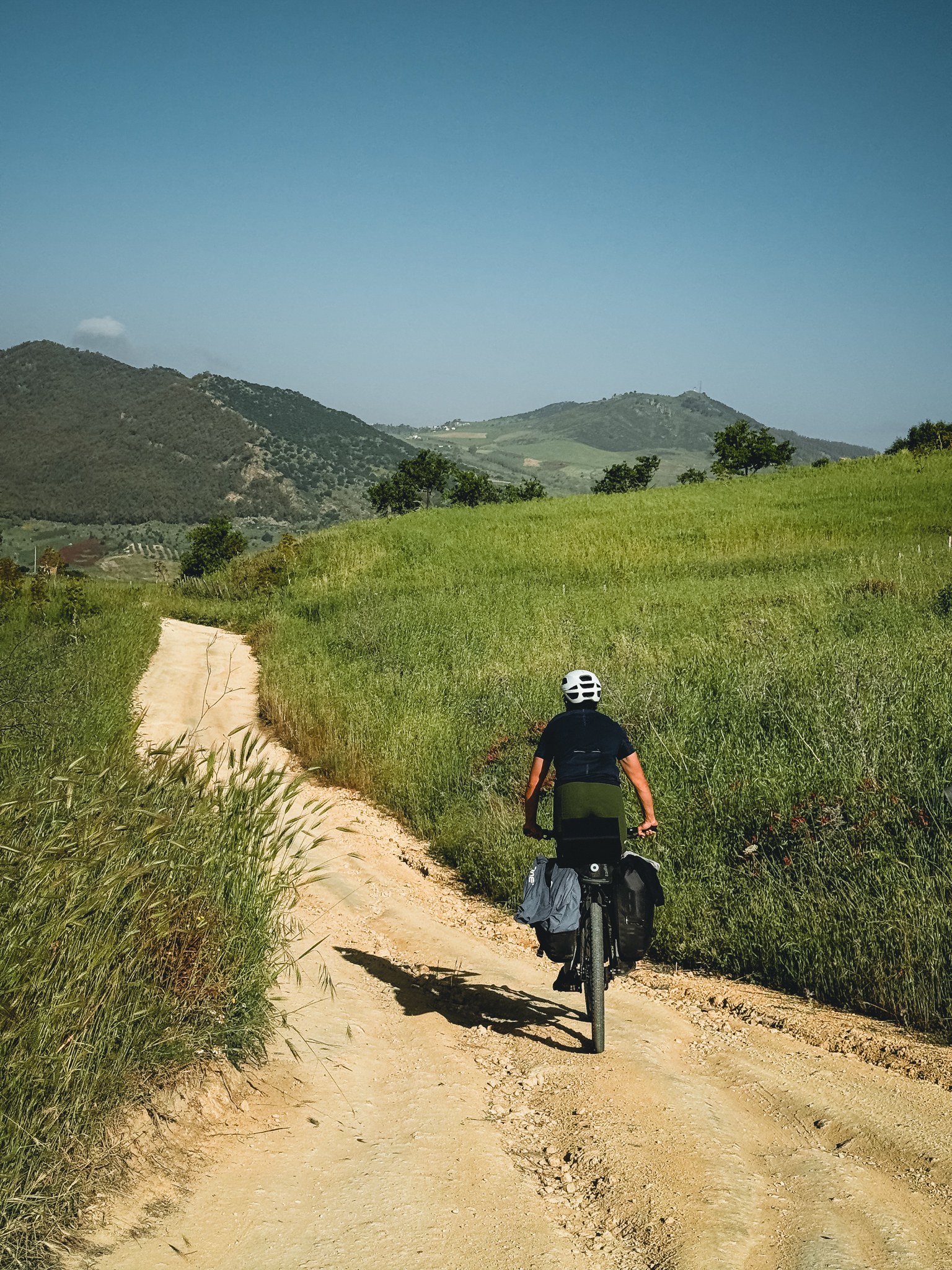
Wild roads in southern Italy

From Pollino to Sicily

We crossed Italy from east to west through Pollino National Park. After the more touristy areas of the east coast, this part felt wilder, rougher, quieter. The west coast also surprised us with its beauty. After ten days, we had already ridden more than 1,000 km and climbed more than 11,000 meters.

It was time to leave mainland Italy. Fifteen minutes by boat, and we were in Sicily.

The previous days had been long, including a 165 km stage. In Messina, it was already late, there was no nearby campsite, and reaching the first one would have added another 15 km and 400 meters of climbing. We eventually found an Airbnb. A hot shower, a bed, and a real place to unpack. Absolute happiness.

The next morning, we were exhausted. A big stage was waiting for us, with 2,700 meters of climbing to reach Mount Etna. We asked if the Airbnb was free for one more night. It was. We took it as a sign. We stayed. We worked, ate, and did almost nothing. We found the best cannoli of the trip and the best parmigiana of our lives. That pause saved us.

First volcanic tracks in Sicily

Etna, wind and encounters

Looking at the next part of the route, we realized there was only one ferry per week to Sardinia. We had five days left to cross Sicily. Not exactly time to slow down.

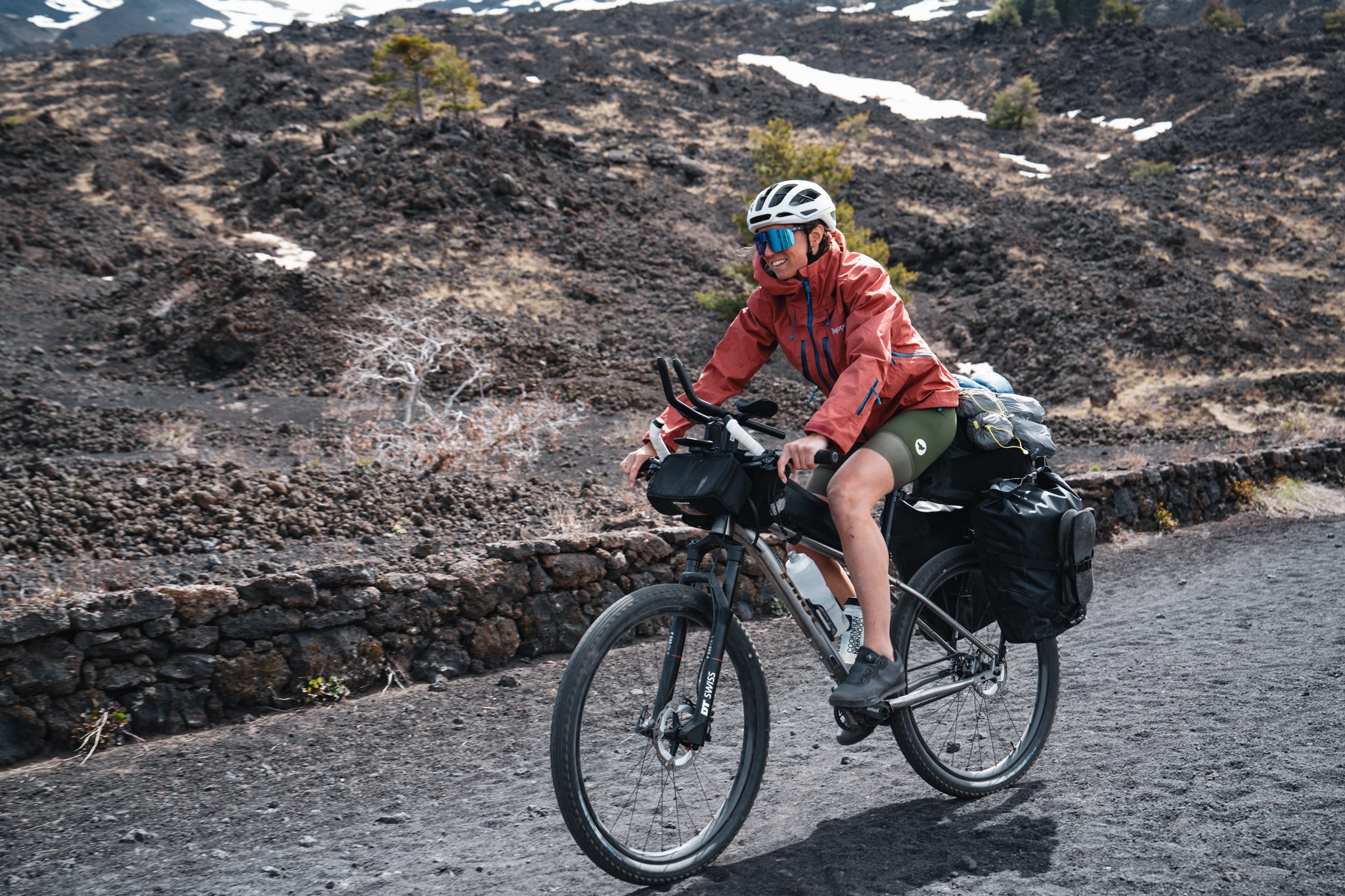
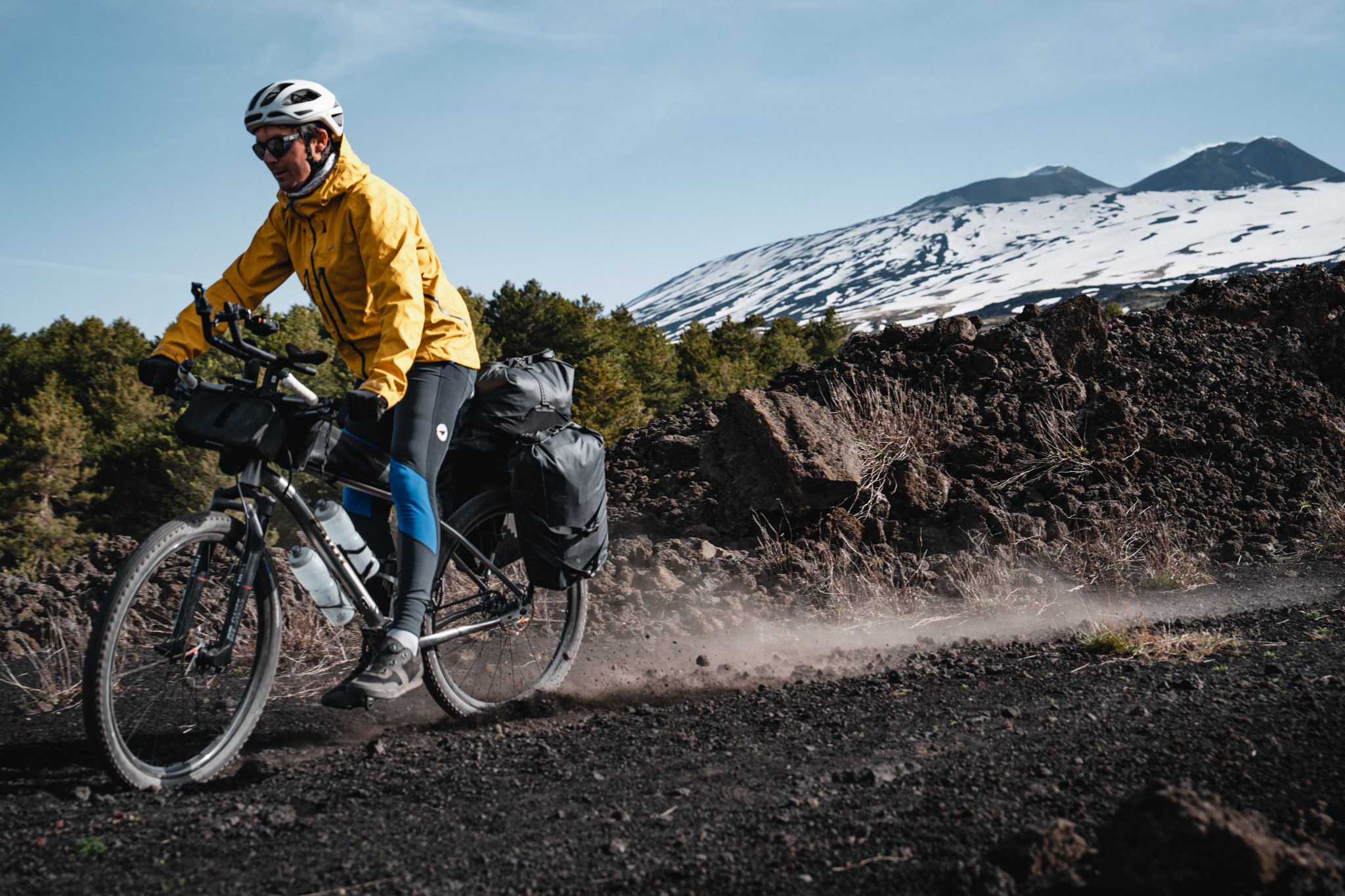
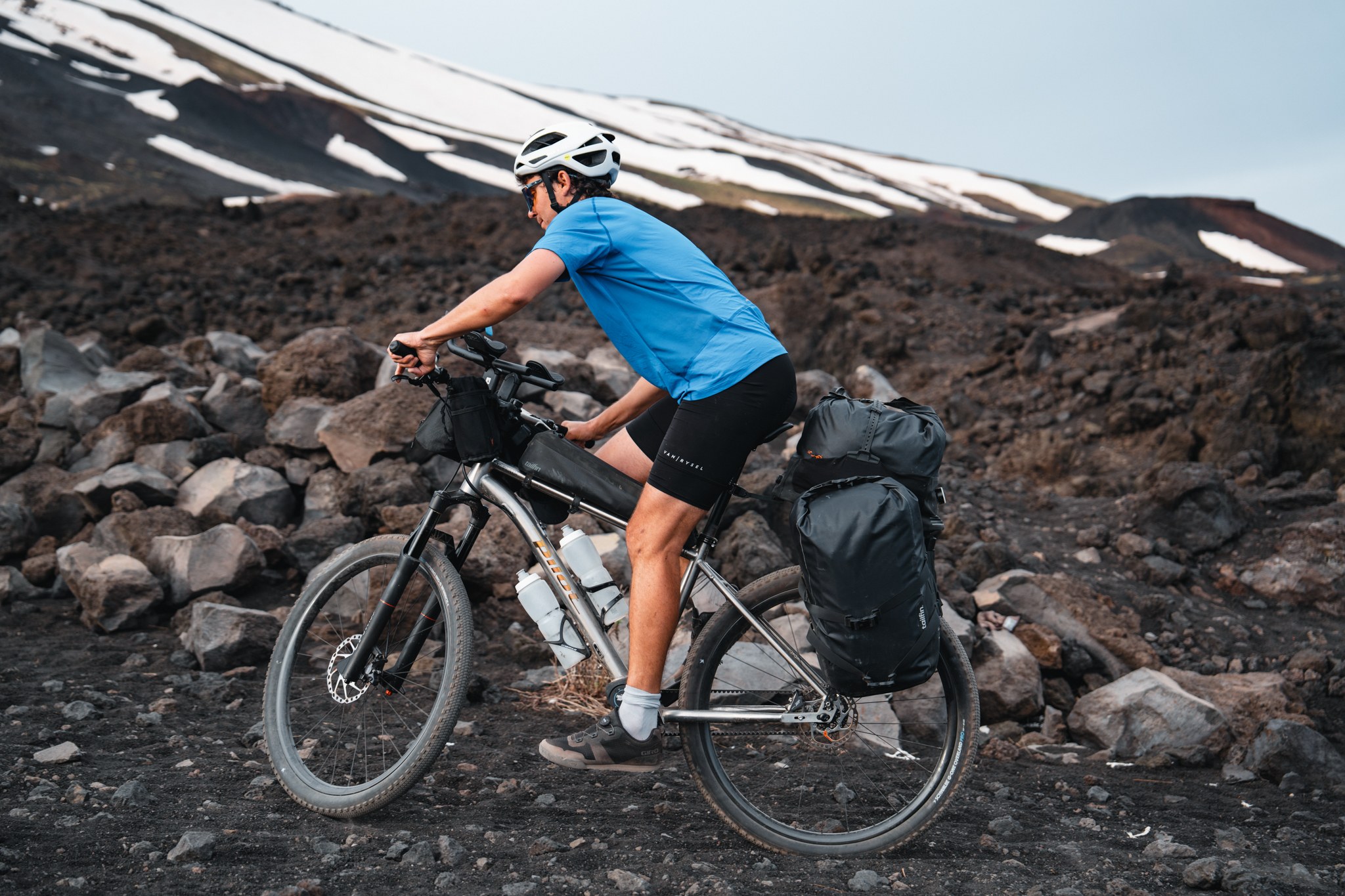
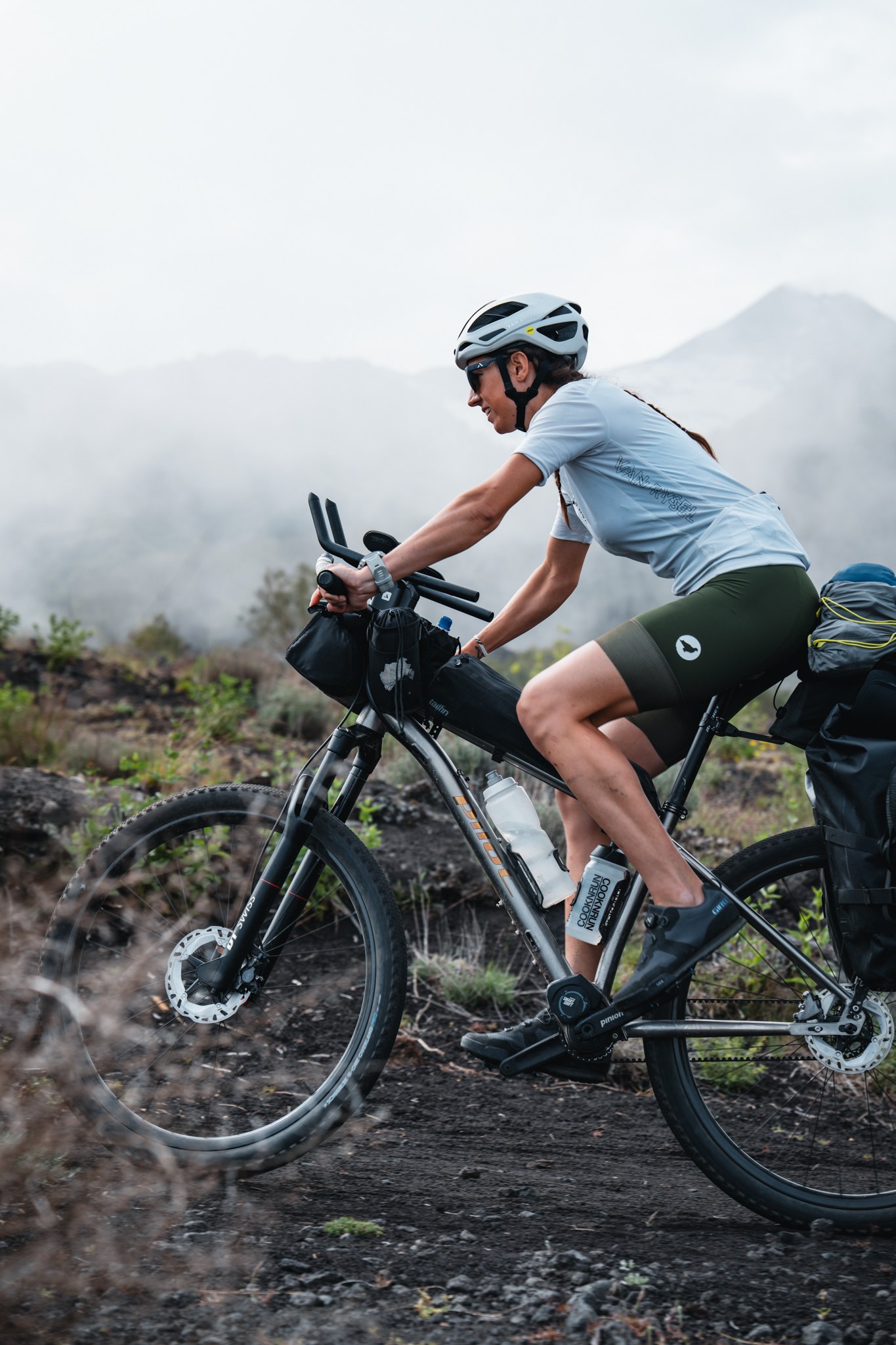
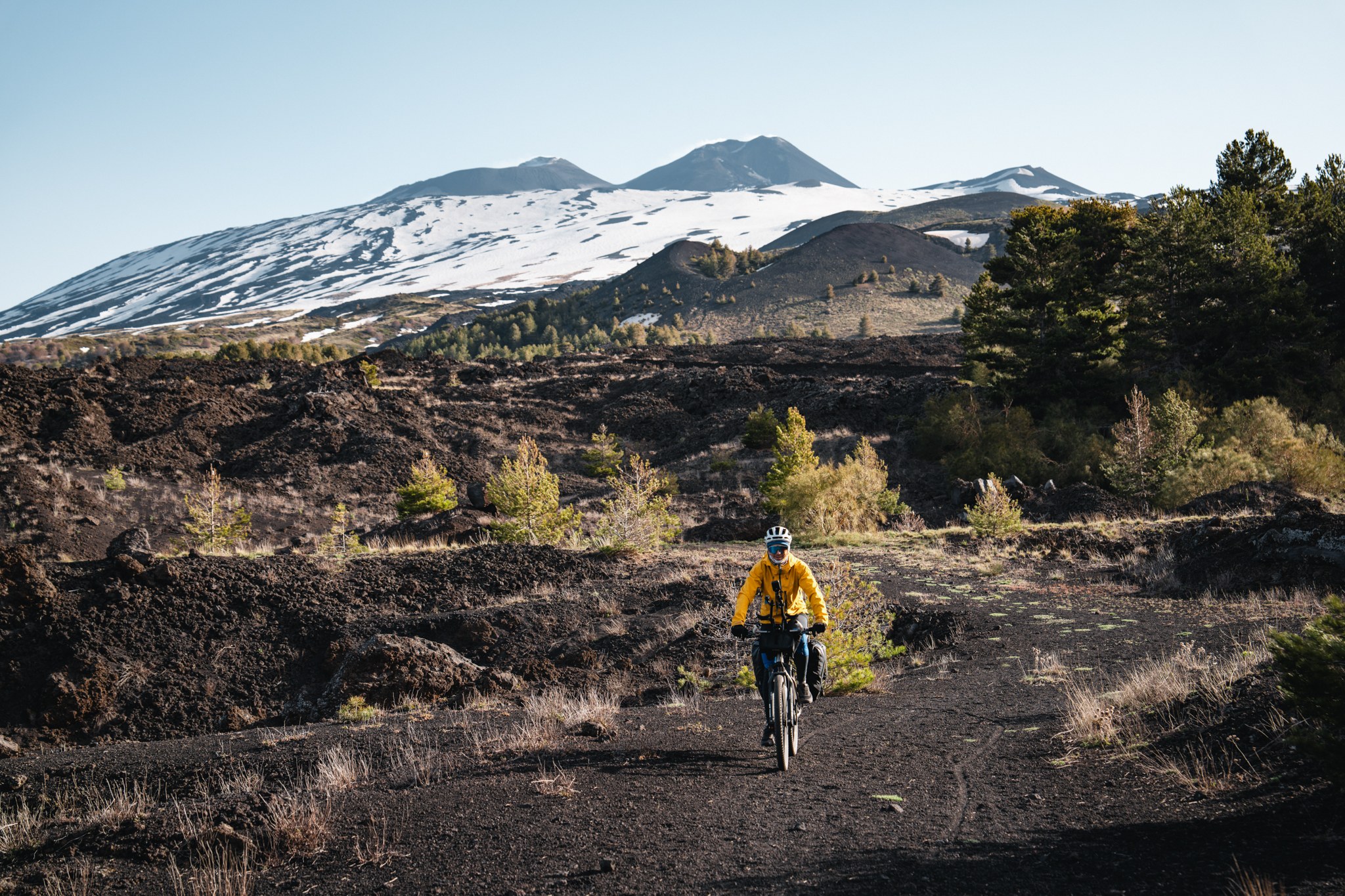
Etna made us work for it. The gradients were steep, lava flows blocked some of the tracks, and the wind sometimes reached almost 100 km/h. But the landscapes were breathtaking. Riding through those black volcanic expanses, with snow and the volcano in the background, felt like crossing another planet.

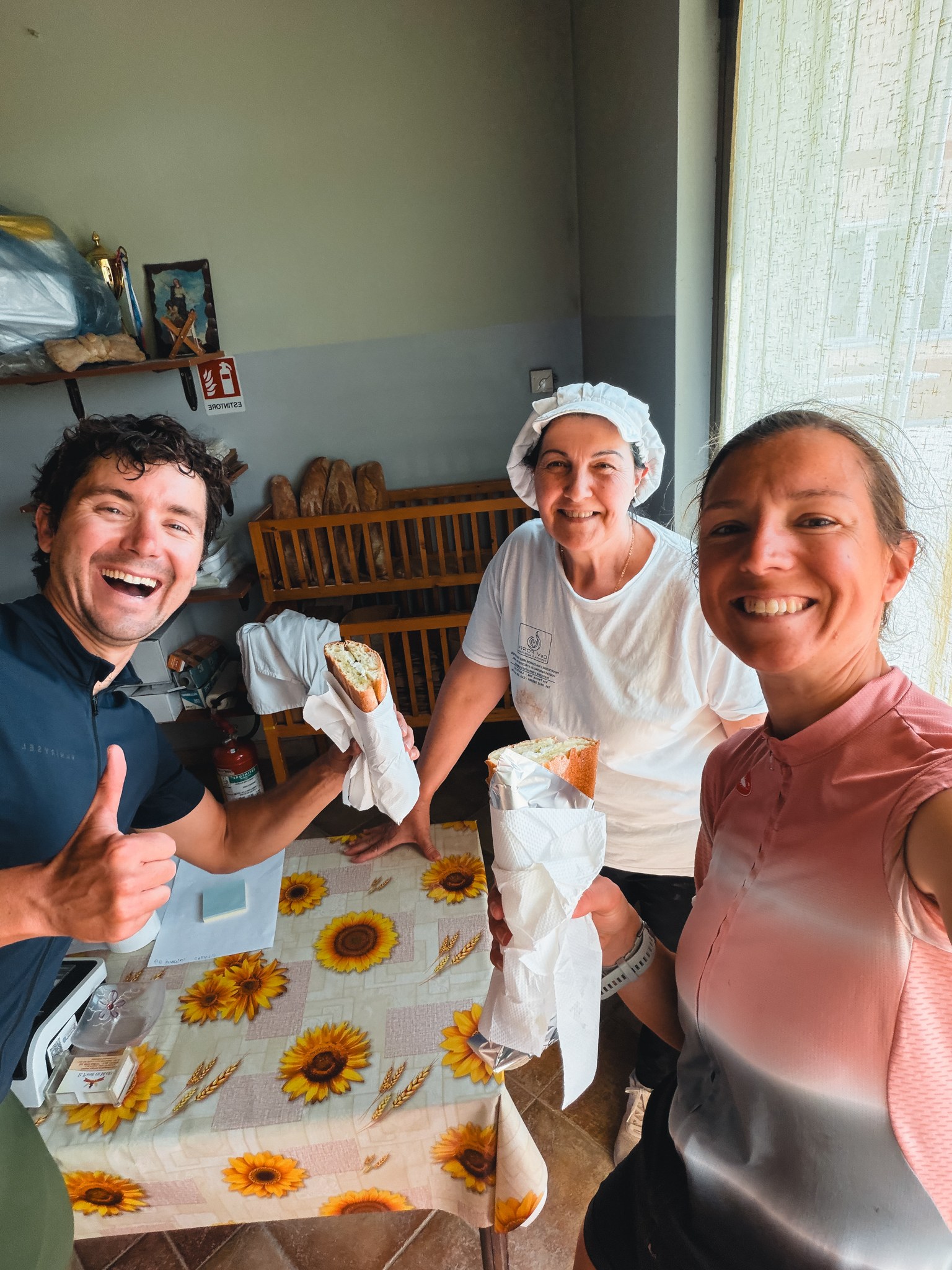
We met Maria on her farm, where she grows her own grains to make bread. She welcomed us like kings and prepared her specialty for us: homemade bread, mozzarella, olive oil and herbs. Simple, generous, perfect.

We also tasted the best pistachio pasta, incredible brioche with gelato, and despite the windy weather, we managed to paraglide above Cefalù. Before leaving Sicily, we stopped in Palermo to meet Antonio and discover his urban agriculture project in the heart of the city.

Volcanic gravel on Mount Etna
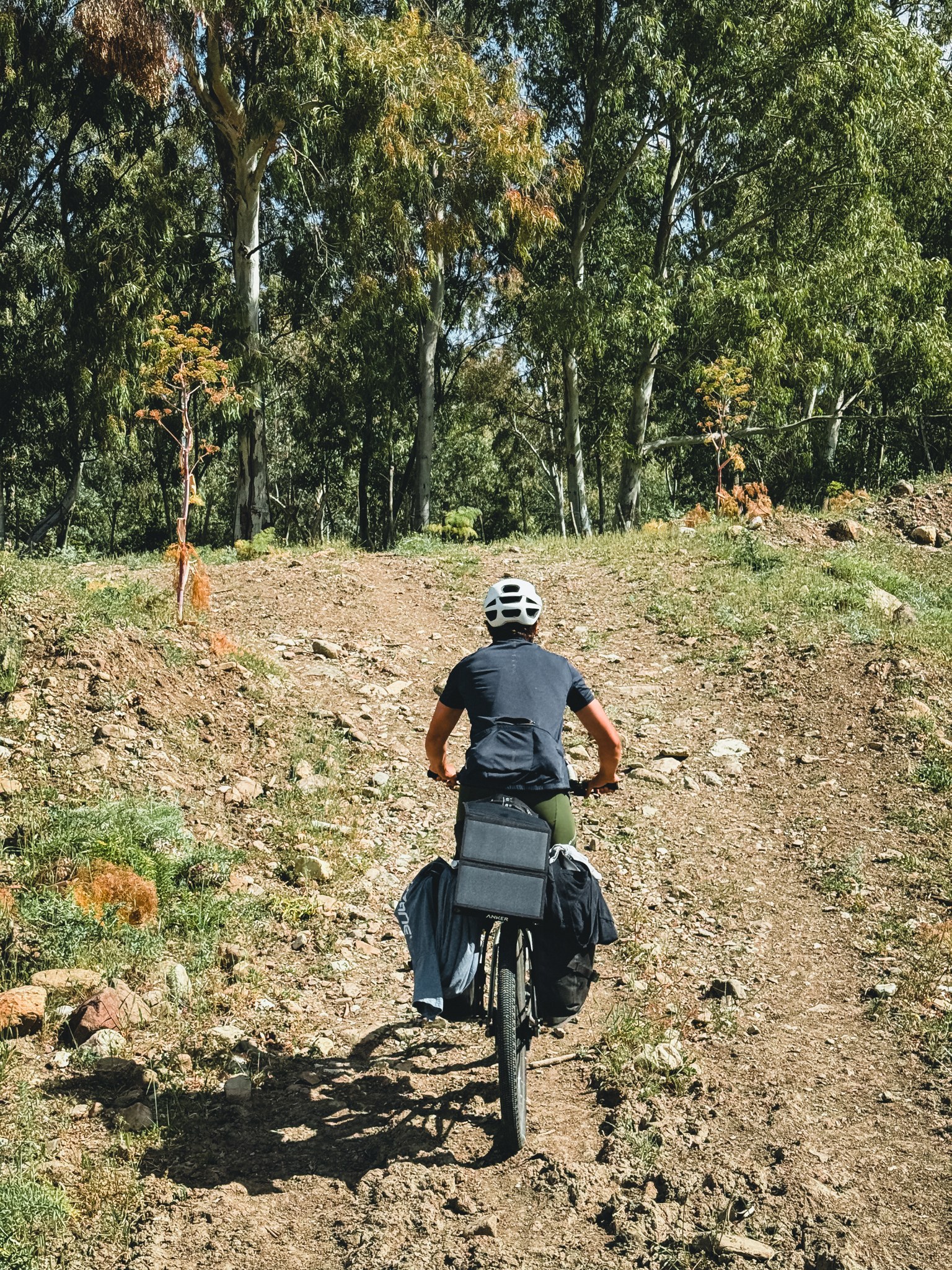
Riding through lava fields
Climbing through the mist in Sicily

To Sardinia, wet, tired, but happy

Our last night in Sicily was stormy. Our gear was soaked and we had no time to dry it before the ferry. A twelve-hour crossing was waiting for us. We tried to work, but seasickness made it difficult.

We reached Sardinia at 9 p.m., happy to be back on land. We rode about ten kilometers to find a bivouac spot. Everything was still damp and not very pleasant, but we were too tired to do anything other than pitch the tent and sleep.

Ferry crossing towards Sardinia
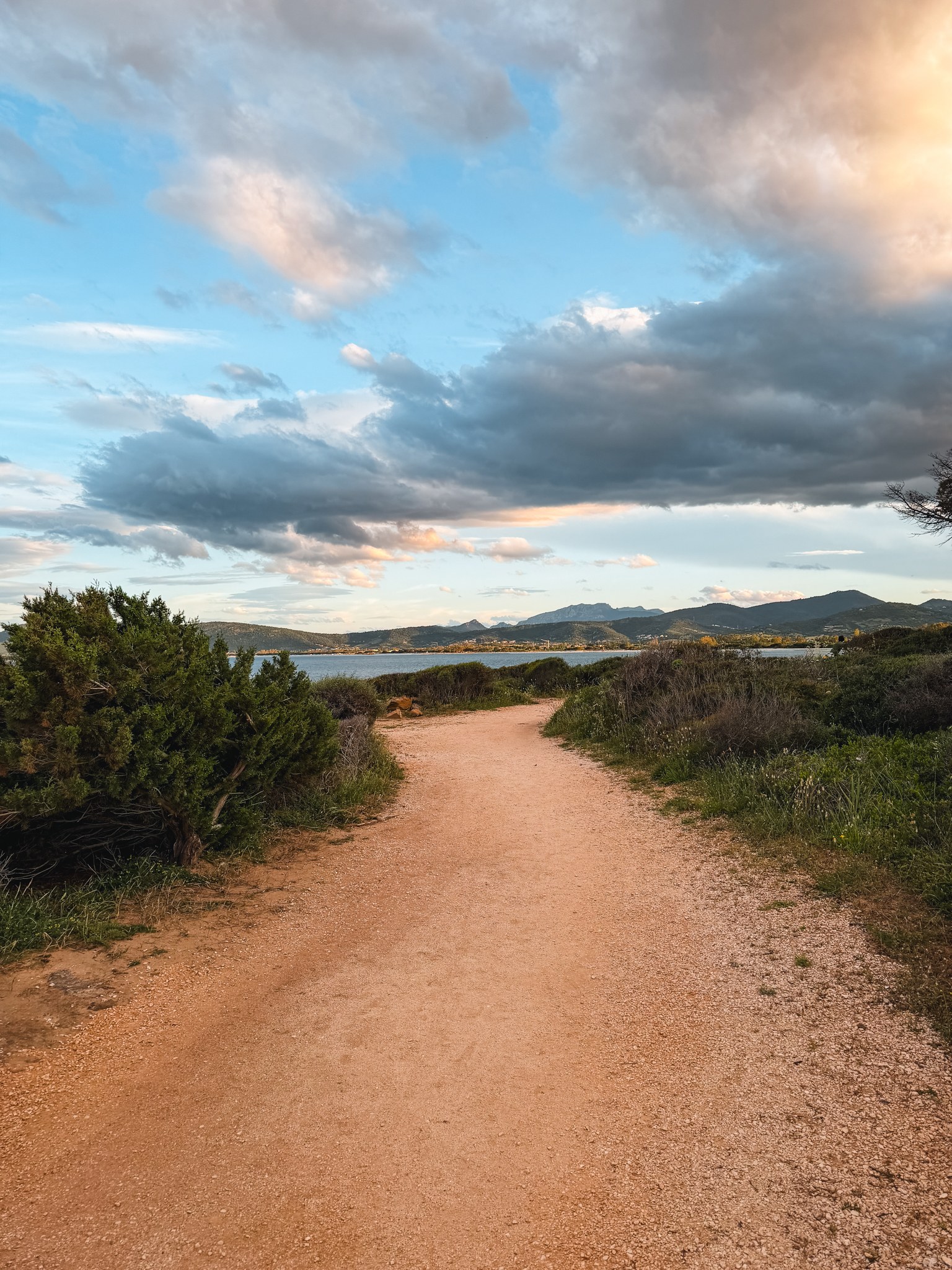
Coastal road in Sardinia

Sardinia, unreal beaches and roads to avoid

The forecast in central Sardinia did not look good, so we changed the route and followed the east coast, where the weather seemed better.

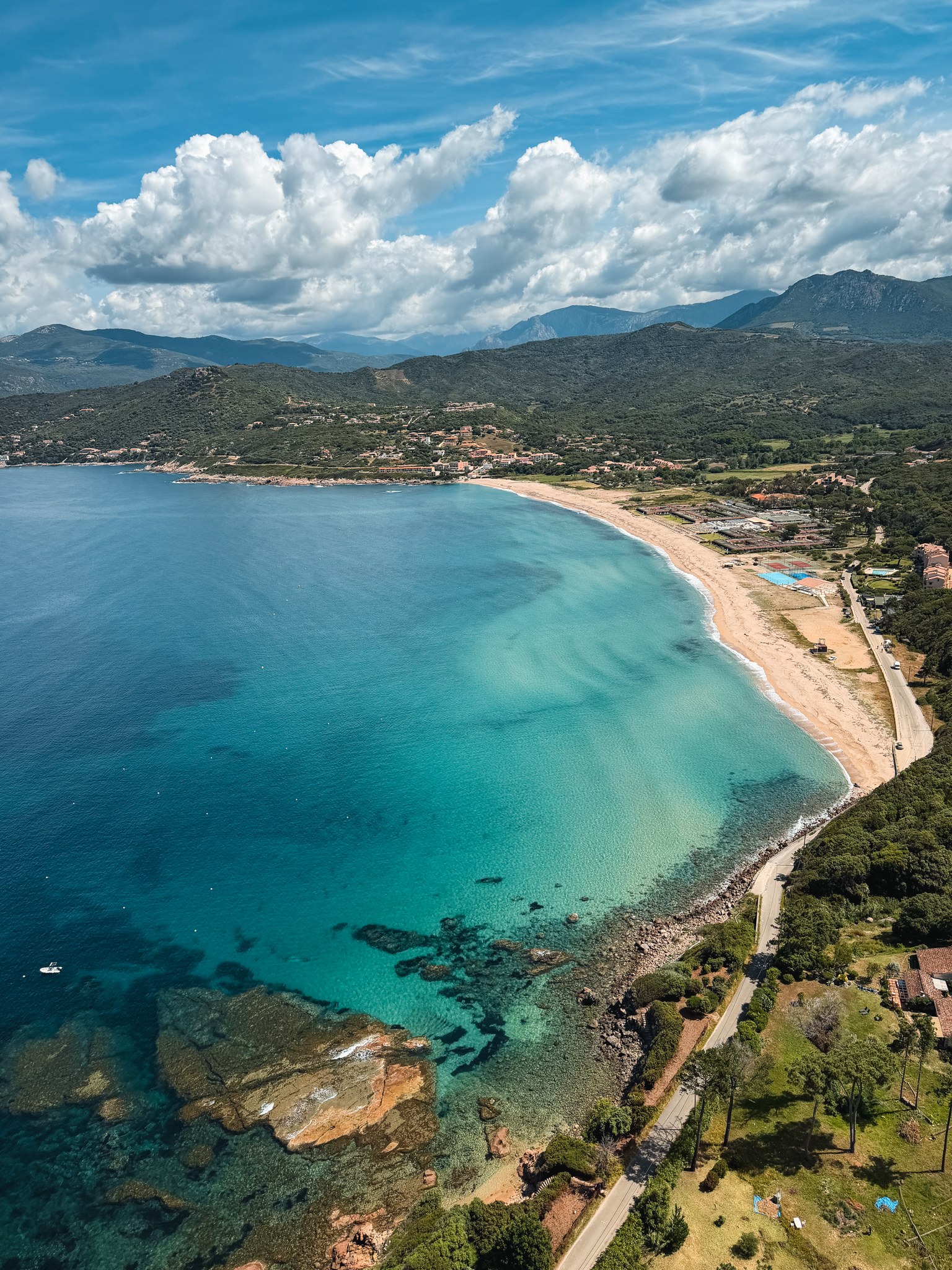
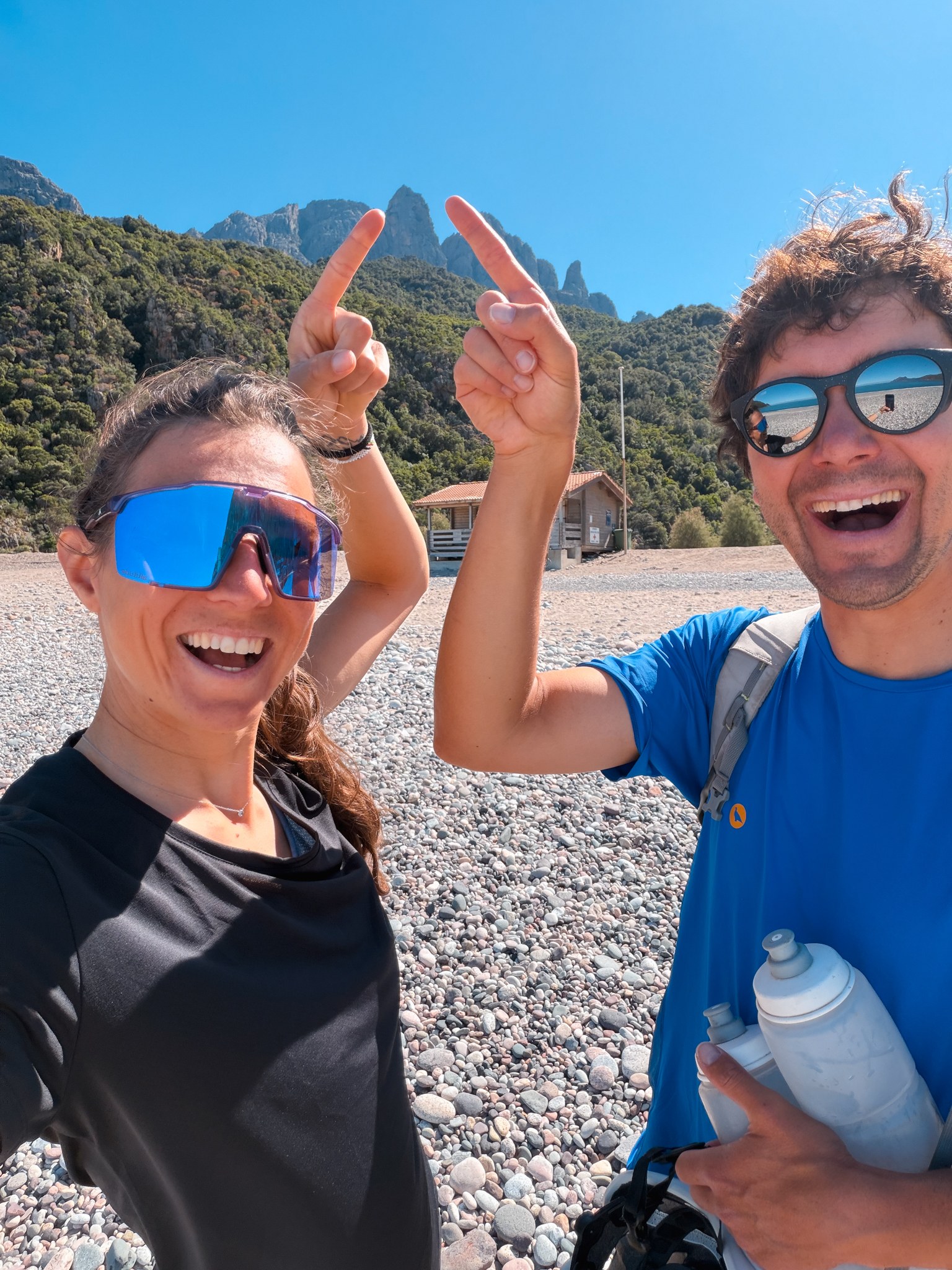
We discovered stunning beaches, some accessible only by foot or by boat. We even took a day to reach two of the most beautiful beaches in Europe. The next morning, our legs were sore. We were clearly not used to walking anymore.

We alternated between the sea and the inland roads, between silent tracks and more stressful main roads. On the small gravel tracks, we savored the silence. On the bigger roads, we sometimes just hoped not to be hit. Towards the end of the crossing, the wind picked up and the weather deteriorated. We arrived in Santa Teresa just after the last ferry to Corsica had left. The next day, all boats were cancelled because of 100 km/h gusts.

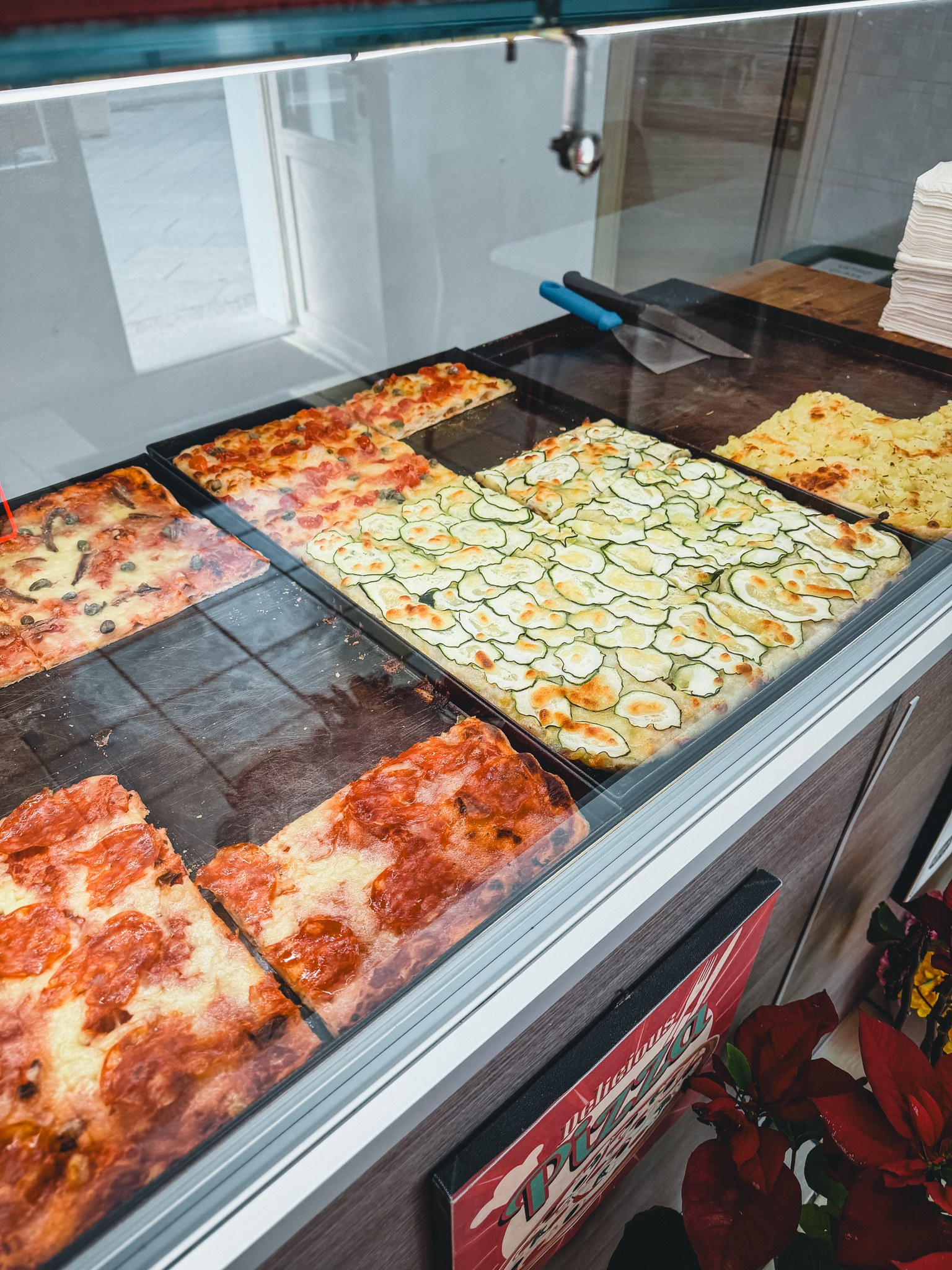
A forced rest day. In the end, it did us good. We repaired our punctured sleeping mat, worked, slept, and refueled in pizzerias where you could buy as many slices as you wanted.

Turquoise beach in Sardinia
Wild beaches of Sardinia
Evening tracks in Sardinia
Italian comfort after long days
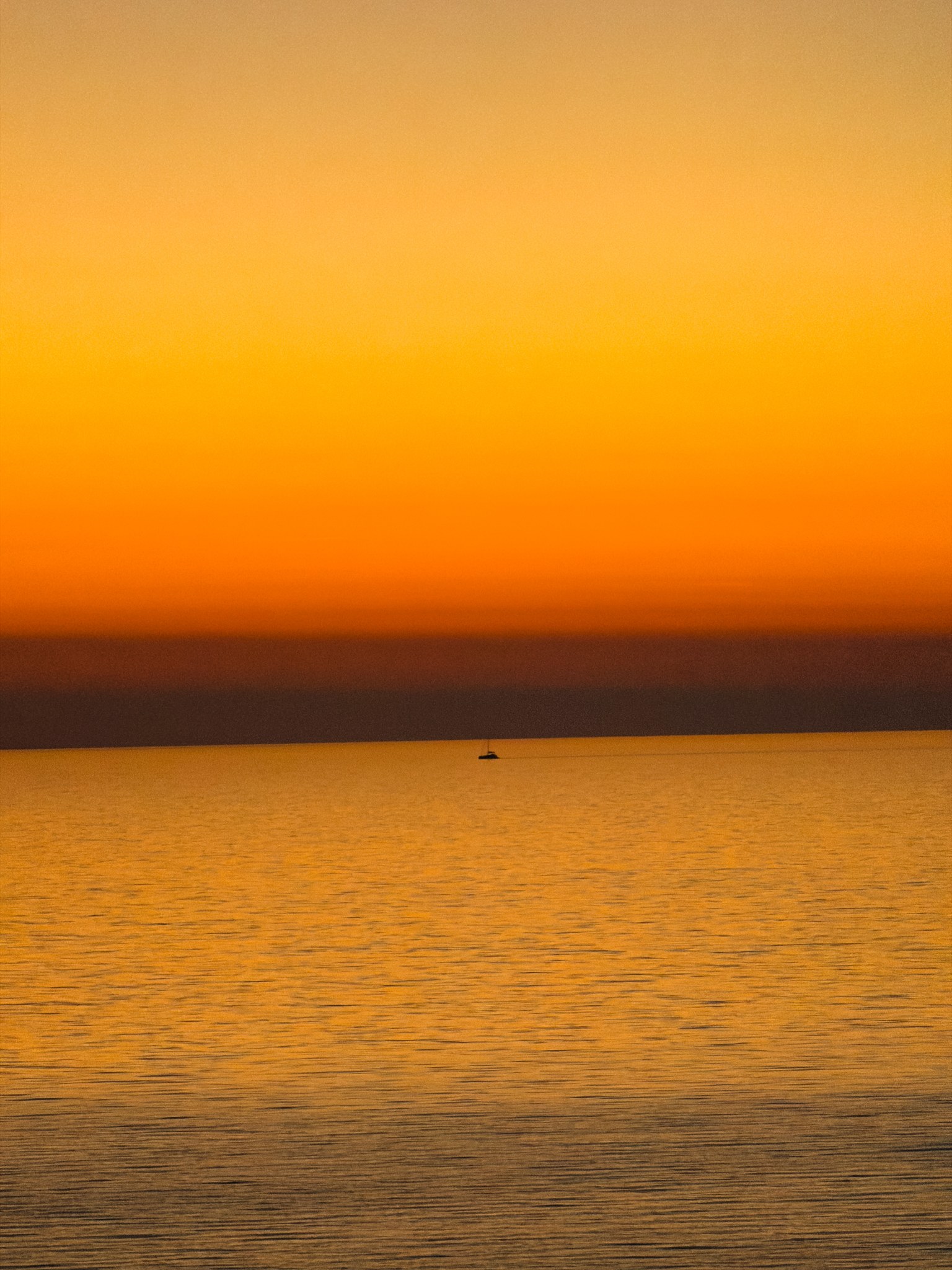
Bivouac at sunset

Corsica, wild and deeply human

The next morning, we felt ready to reach Corsica. Charlotte’s excitement was quickly crushed by seasickness. Ten minutes after departure, she was already throwing up. Thankfully, there were sick bags everywhere on the boat.

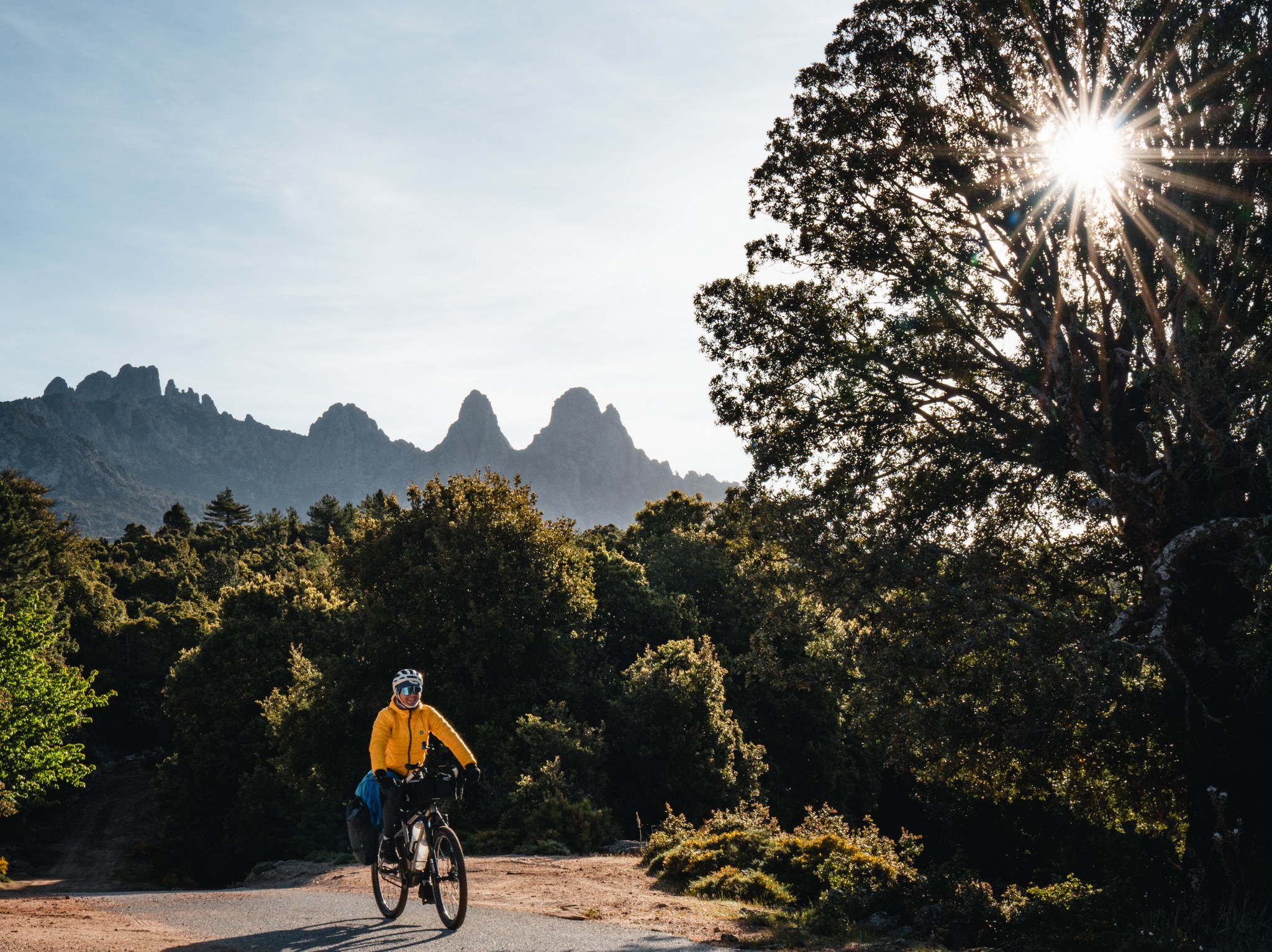
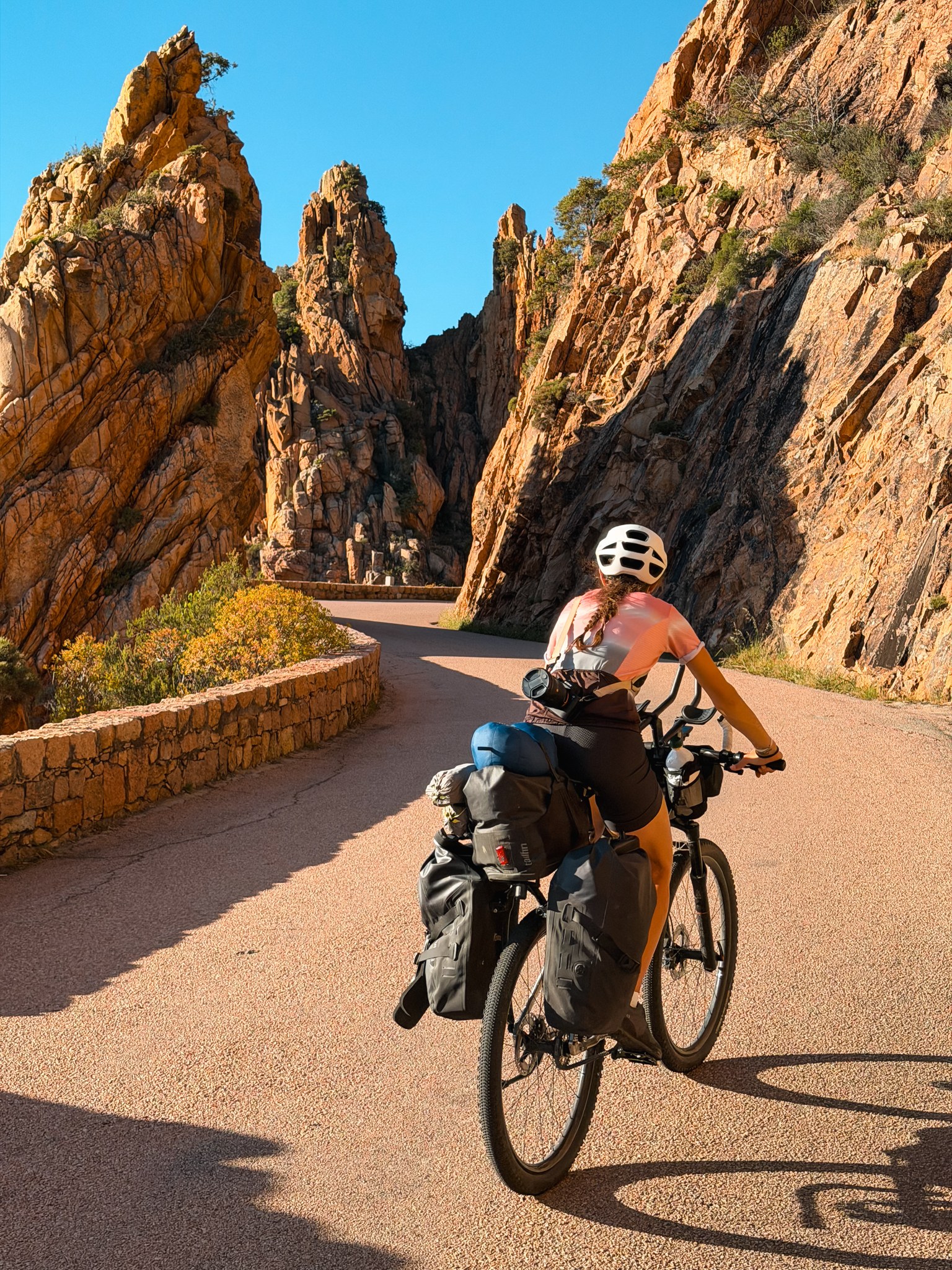
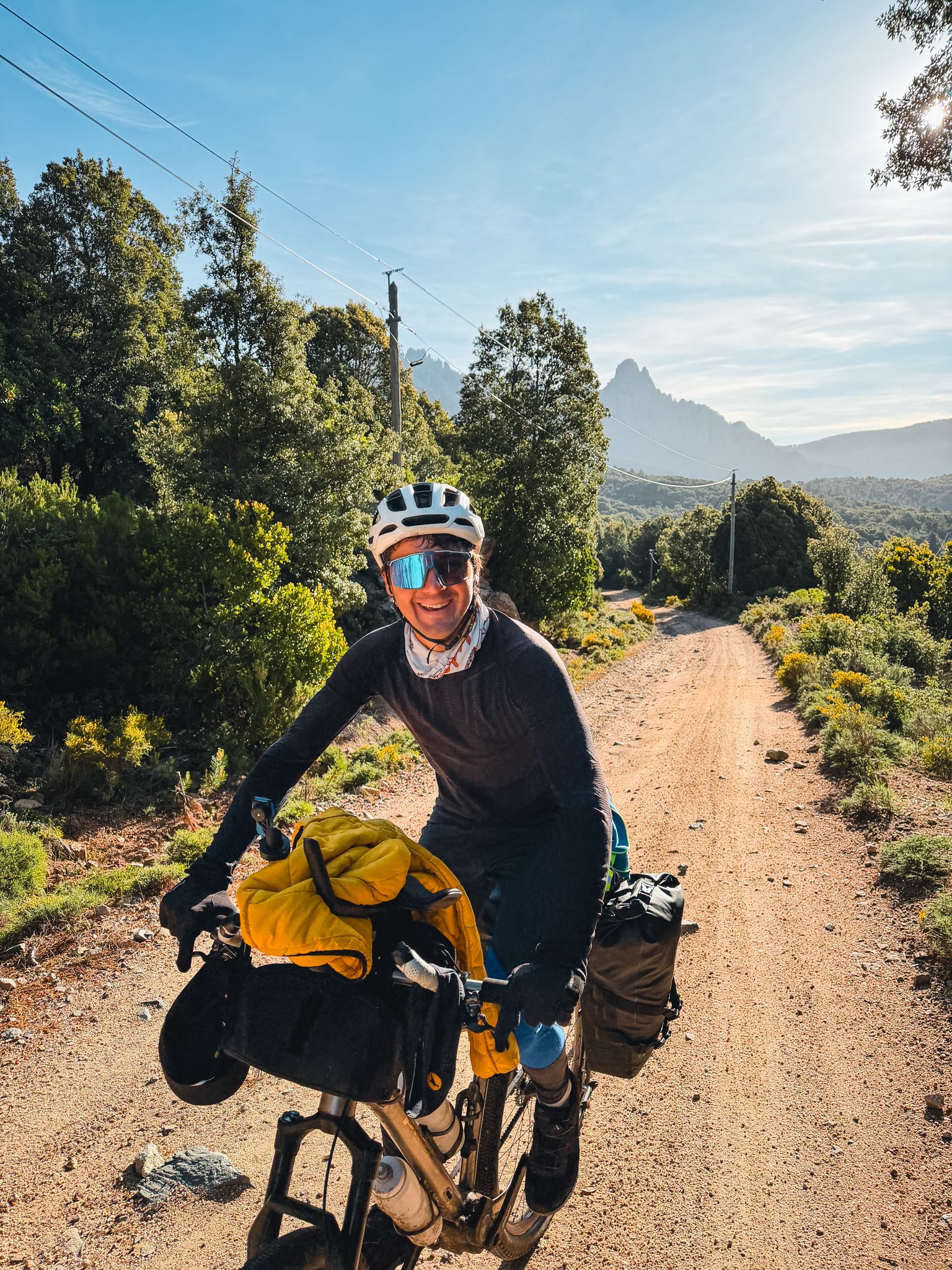
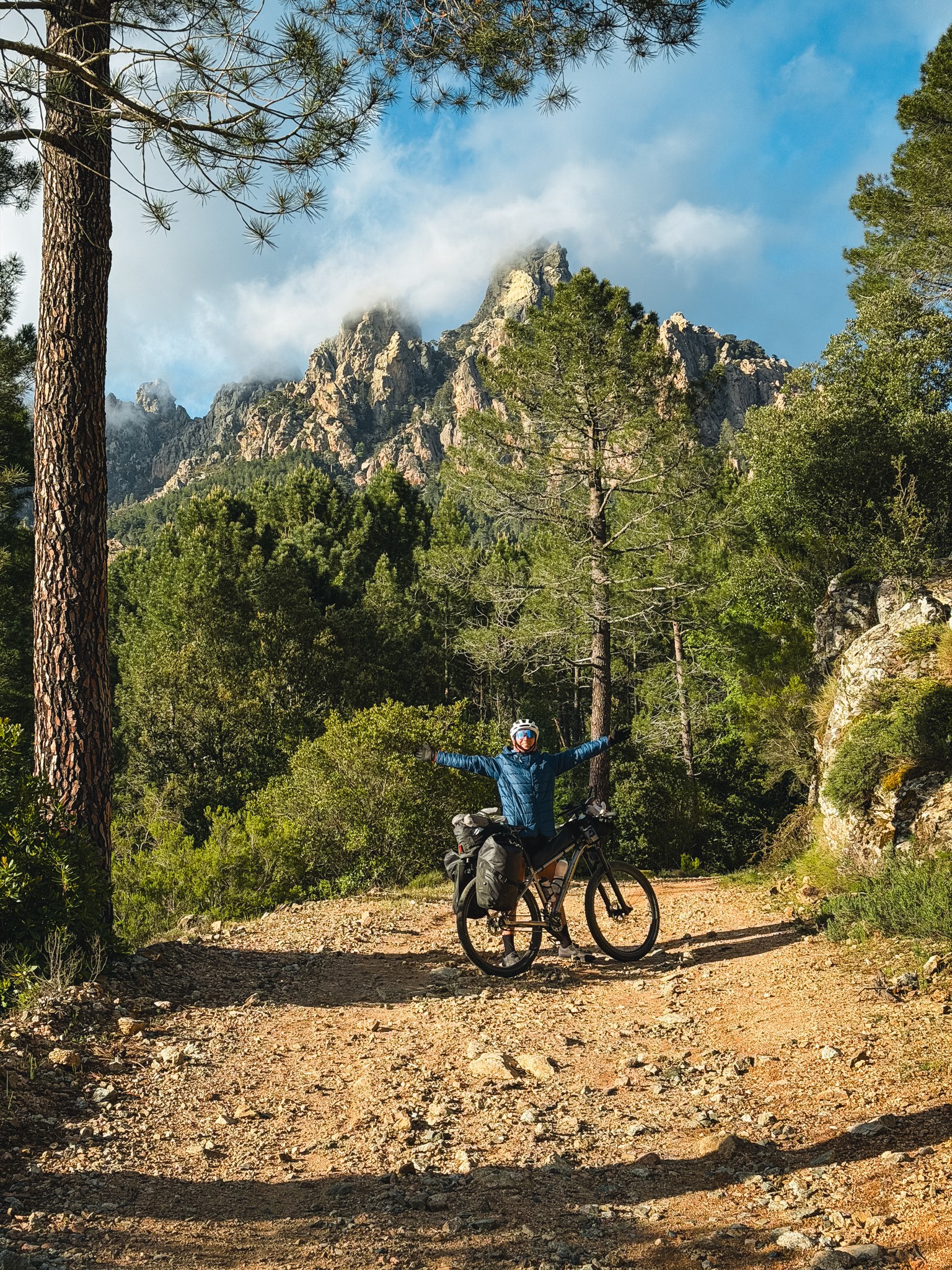
Once we arrived, everything felt better. We love Corsica. We followed a mix of routes, including parts of the Gravel 20 and Corsica Divided, to reach the Aiguilles de Bavella by gravel tracks, then the Coscione plateau. It was unbelievably beautiful. Wild. Quiet. We were often alone.

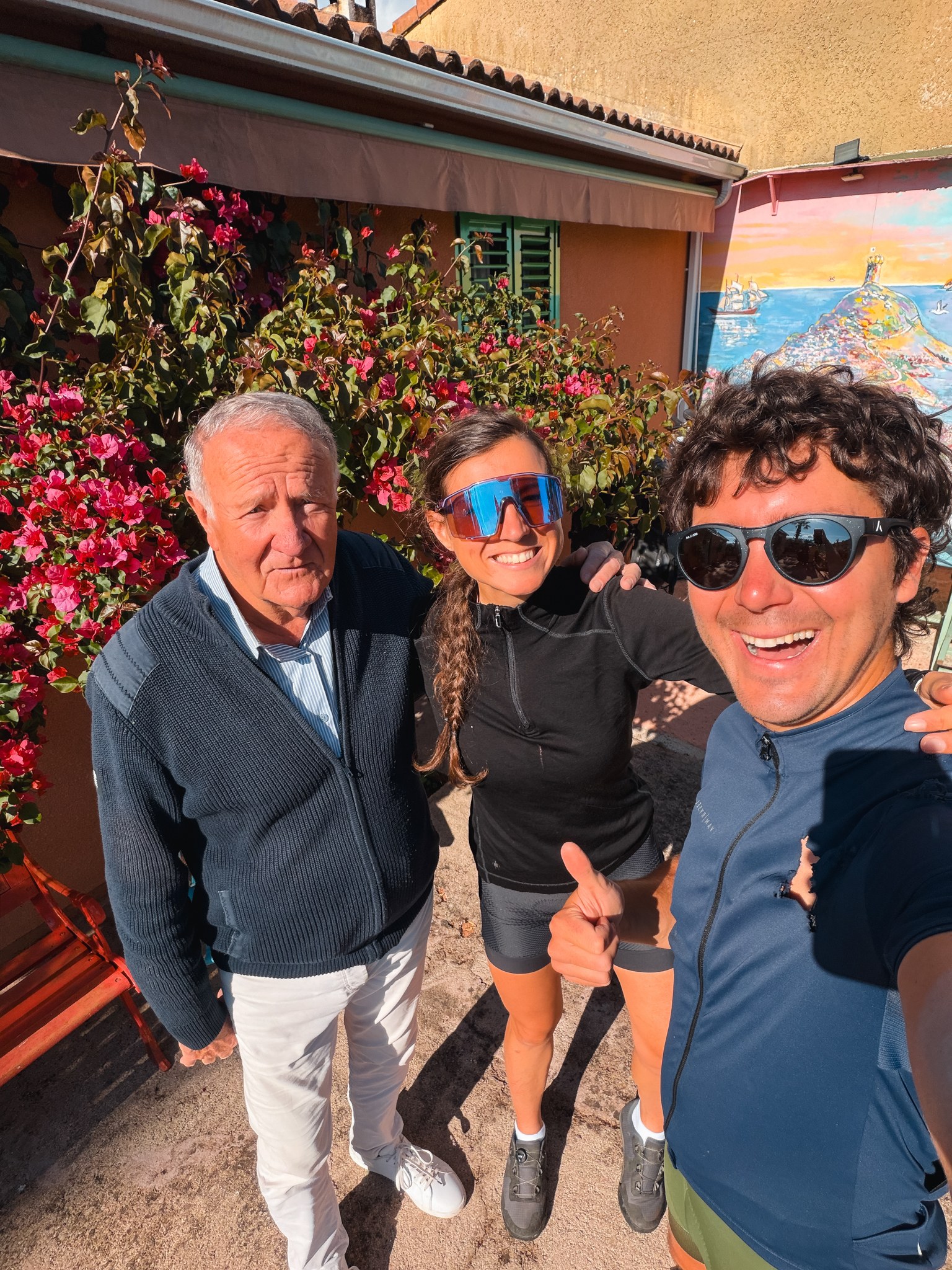
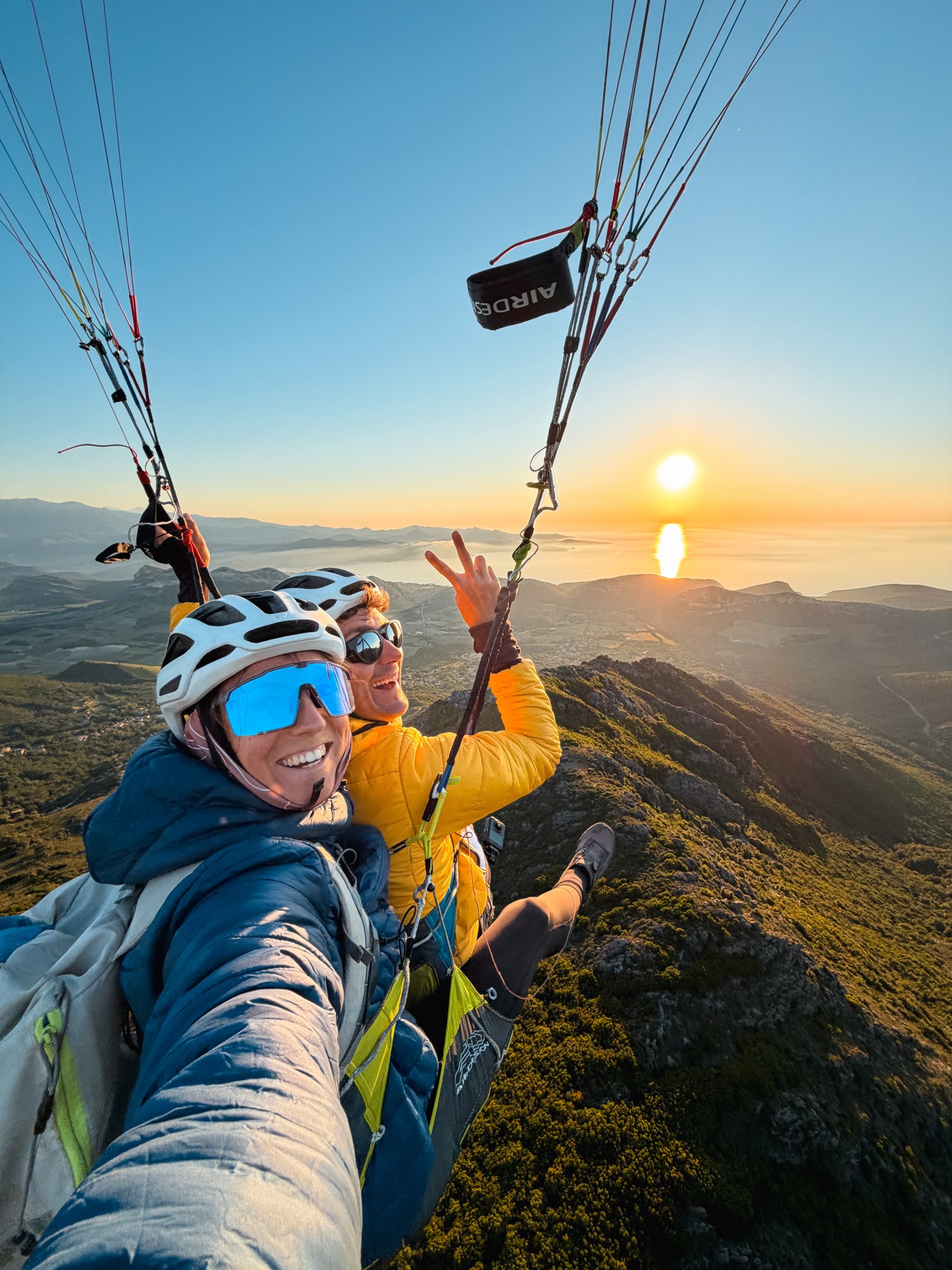
After the calm of the mountains, we headed down towards Ajaccio to try to fly. On the way, we met Roberto, a 72-year-old former police officer, who invited us to sleep and eat at his place. We spent an unforgettable evening laughing and talking about life.

The next day, barely 15 km later, we met Ania, a Polish caregiver, who kindly watched our bikes while we went for a paragliding flight. When we came back, she was waiting for us with coffee and homemade doughnuts. It was hard to believe all of this was really happening. These encounters made us feel incredibly rich.

Road towards Bavella
Mountain tracks in Corsica
Camp and Corsican tracks
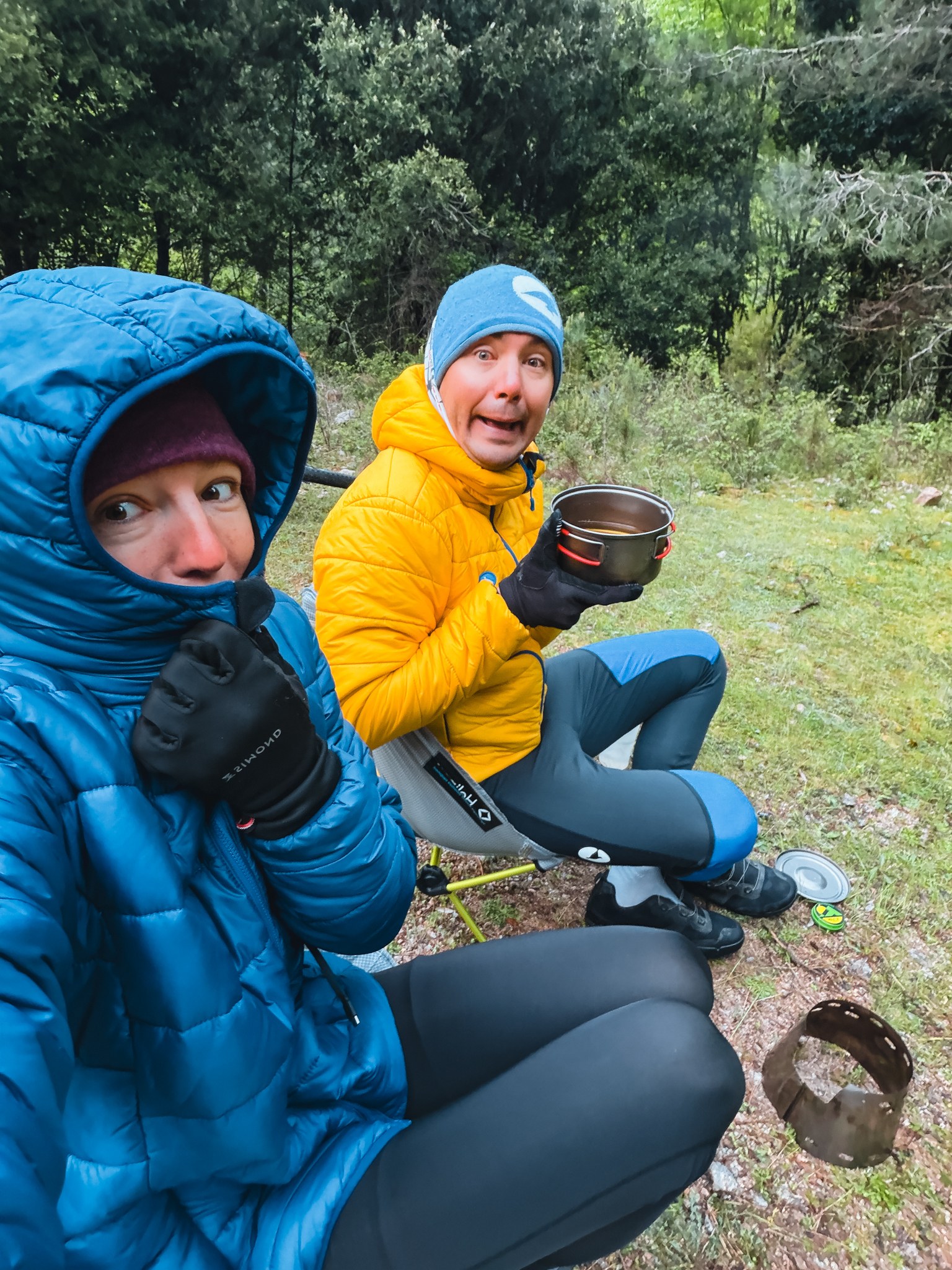
Cold morning at camp
Corsican hospitality with Roberto
Tandem flight above Corsica
Smiles after the flight
Encounters by the water
Coffee and homemade doughnuts with Ania

Shepherds, honey and the last days on the island

We continued and met Sébastien, a Corsican sheep breeder and cheesemaker. We spent a great moment with him and learned a lot about pastoralism in Corsica.

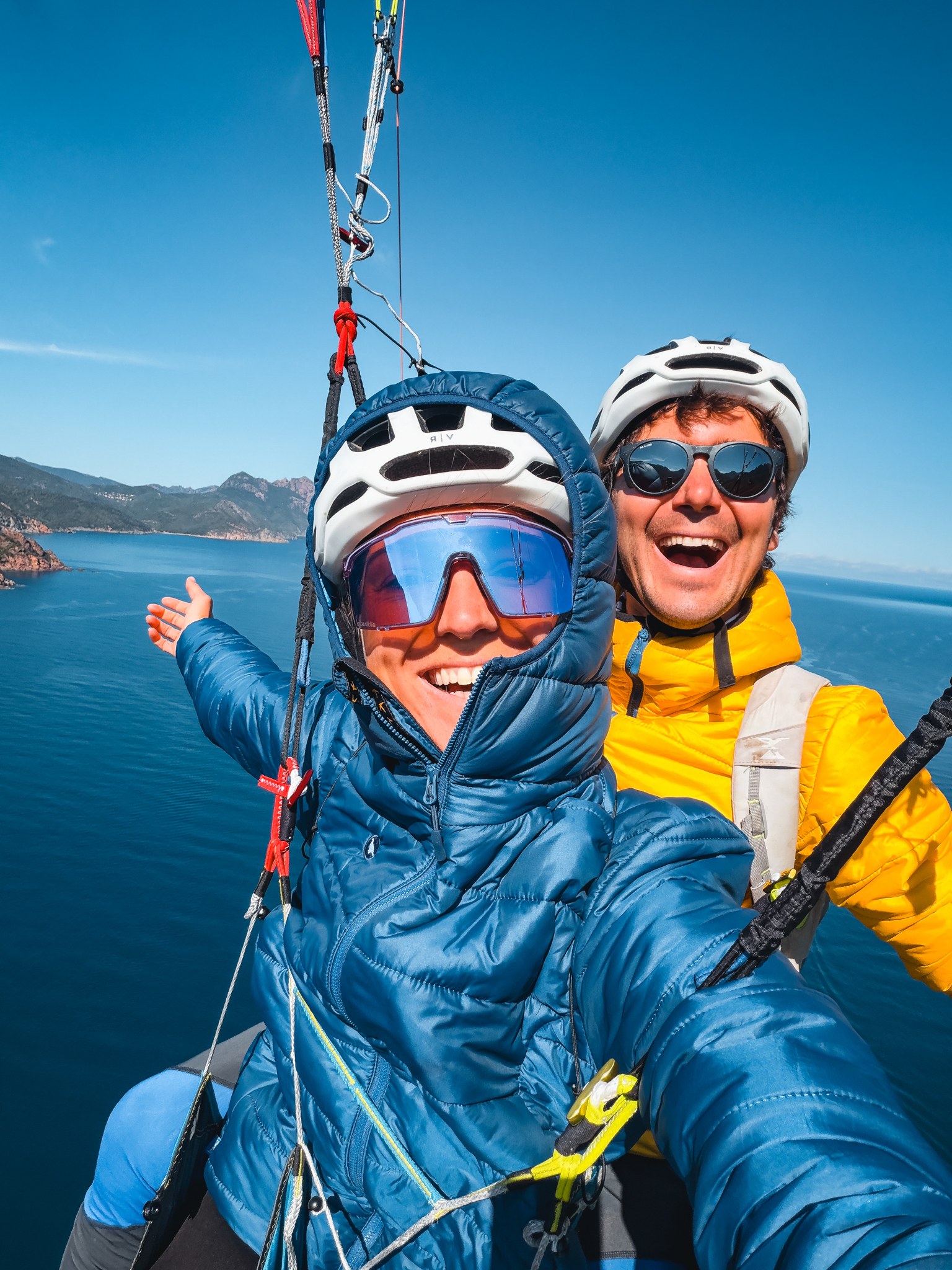
In Porto, we stopped in the hope of taking off from Capu d’Orto. At first, we mostly planned to hike, because finding a takeoff among granite blocks seemed unlikely. But everything aligned: a space large enough to lay out the tandem wing, perfect conditions, and one of our most beautiful flights together.

Further north, Adam, a Corsican AOP beekeeper and transhumant, was waiting for us for an interview. We spent a wonderful day with him, learned so much, and even had the chance to visit his hives to observe queen introductions and pollen harvesting.

Our last days in Corsica gave us more flights, dolphins, beautiful roads, incredible tracks, a winemaker, and even Simon and Eva, Charlotte’s brother and his girlfriend, who had just arrived to ride the GT20.

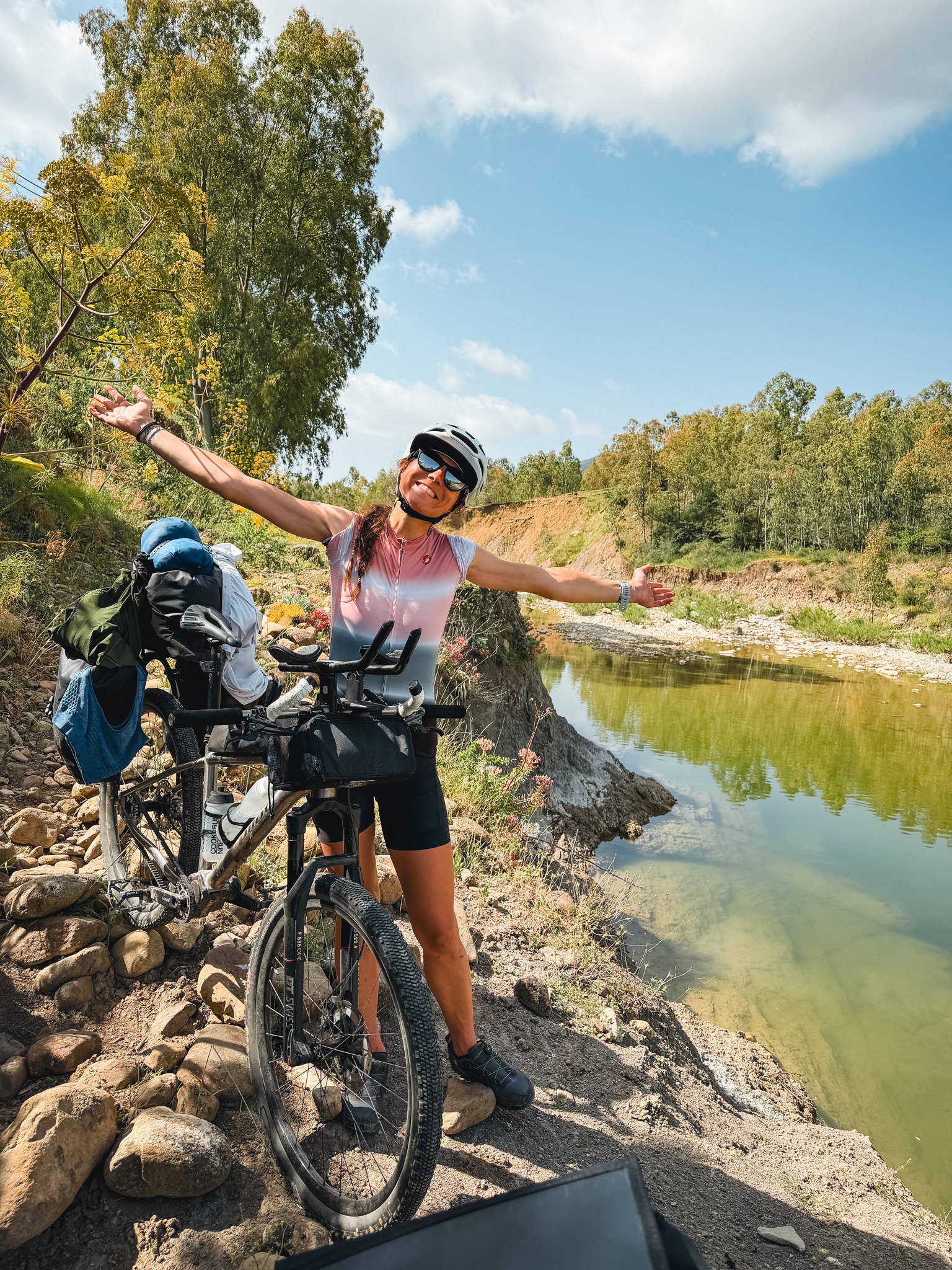
River break in Corsica
Green and wild tracks

Back through Verdon, Ventoux and Dévoluy

We left Corsica with a heavy heart. After a bad night on the ferry, we arrived in Toulon. Home was getting closer, but so was the heatwave. It was 36 degrees, and our goal for the day was to reach the Verdon Gorge.

The afternoon was brutal. We reached Salles-sur-Verdon exhausted, but early enough to swim. That evening, we hesitated: take a rest day in the gorge, or make a detour to Mont Ventoux.

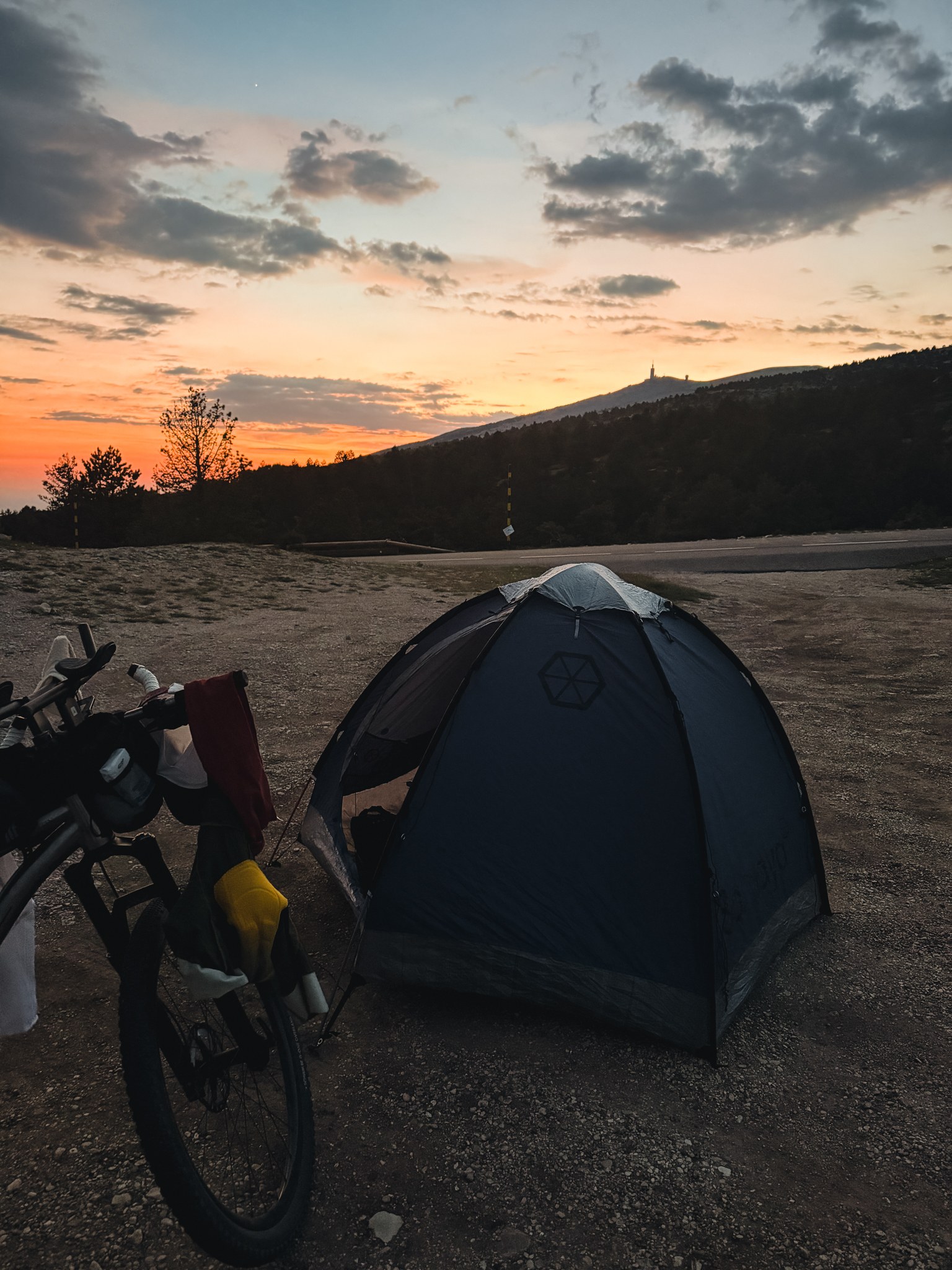
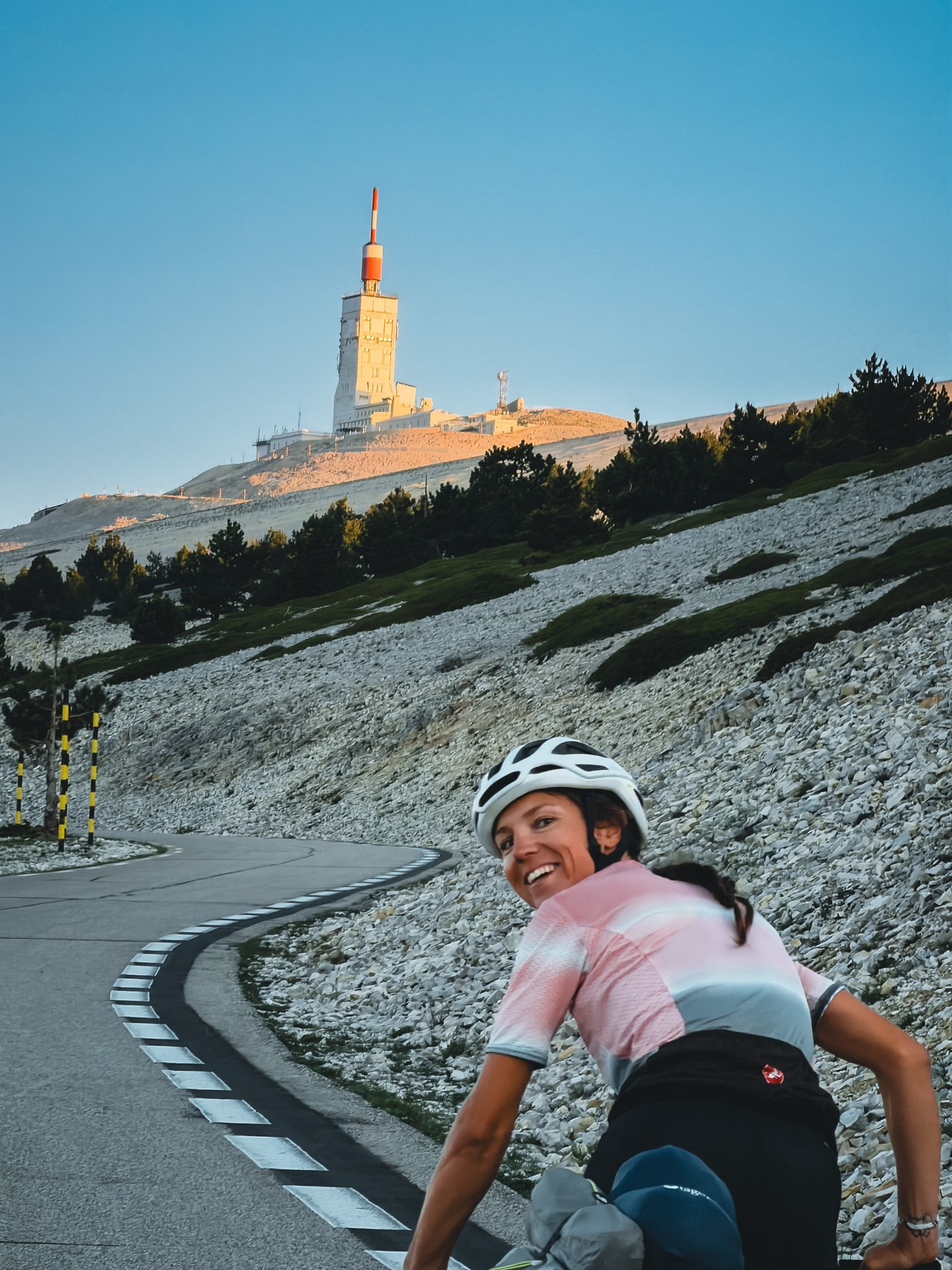
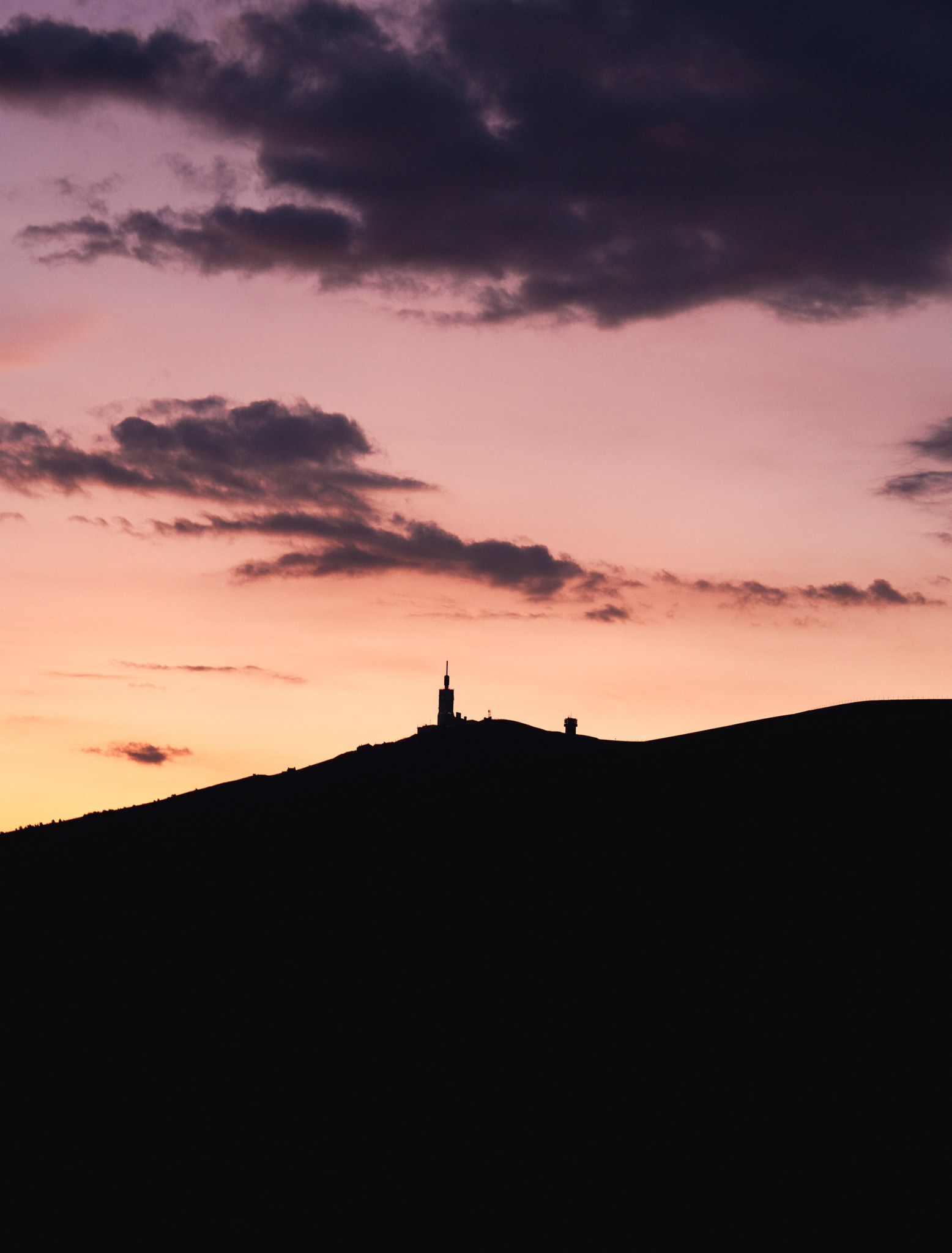
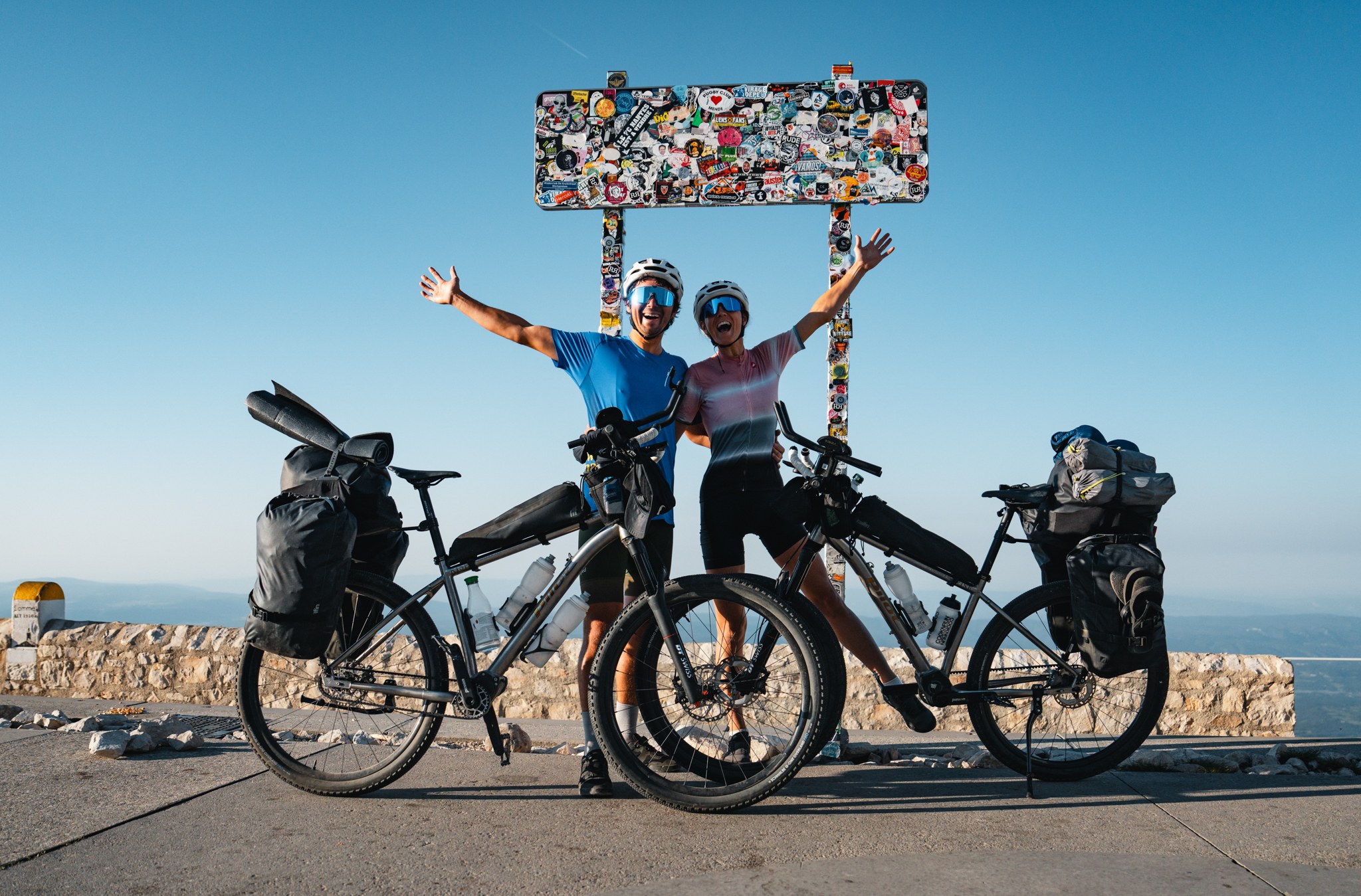
The next morning at 6 a.m., our eyes were wide open and we had only one idea: go to Ventoux. We crossed the Valensole plateau, between small roads and gravel tracks, with Ventoux appearing in the distance. At 6:30 p.m., we reached Sault. The campsite we had found was closed, so we kept going. We climbed Ventoux like mad to find a bivouac spot facing the summit and the sunset. The colors were incredible. We pitched the tent. The next morning, we reached the summit for sunrise.

Ventoux felt special: it is the mountain Charlotte grew up with, and it was Nicolas’ first time climbing it.

Return through Provence
Bivouac facing Mont Ventoux
Back through the mountains
Last tracks before home

What this journey taught us

During the last days, we crossed the Méouge and then the Dévoluy. It was still extremely hot, but the landscapes kept stopping us in our tracks. We felt that strange mix of happiness to go home and the desire for the journey to continue.

Over five weeks, we had become used to living at the rhythm of the pedals, improvised bivouacs, meals shared from one pot with one spoon for two, days that were too long, sore backs from working inside the tent, unexpected problems, encounters and uncertainty.

We came home for Charlotte’s 30th birthday, happy, tired, and reassured. The bikes, the gear, our organization and our desire were ready for what comes next.

This trip was supposed to be a test. It became a confirmation.

This journey was supposed to be a gear test. Very quickly, it reminded us of something else: it is always the people we meet who give meaning to a route.

— Charlotte & Nico

Vertical films

Short films from the road

A few short vertical films captured along this first long bikepacking test, between Italy, Sicily, Sardinia and Corsica. They do not replace the written story, but they extend its atmosphere: the wind, the ferries, the bivouacs, the gravel tracks, the sea, the paragliding flights, and all those small moments on the road that do not always fit into words.

Small pleasures and Italian caloriesCamp life after long days
Loaded bikepacking setup detail

The setup

A loaded test for RISE Season 2

For this journey, we rode fully loaded to test the setup that will follow us into RISE Season 2. The goal was clear: check whether we could carry filming gear, camping equipment and paragliding gear while keeping the bikes efficient, strong and comfortable for several weeks.

After more than 3,000 km across mainland routes, islands, volcanoes, gravel tracks, ferries, heat, wind and mountain passes, the test was validated.

Follow the expedition

New stories, routes and behind-the-scenes moments are added as the journey unfolds.