Crossing the Alps by Gravel

Expedition — French Alps — Summer

Crossing the Alps by Gravel

800 km. 21,500 m of climbing. From Lake Geneva to the Mediterranean in 6 and a half days, on loaded gravel bikes.

Distance

800 km

Elevation gain

21,500 m+

Duration

6.5 days

Reading time

10 min

Some adventures are prepared for travel. Others are prepared so that you can prepare yourself. This gravel traverse of the Alps belonged to the second category. Before heading back into the field for RISE, before spending weeks filming stories, solutions and encounters, we needed to test our bodies, our gear and our ability to keep moving for a long time, even when fatigue took over everything else.

The idea was simple on paper: start in Thonon-les-Bains, on the shore of Lake Geneva, and ride all the way to Nice, on the Mediterranean, following a route inspired by the gravel version of the Route des Grandes Alpes. In practice, that meant 800 kilometres, 21,500 metres of climbing, loaded bikes, huge days, bivouacs, storms, legendary passes and many moments where pushing the bike became more realistic than pedalling it.

We were not chasing pure performance. But we had chosen an intense format: crossing the Alps in 6 and a half days. It was short. Too short, sometimes. But it was also exactly what we had come for: a concentrated dose of effort, landscapes and freedom.
The journey

The route at a glance

Start
Thonon-les-Bains, on the shore of Lake Geneva.
Finish
Nice, on the Mediterranean coast.
Distance
Around 800 km.
Elevation gain
Around 21,500 m.
Landscapes
Alpine passes, high-altitude tracks, balcony roads, scree slopes.
Main challenges
Long days, altitude, storms, hike-a-bike, filming on the move.

Route map

Follow the line, north to south

The film

Watch the full Alps gravel film

Starting near Lake Geneva with loaded bikes

Leaving the lake, entering the mountains

The first kilometres always have the same feeling. Everything is still clean, organised and full of optimism. The bags are properly strapped, the legs are fresh, and you tell yourself that 800 kilometres is only a sequence of smaller pieces.

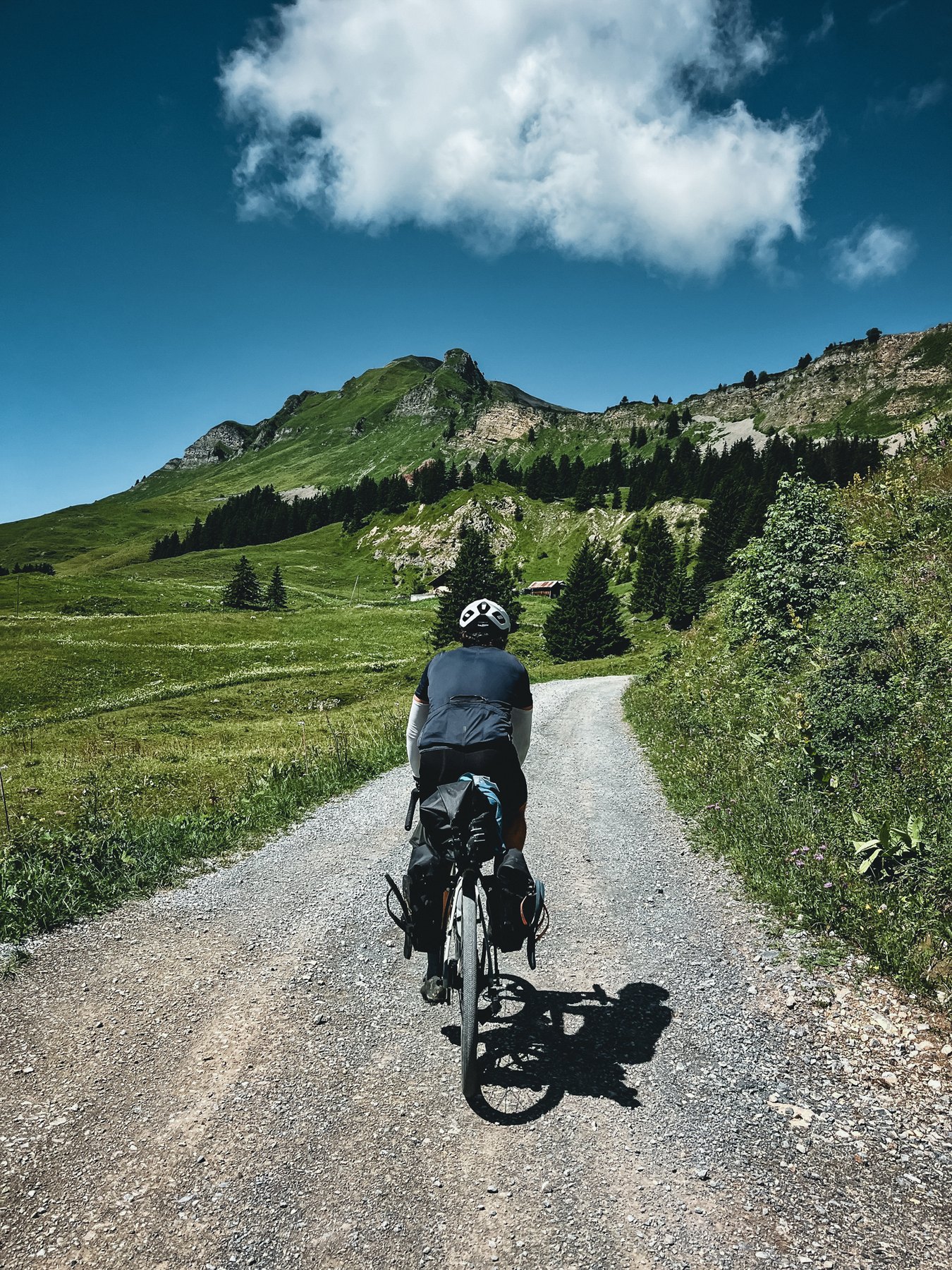
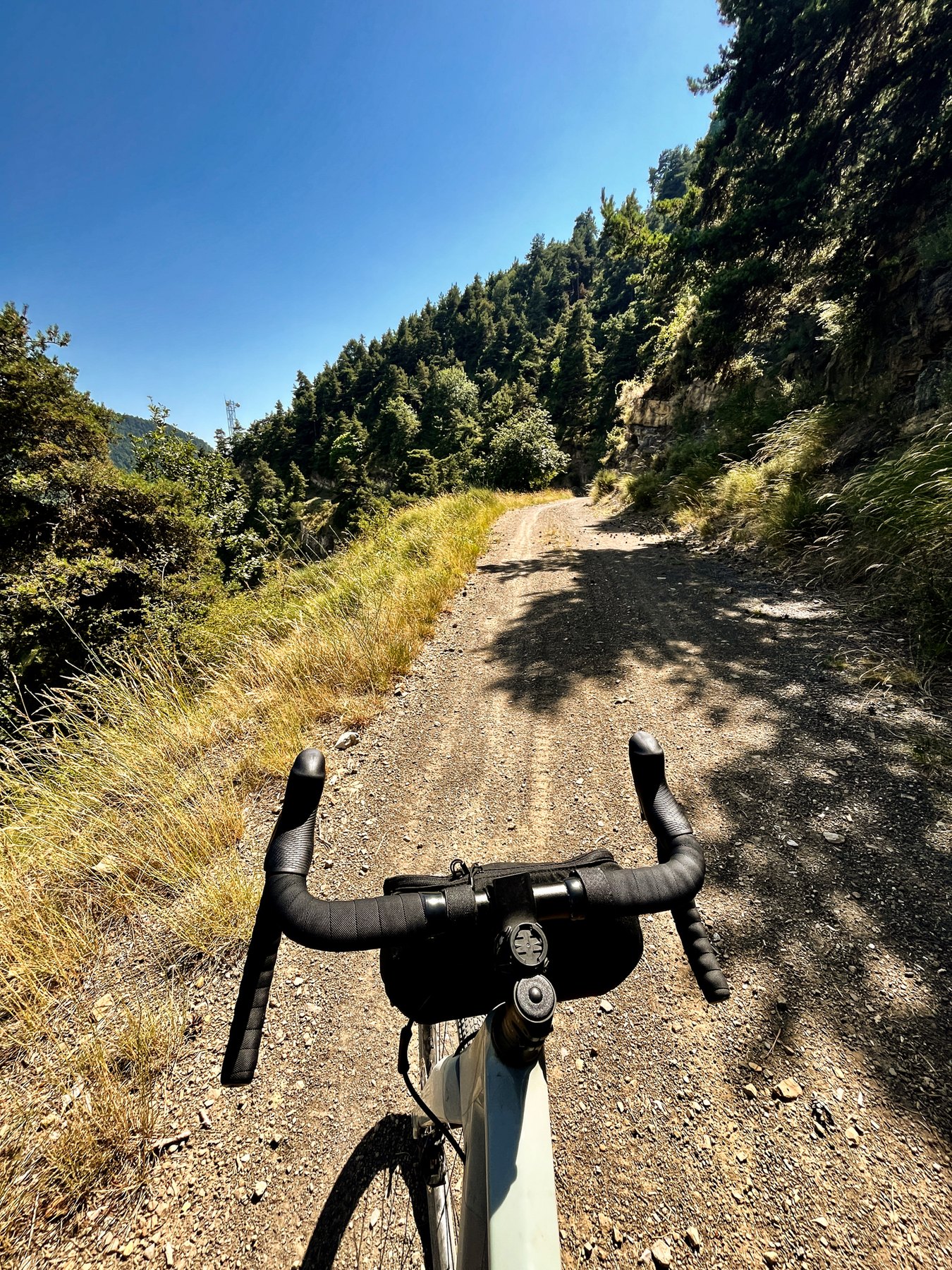
Then the Alps quickly remind you that they are never crossed by accident. From the first hours, the road starts climbing. Villages fade behind us, valleys deepen, tracks appear. We gradually leave the main roads and rediscover what we love about gravel: those side tracks that are neither fully roads nor fully trails, but feel like a hidden doorway into the landscape.

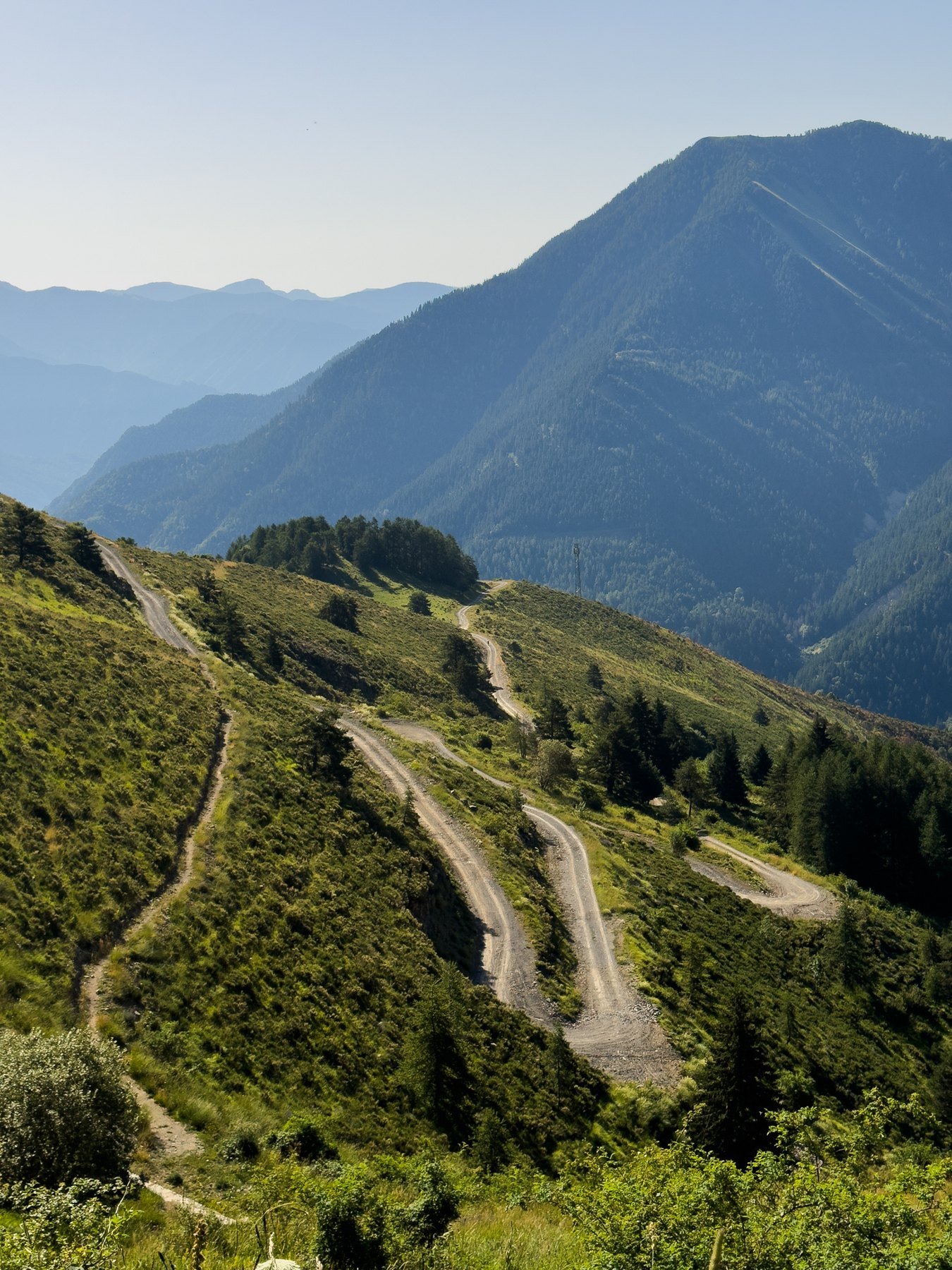
First gravel tracks in the French Alps

The route was never a gentle ride. It alternated between small roads, forest tracks, rocky paths, fast rolling sections and properly technical parts. Sometimes everything flowed perfectly. We covered kilometres quickly, tyres cutting through dust, mountains opening up ahead. At other times, every metre had to be earned. We got off, pushed, carried, got annoyed, then looked up again and remembered why we were there.

Balcony road above the alpine valleys

Riding long days, filming anyway

This journey also had an invisible constraint: documenting the adventure. Filming when you are fresh is easy. Filming after 120 kilometres, with another pass ahead and weather building, is something else entirely.

For RISE, it was a real test. In the field, our days never stop at physical effort. We also need to observe, listen, tell the story, frame the shots, charge batteries, protect the equipment and anticipate the next day. This traverse became an open-air laboratory: how do you stay creative when your body only wants to stop? How do you keep filming when it rains? How do you tell an adventure without turning it into a cold performance report?

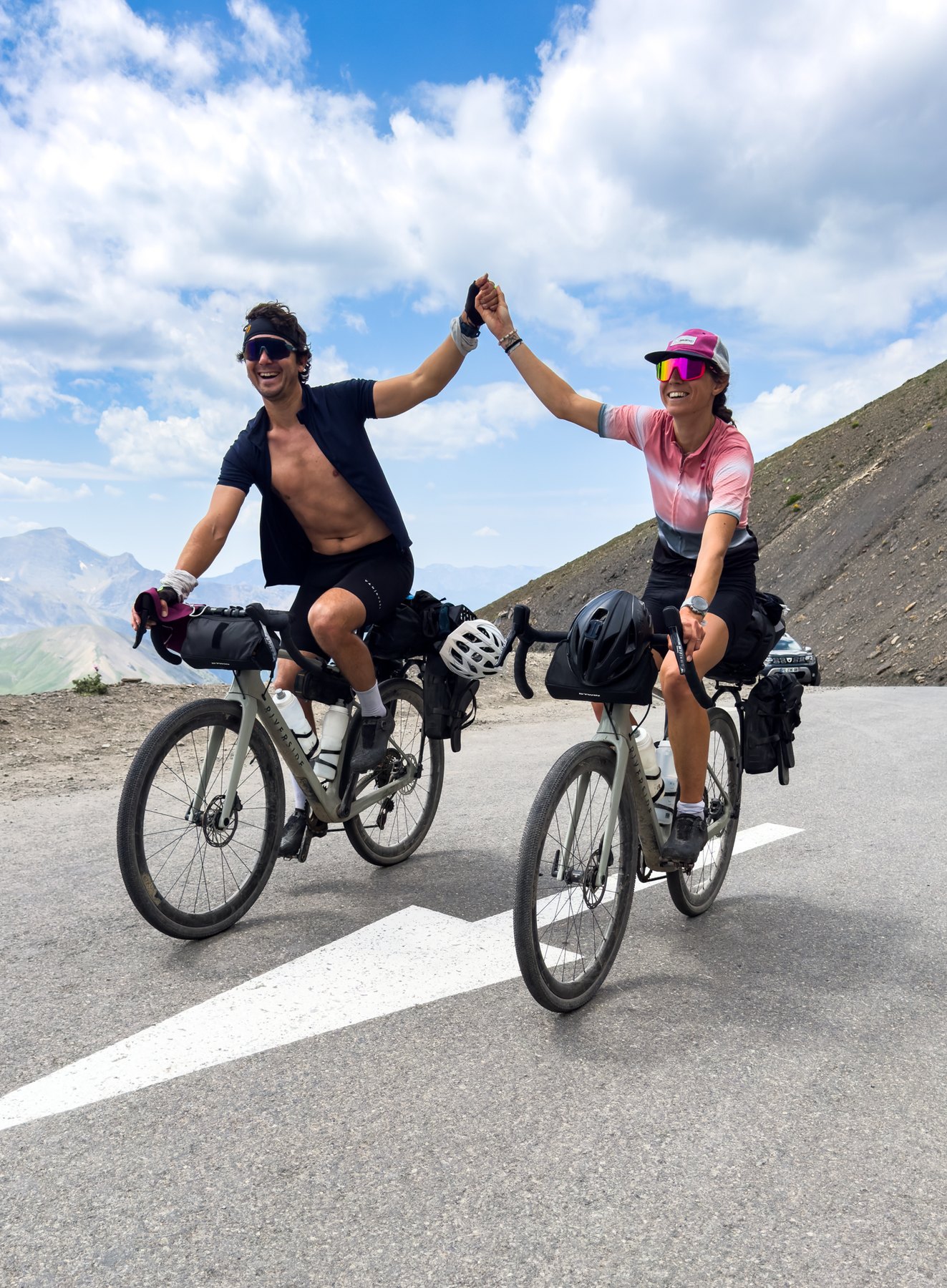
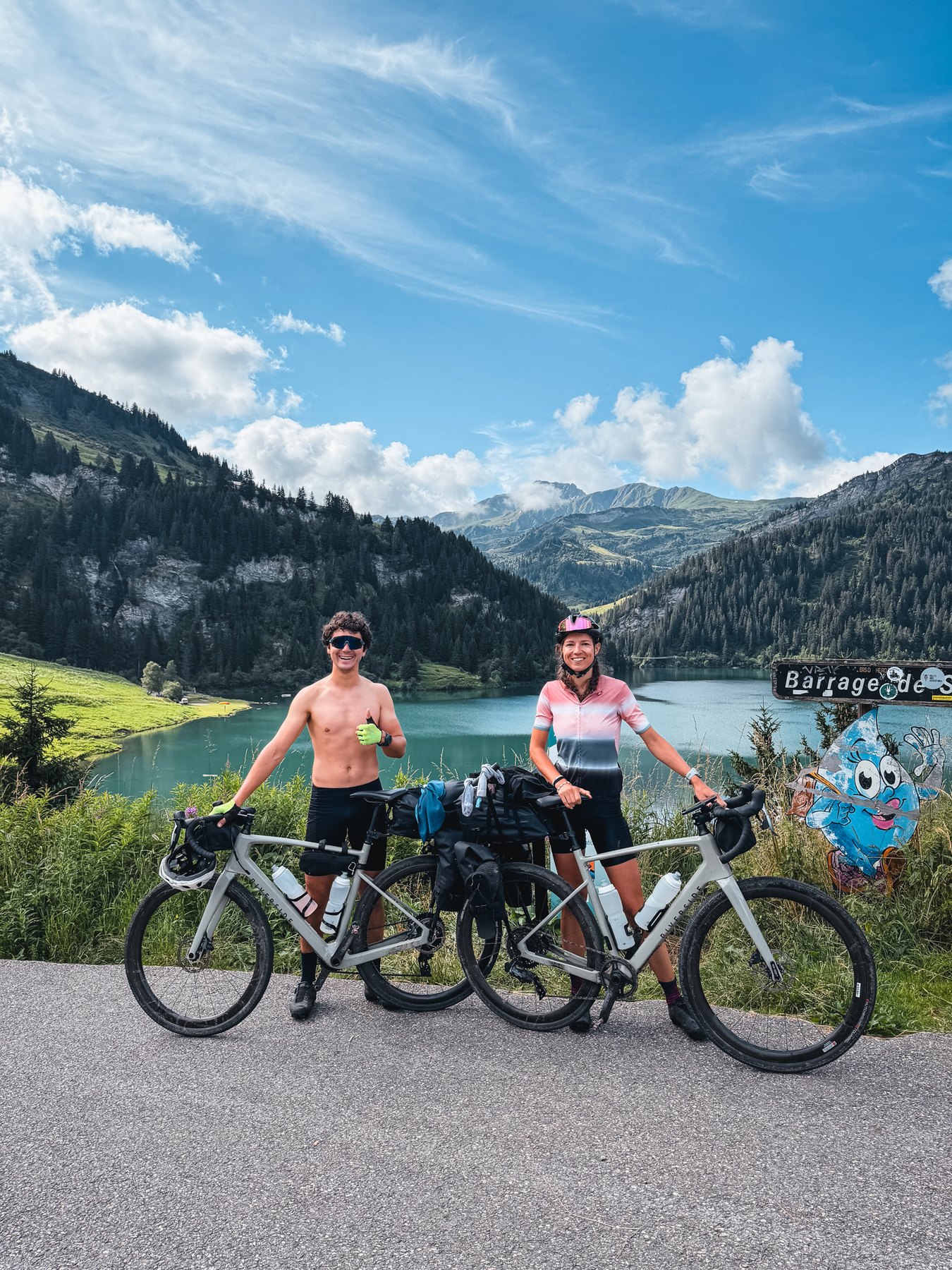
Two bikes, two smiles and a long high mountain day

The answer came gradually. We had to keep things simple. Take the camera out when the emotion was there. Film the silences as much as the spectacular moments. The spinning legs, the cold hands, the open bags on the side of the road, the looks that ask “do we continue?”, the improvised meals, the descents that suddenly bring the energy back.

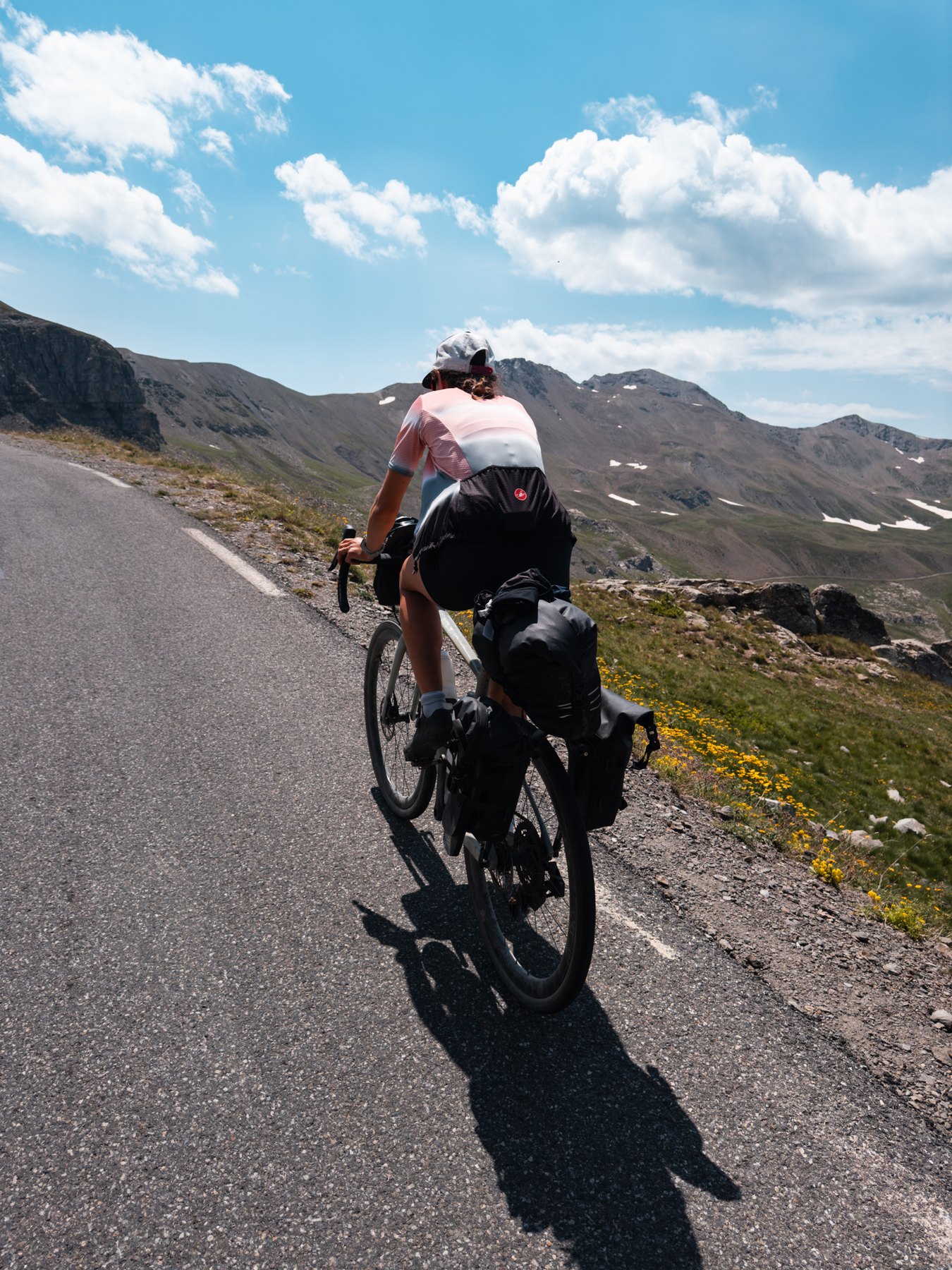
Long road day on gravel bikes in the Alps

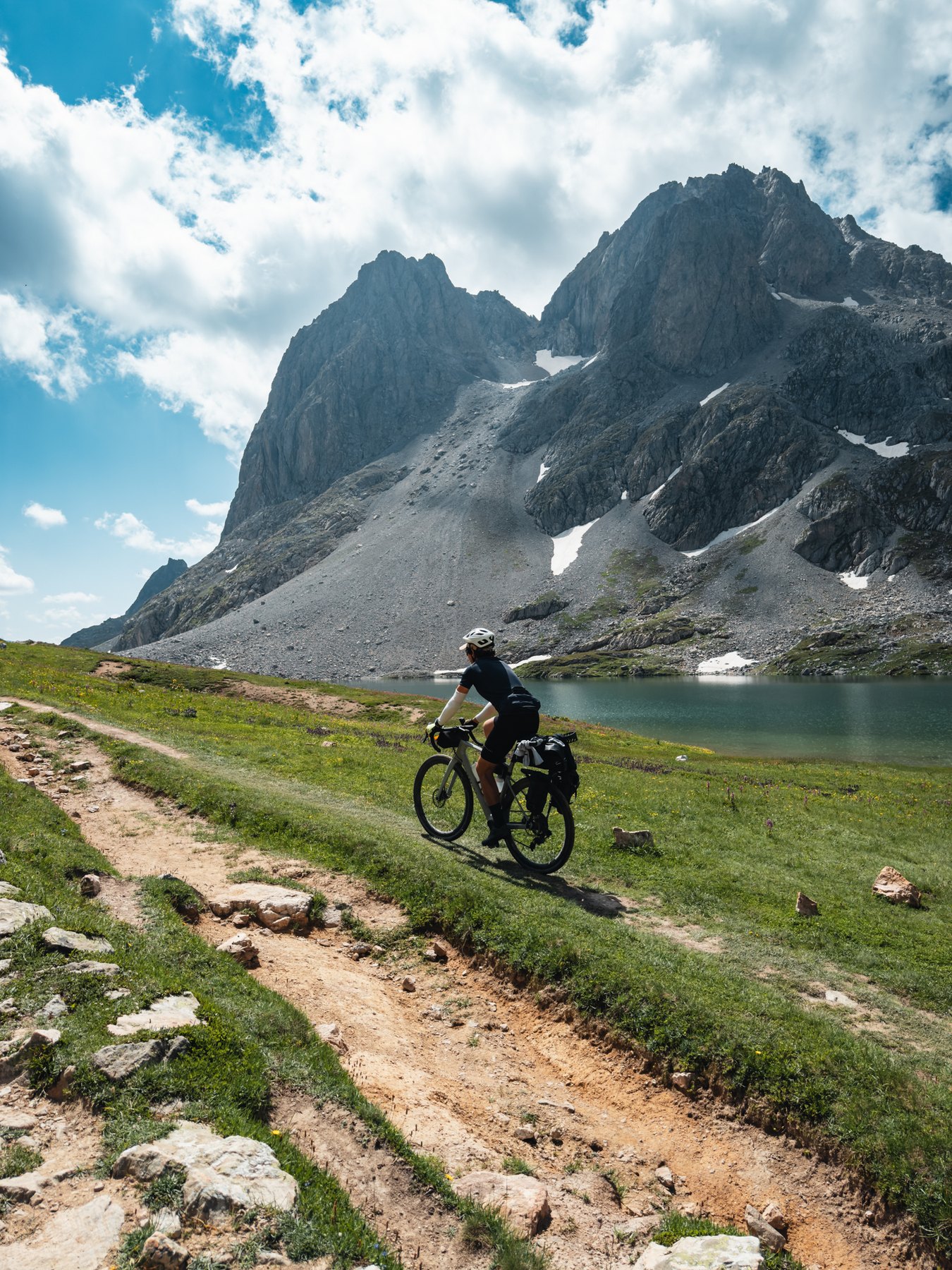
High mountains, gravel style

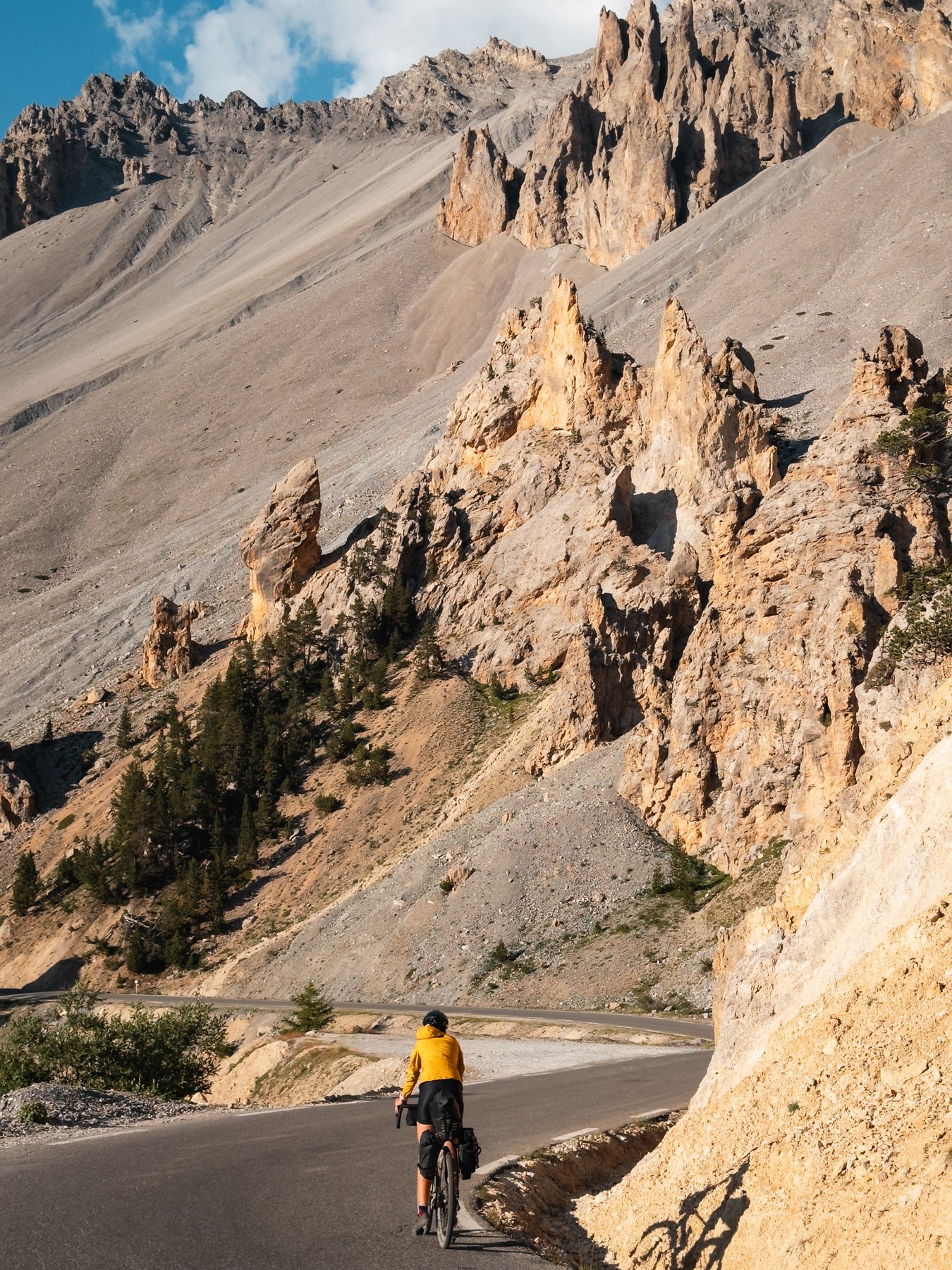
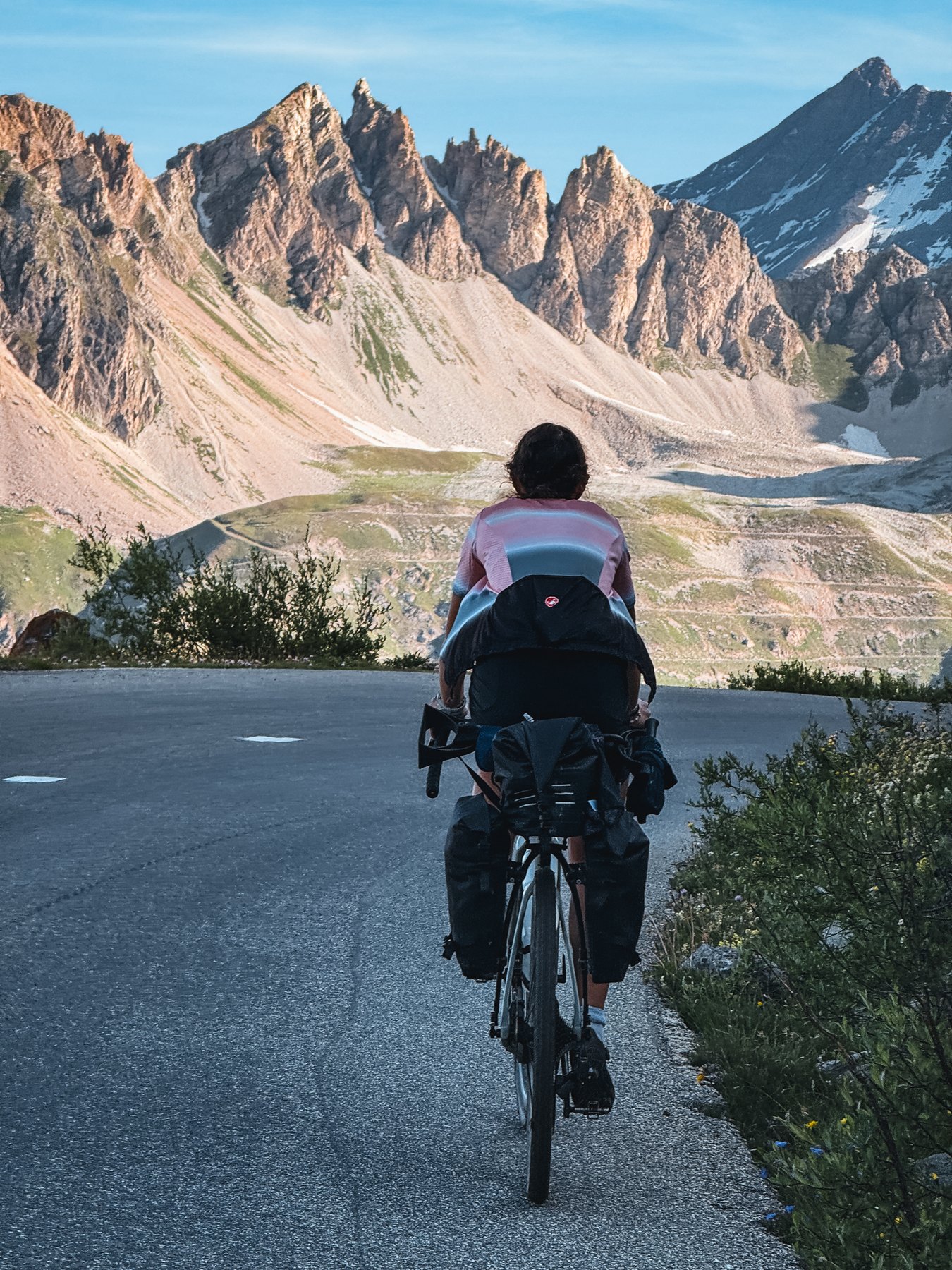
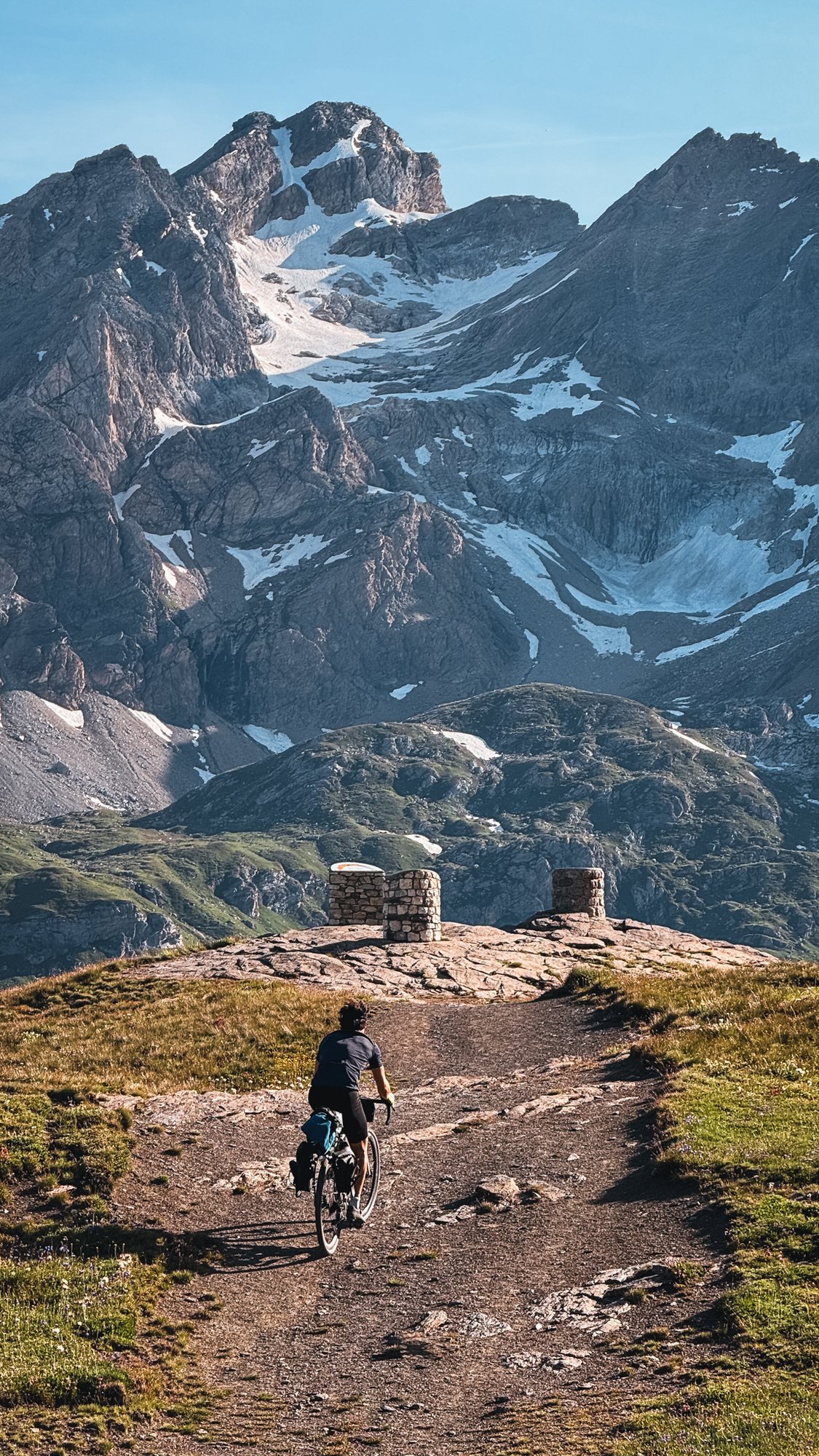
The further south we went, the more mineral the adventure became. Forests gave way to alpine meadows, then scree slopes, then those wide high-altitude spaces where you feel very small.

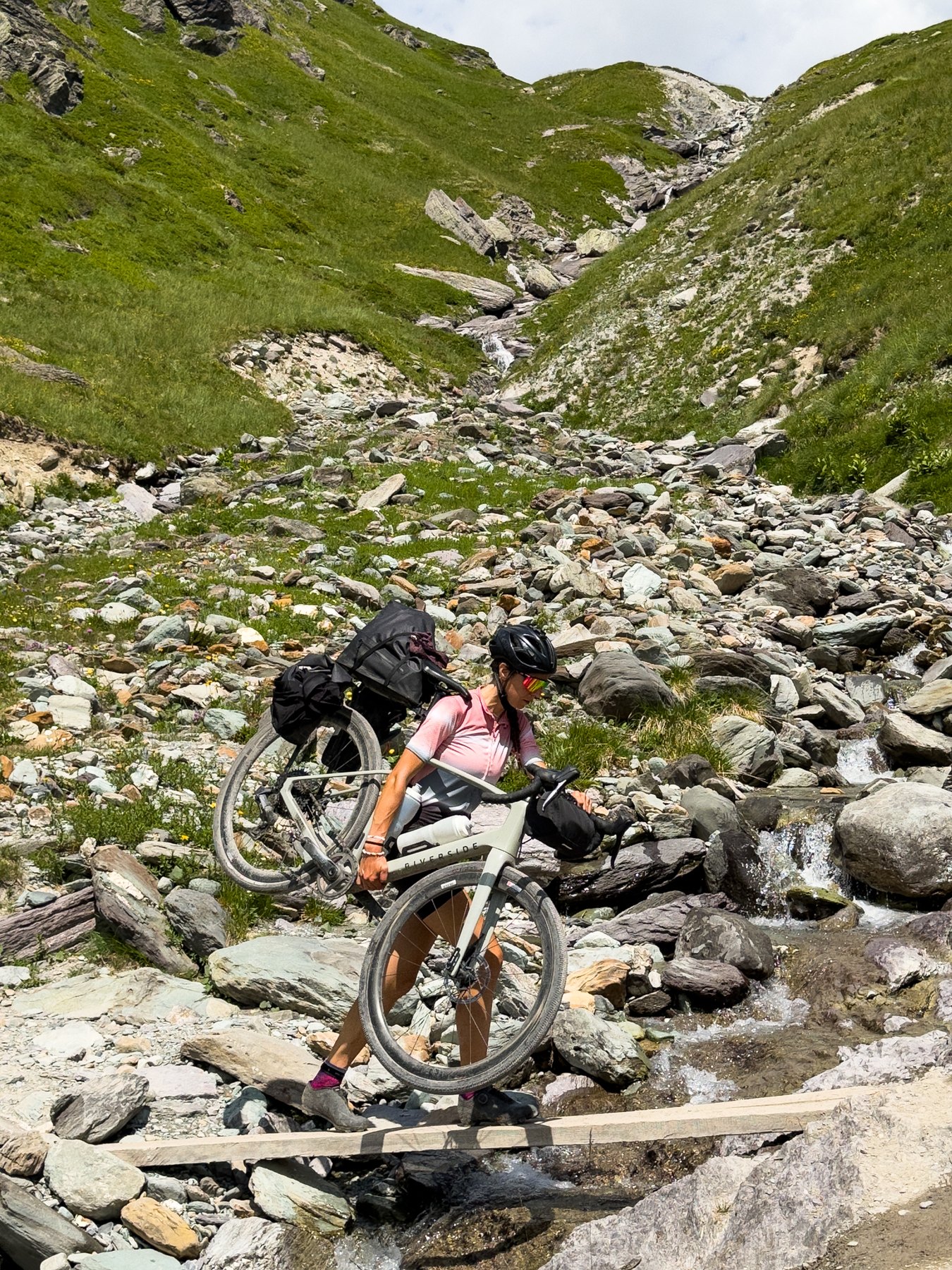
Some sections were incredibly smooth. Others felt much closer to mountain biking than gravel. That is where the traverse took on another dimension. With loaded bikes, every stone matters. A steep climb becomes a wrestling match. A rough descent demands as much focus as a pass. And when you have to push, the bike stops being a vehicle and becomes one more thing to carry.

Mineral landscape of the Casse Déserte

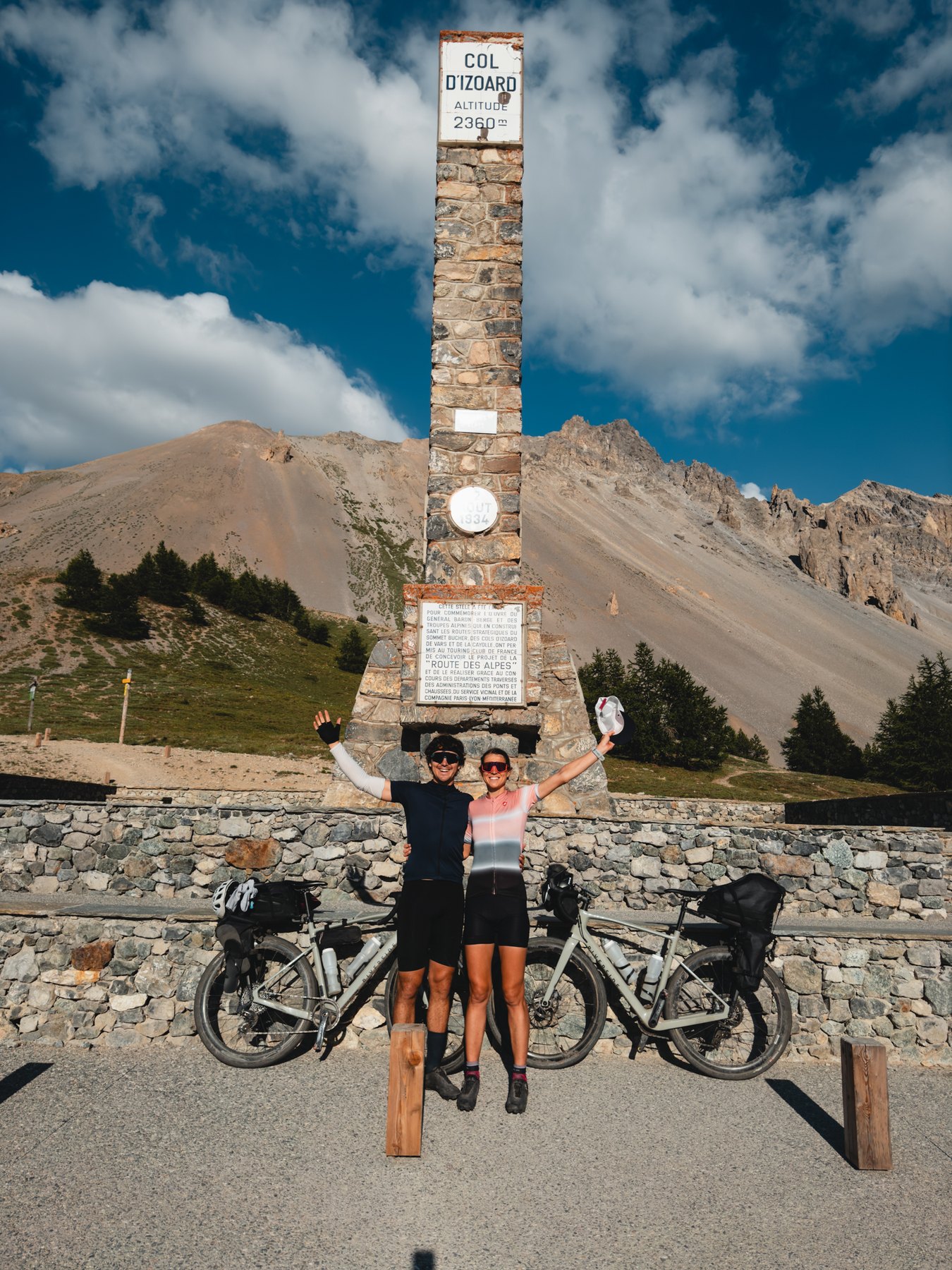
We especially remember the long approaches to the high passes. The switchbacks, the wind, the altitude, the signs you wait for during hours. Reaching the Col de l’Iseran with loaded bikes felt almost unreal. One of those moments when you no longer know whether you are proud, exhausted, happy or simply relieved.

Loaded bikes at the Col de l’Iseran

Days overflowing

Riding 800 kilometres in 6 and a half days leaves very little margin. The days started early and ended late. Sometimes it felt like we were already behind schedule before even leaving camp.

We had to ride, eat, fill the bottles, film, fix small things, find a place to sleep, check the weather, and start again. Simple moments became incredibly precious: a patch of sun after rain, a fountain in a village, a piece of bread, a cold lake swim, ten minutes lying in the grass without speaking.

Fatigue changes everything. It makes landscapes feel more intense, but it also makes decisions heavier. Continue or stop? Take the faster variant or stay faithful to the track? Take the camera out or save energy for the next pass? And yet, despite the difficulty, one feeling kept coming back clearly: we were exactly where we wanted to be.

Remote track below the alpine peaks

Living outside

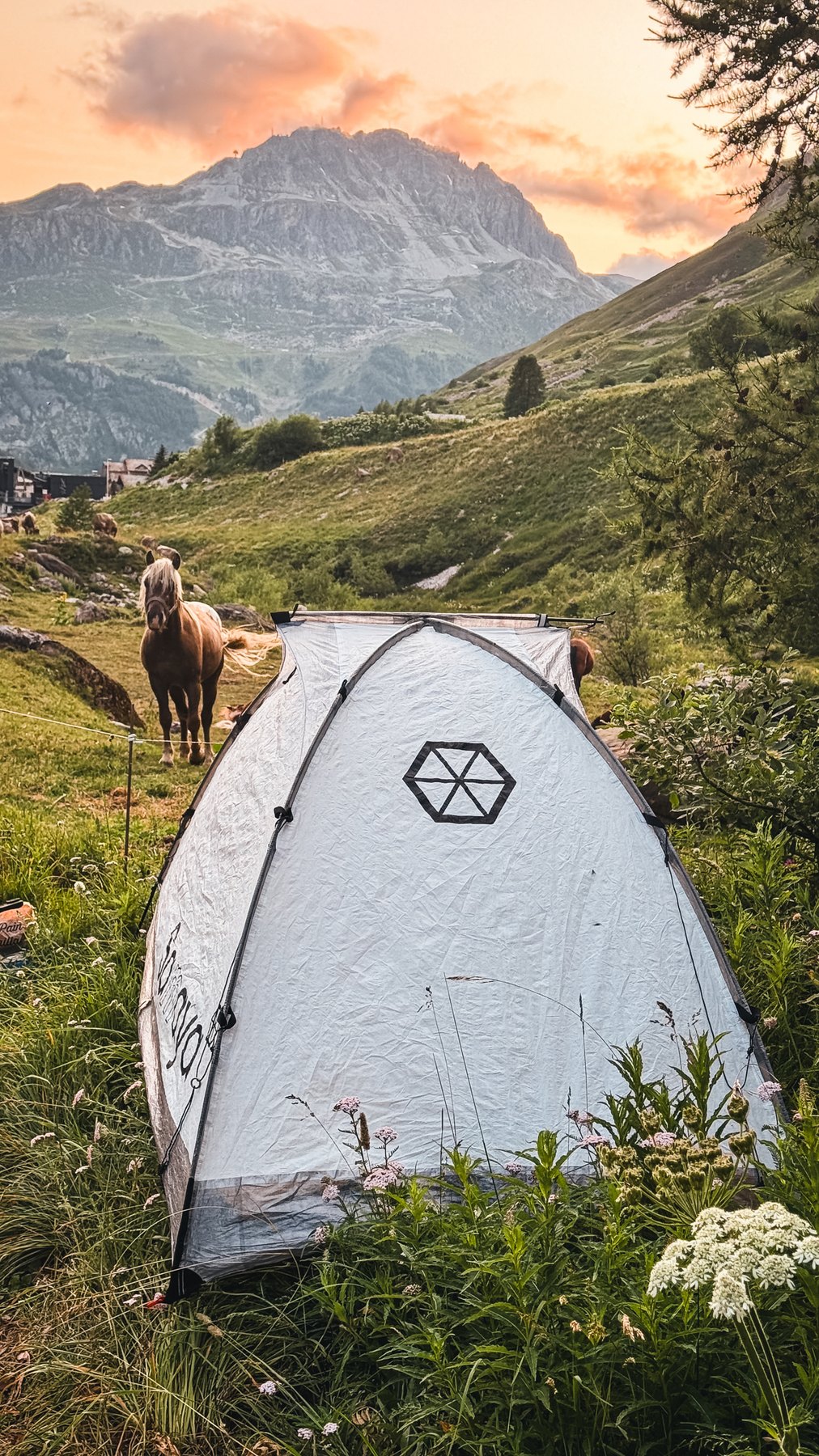
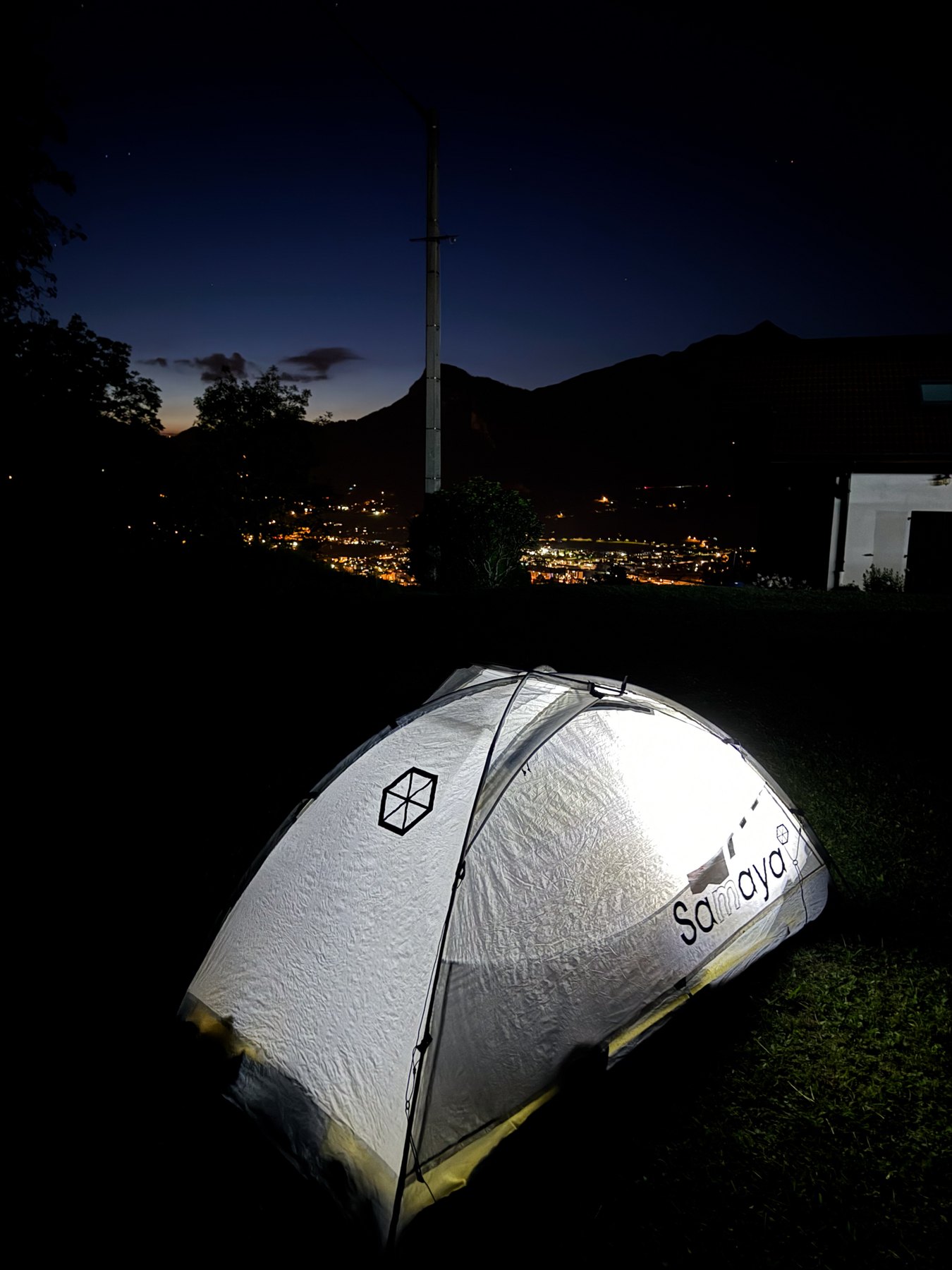
Bivouacs are the parentheses of this kind of adventure. They never last long, but they stay in the memory. You pitch the tent with gestures that become automatic. You spread out damp clothes. You eat whatever is left. You check the forecast. Sometimes you fall asleep before even realising where you are. Then, in the morning, everything starts again: pack, load, ride.

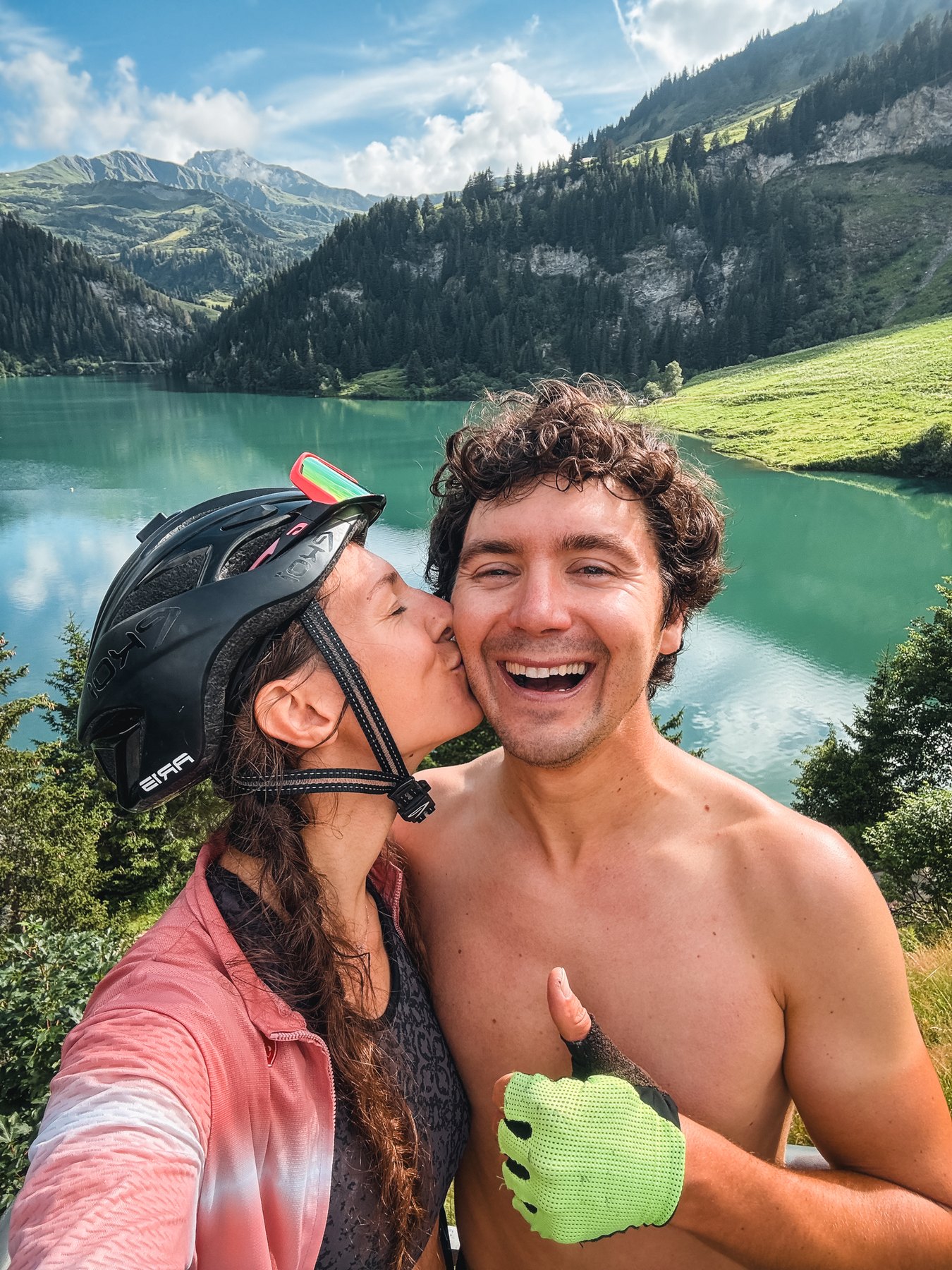
Those nights outside change the way you experience the traverse. The mountain is no longer only a backdrop. It becomes the place where you sleep, where you are cold, where you wake up and regain confidence. There are also unexpected rewards. A lake beautiful enough to make you want to jump in despite the fatigue. An improvised cold-water shower. A moment of laughter that erases a hard day.

Bivouac in the Alps at sunset

Weather is part of the journey

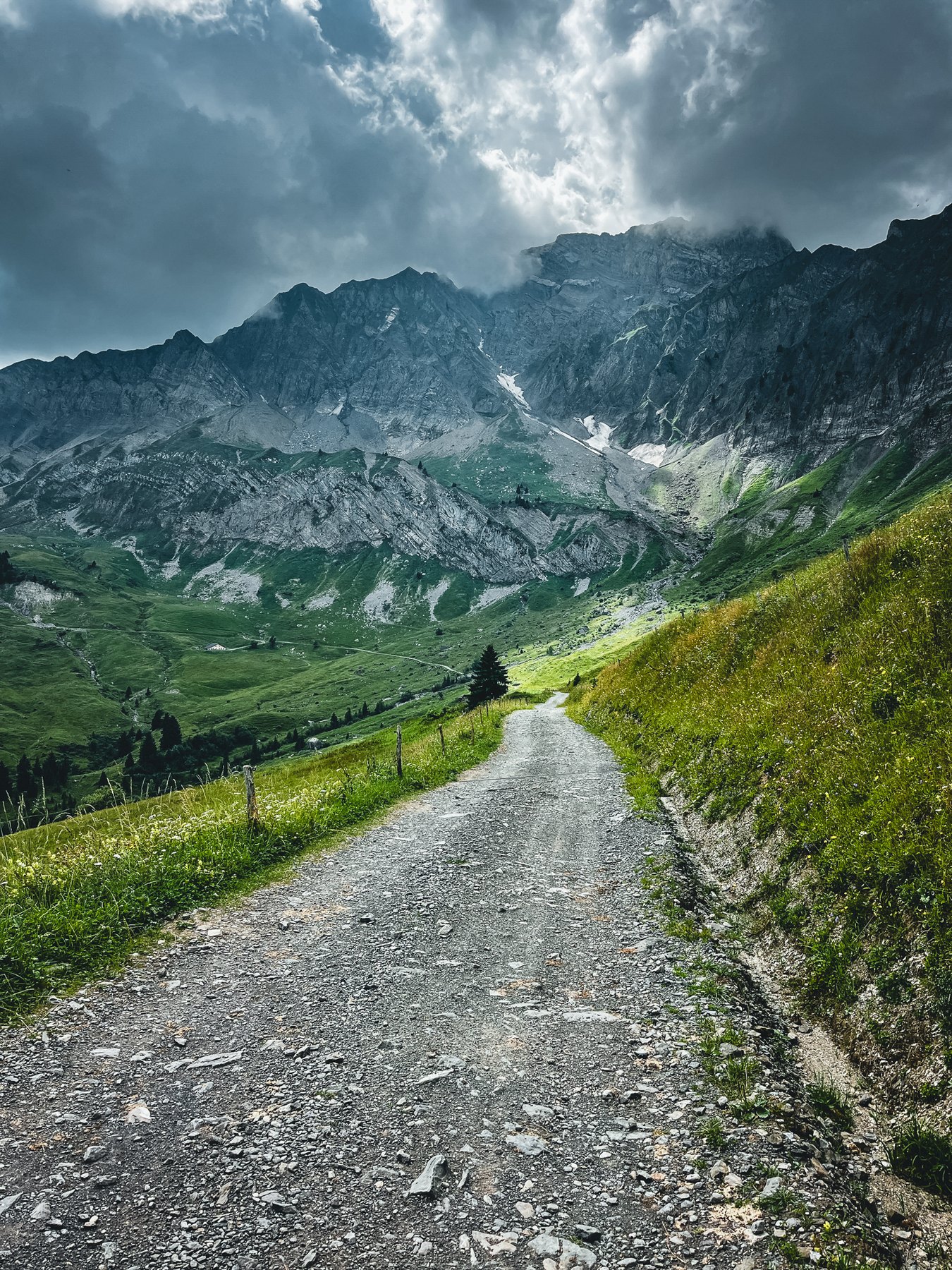
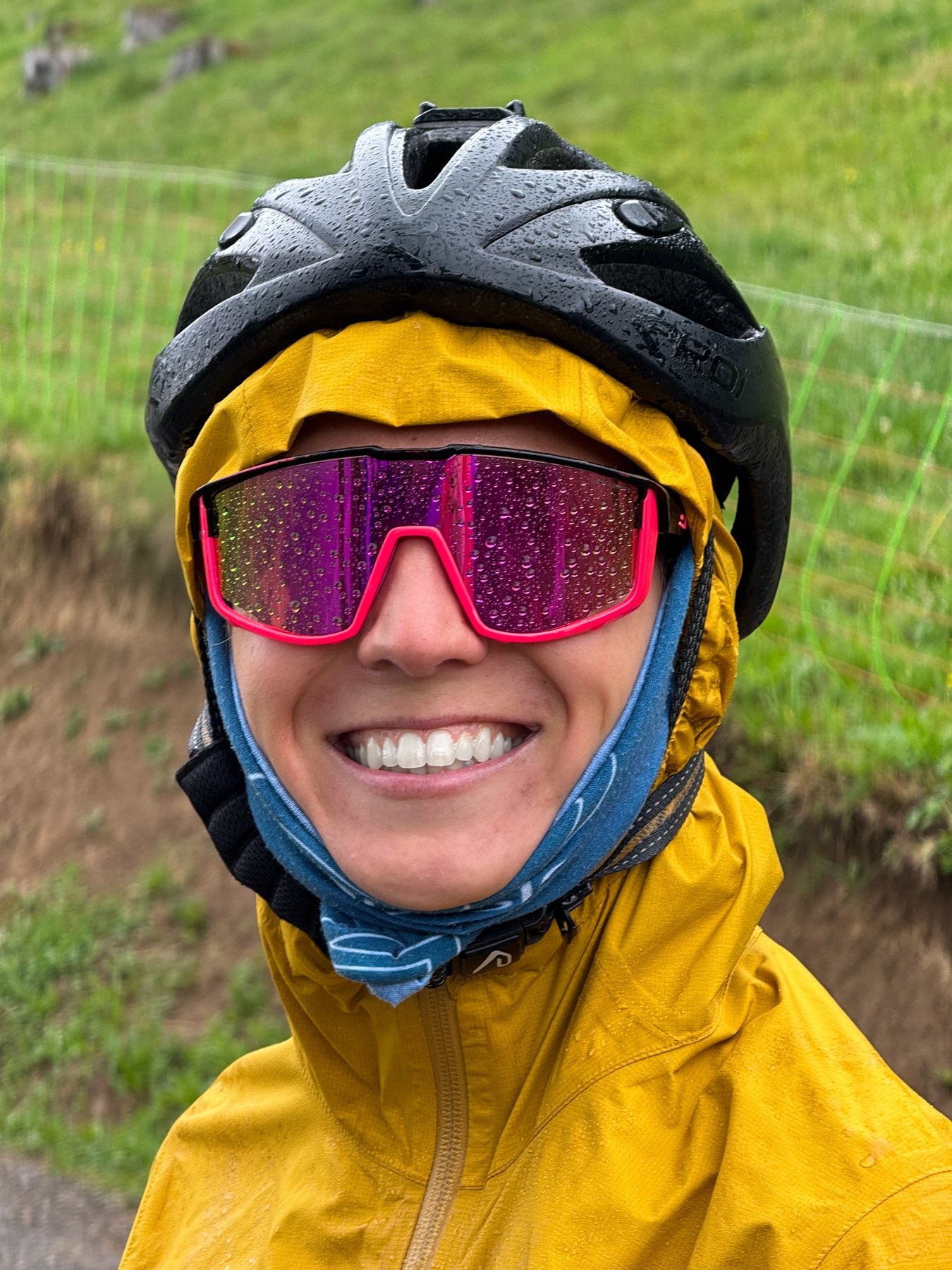
In the Alps, weather is never a detail. It decides the atmosphere, the pace and sometimes the mood. We had bright days, huge skies and perfect tracks. We also had rain, storms, cold and the kind of dampness that gets everywhere and turns every break into a negotiation with yourself.

These moments are not always the most beautiful on paper. But they often give the journey its texture. When the sun comes back, it no longer has the same value. When the road dries, it feels lighter. When you leave again after doubting, something shifts in your head.

Storm clouds over an alpine gravel road

Dropping towards the south

As we got closer to the Mediterranean, the atmosphere started to change. The mountains were still there, but the light became drier, the villages more southern, the smells different. We could feel the end before we could see it.

The last day had a strange energy: wanting to arrive, while also not wanting the journey to stop. After almost a week of thinking about nothing but moving forward, the idea of putting the bikes down felt almost unreal.

High-altitude road in the Southern Alps

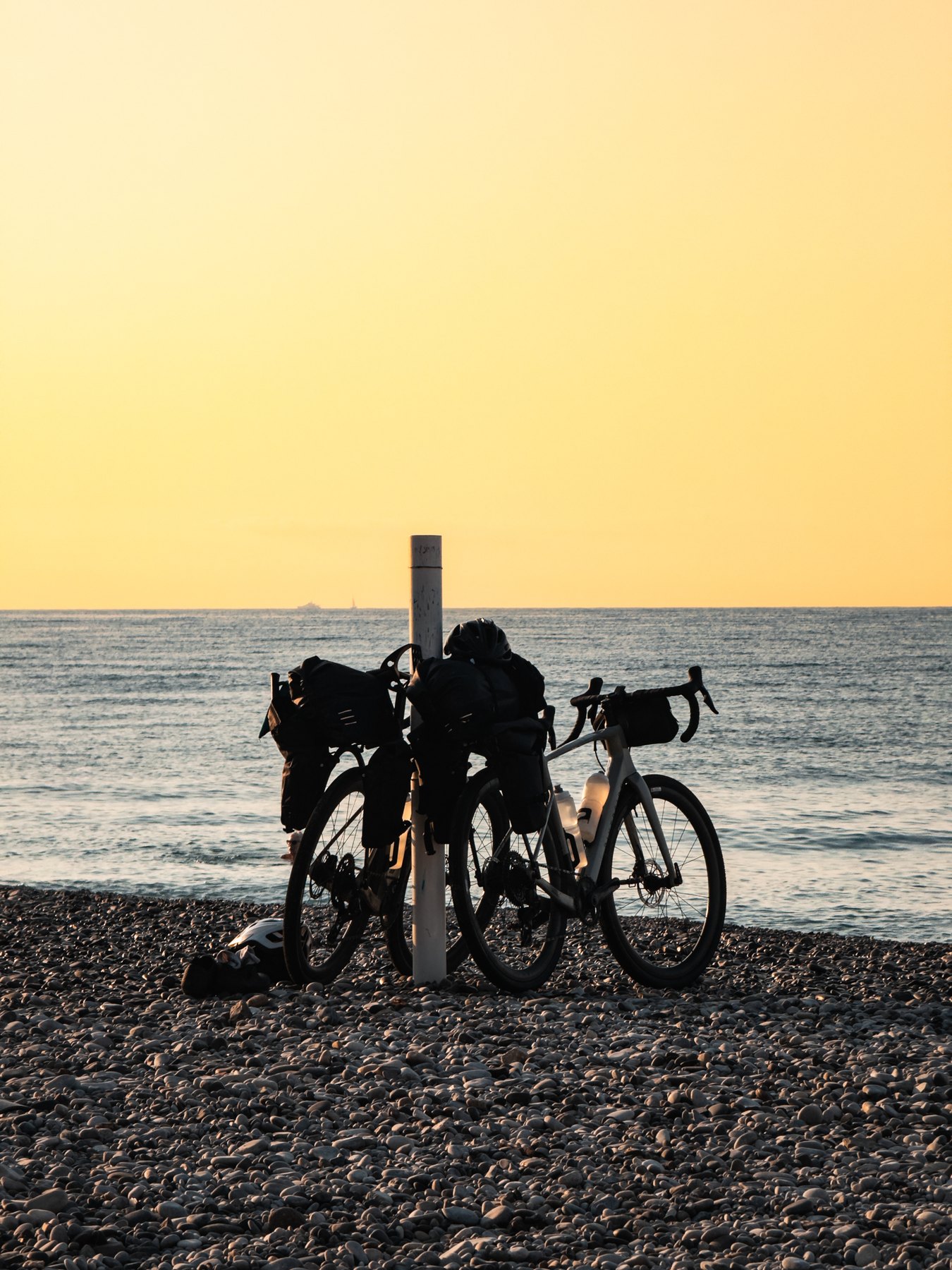
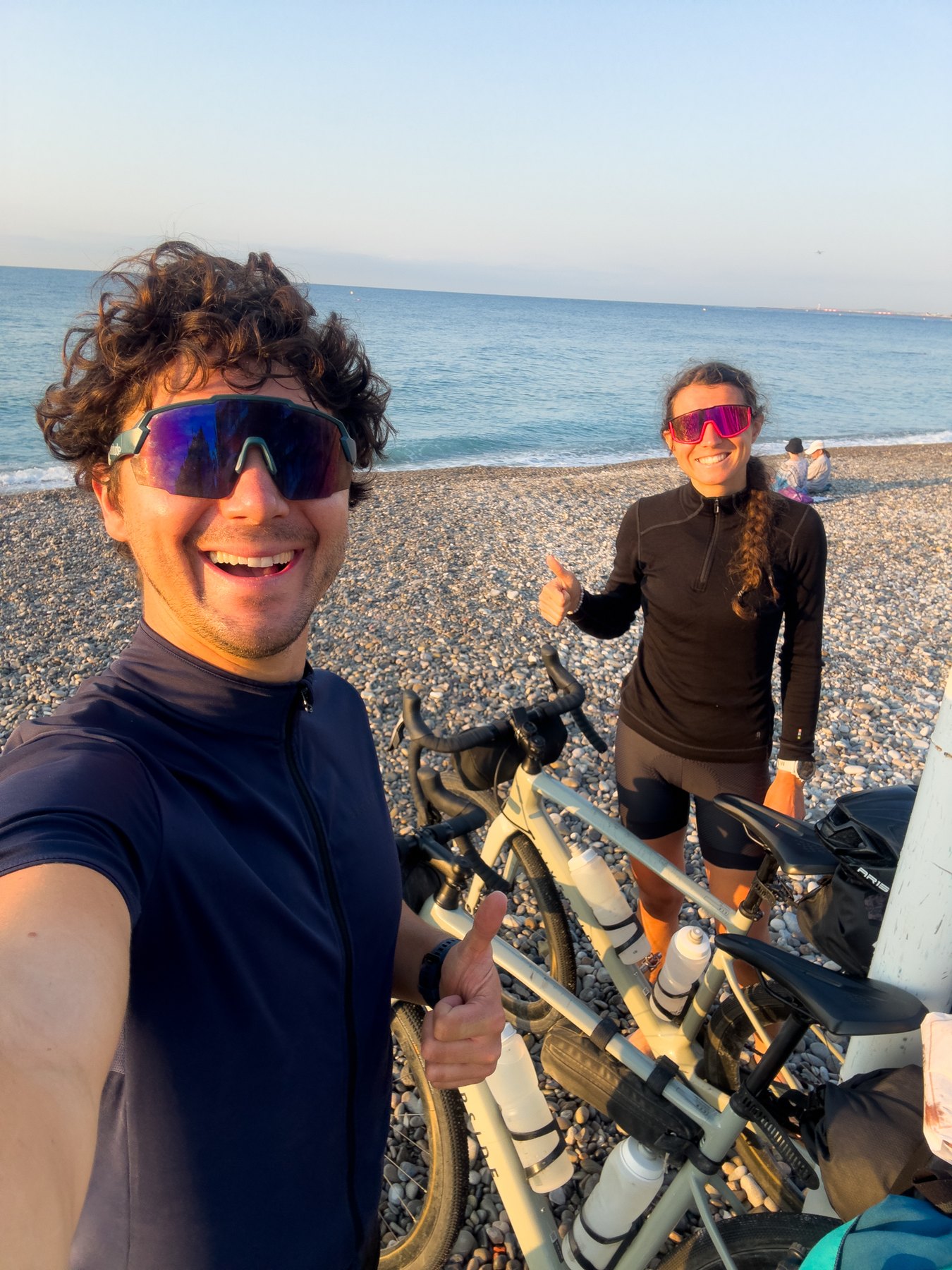
Then the sea appeared. After the passes, the stones, the bivouacs, the rain, the cold mornings and heavy legs, there was finally salt water, the light of Nice and the simple feeling of having crossed something bigger than us.

Loaded bikes by the Mediterranean in Nice

What this traverse taught us

This adventure was not a RISE documentary shoot in the strict sense. But it already carried a lot of what we are trying to build.

To tell stories about solutions, you have to accept long timeframes. To truly meet people, you need to know how to arrive slowly. To document a territory, you have to feel its distances, its gradients and its constraints. Cycling does that better than many other forms of travel. It keeps you humble. It makes every kilometre tangible.

This Alps traverse reminded us that adventure does not only belong to remote destinations. It can start here, in mountains we think we already know, as soon as we decide to cross them differently.

We thought we had come to cross a line on a map. In reality, we were learning what the mountains are willing to give when you take the time to cross them.

— Charlotte & Nico

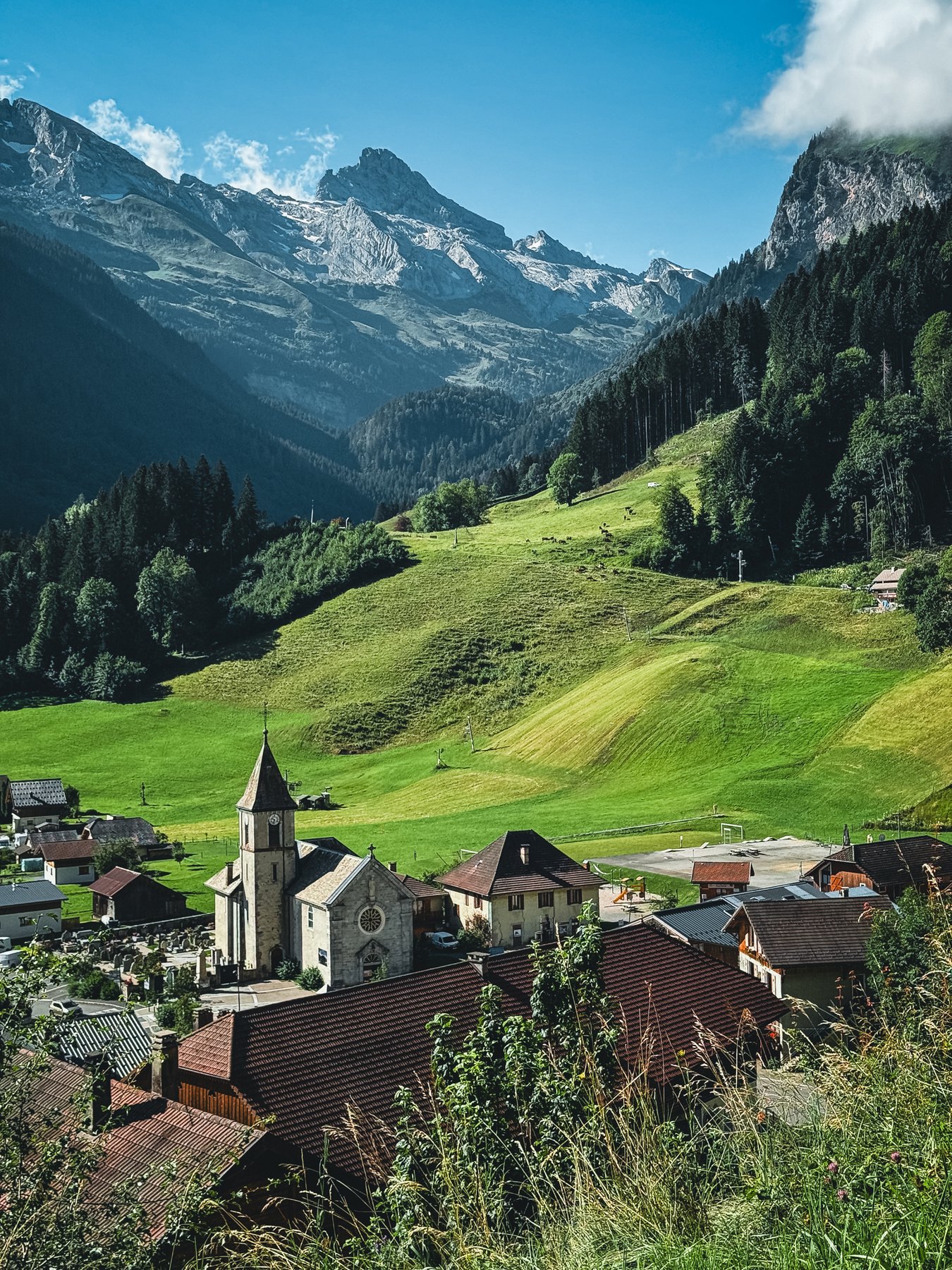
High-altitude lake and peaks on the Alps routeLakeside break during the Alps bikepacking traverseCold lake swim after a long gravel daySunshine climb on alpine gravel roadsAlpine village crossed on the way southHike-a-bike and pushing on technical sectionsTent at night during the Alps gravel traverseRainy day on the Alps gravel traverse
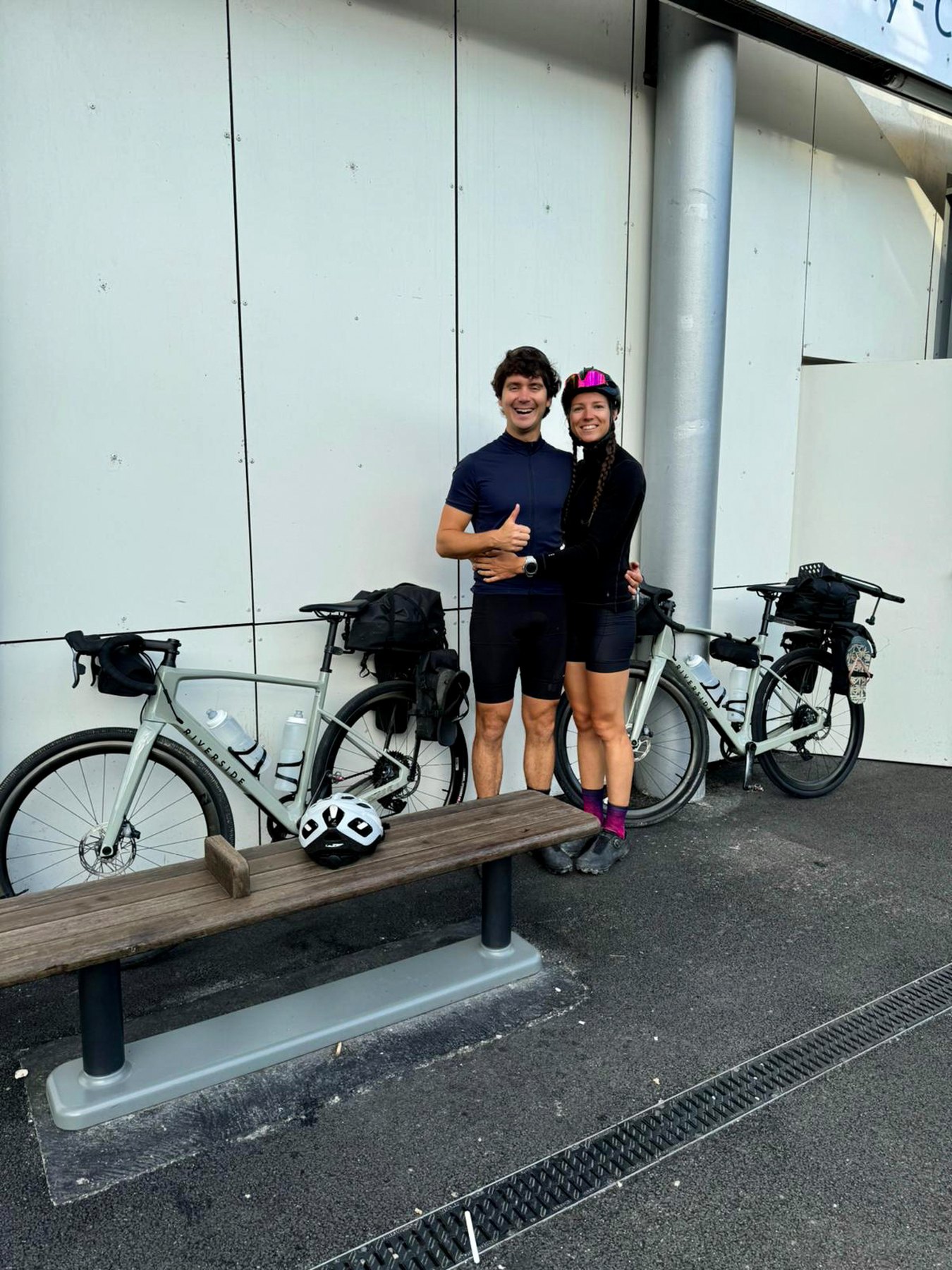
End of the traverse, loaded bikes at the train station

The setup

Loaded gravel bikes, partial autonomy

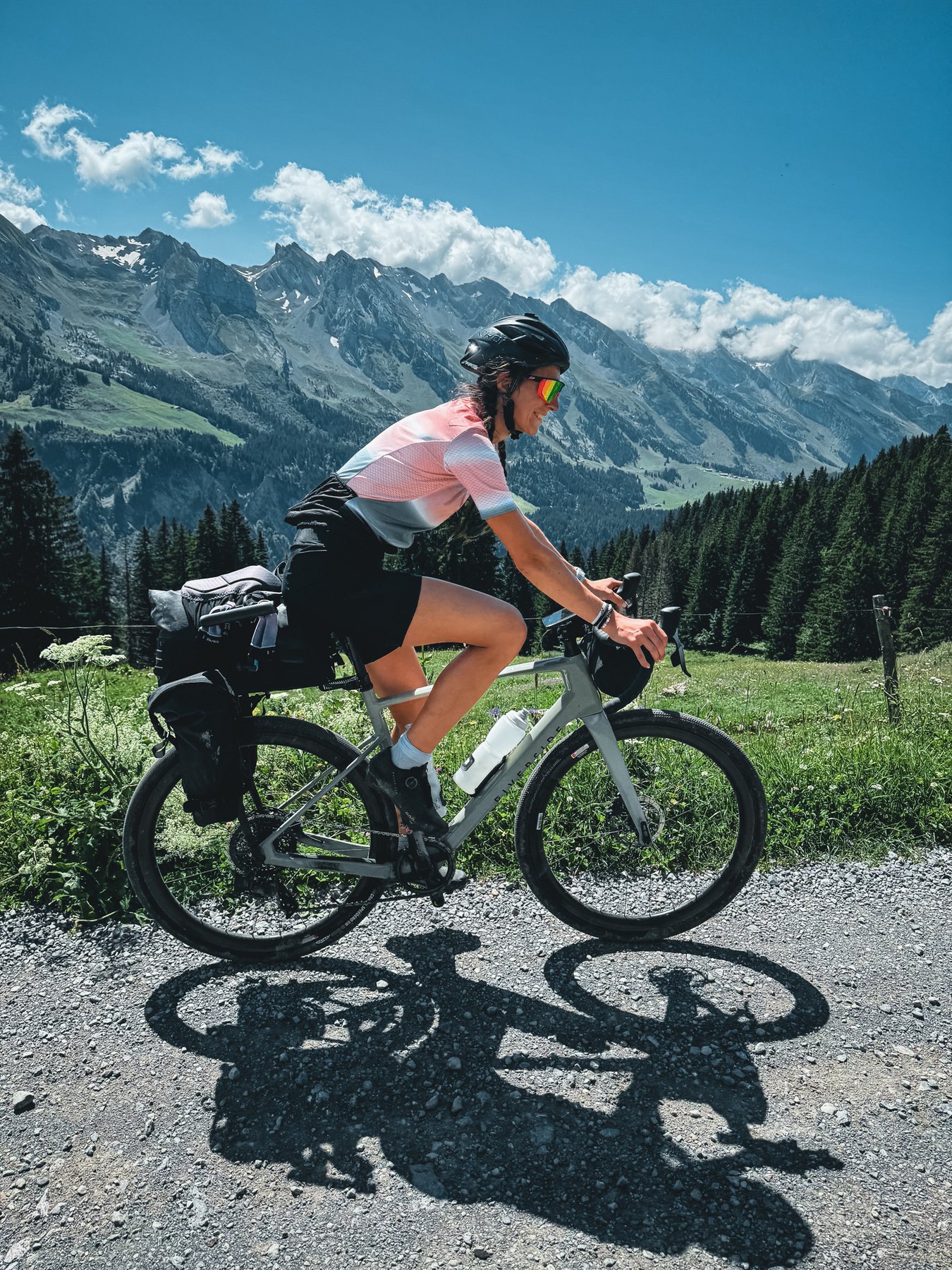
We rode loaded gravel bikes with bikepacking bags, carrying our bivouac kit, a light camera setup and only what we truly needed for six and a half days in the mountains. No support vehicle, no shuttle, just our legs, the tracks and the weather. On a route like the Route des Grandes Alpes in its gravel version, every gram counts — and the right balance between comfort, autonomy and lightness becomes part of the adventure itself.

When we got on the train with the bikes, there was fatigue, of course. But more than anything, there was that familiar desire: to leave again. Not to go faster. Not to tick off a route. To leave again because those days outside had placed us exactly where we wanted to be: on the road, together, with a camera, loaded bikes and the desire to understand the world by crossing it slowly.

Follow the expedition

New stories, routes and behind-the-scenes moments are added as the journey unfolds.