Caravan Roads in Morocco

Expedition — Morocco — November 2025

Caravan Roads in Morocco

2,000 km. 28,500 m of climbing. Morocco from south to north, by bike, following ancient caravan routes.

Distance

2,000 km

Elevation gain

28,500 m+

Season

November

Reading time

12 min

After three intense years building RISE — Our World Heritage, we needed to slow down. With RISE, we use documentary filmmaking as a tool to make concrete solutions visible, and more importantly, understandable. This time, the idea came naturally: scout a future story by bike, bringing slowness back into a life that often moves too fast.

That is how we ended up on the Caravan Roads. A legendary route crossing Morocco from south to north, looking for as many tracks, remote valleys and old trading passages as possible. It became a journey through time, but also a real field test for our bodies, our bikes, our filming setup and the way we travel.
The journey

The route at a glance

Start
Agadir, then Tiznit to join the main route.
Finish
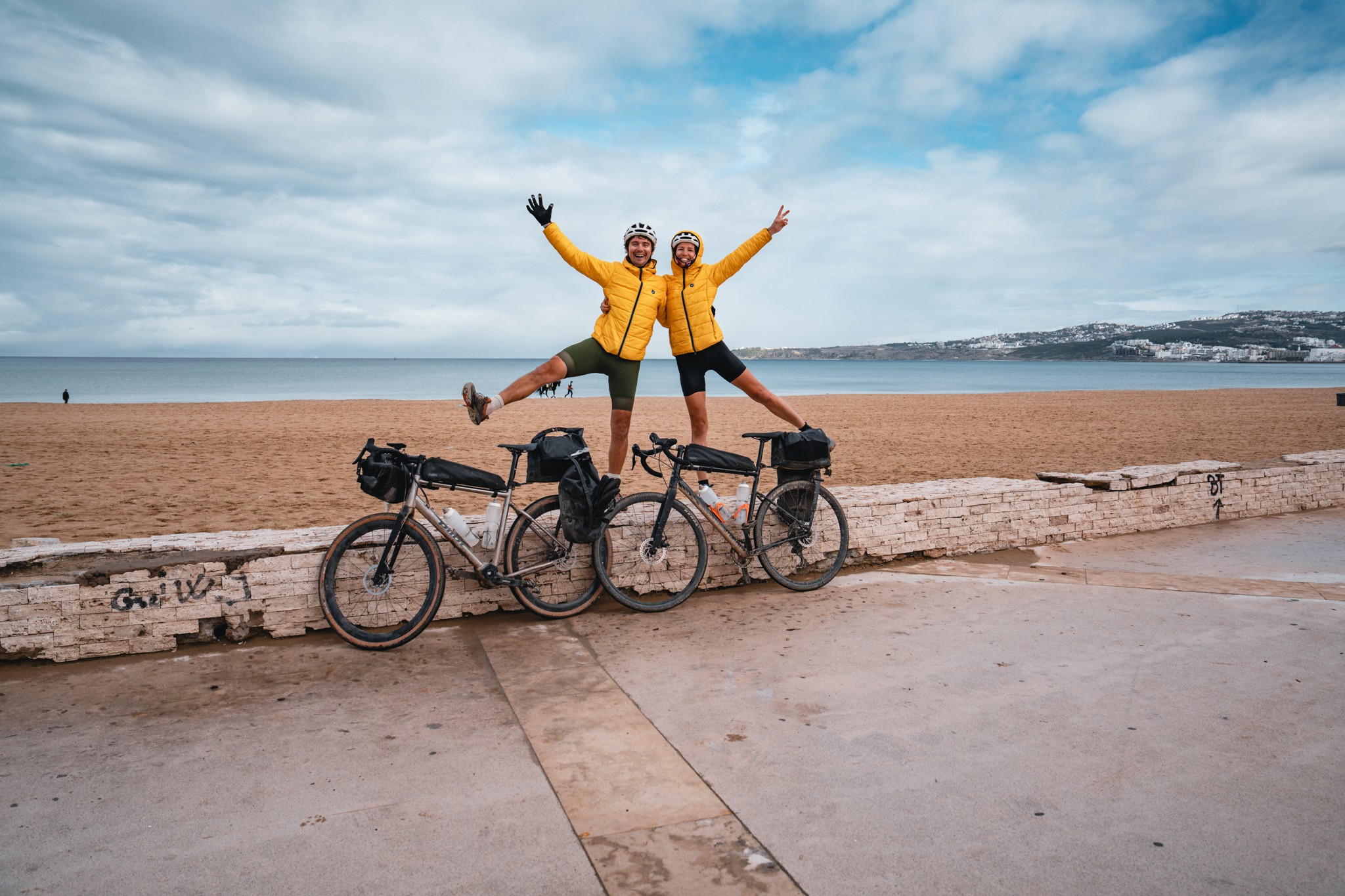
Tangier, facing the Strait of Gibraltar.
Distance
Around 2,000 km.
Elevation gain
Around 28,500 m.
Landscapes
Anti-Atlas, Sahara, High Atlas, agricultural valleys, northern medinas.
Main challenges
Heat, water, sand, rocky tracks, cold at altitude, mechanical issues.

Route map

Follow the line, south to north

The film

Watch the full Morocco bikepacking film

Starting the bikepacking journey near the Atlantic coast

Leaving the coast, entering the mineral world

It was early November, but southern Morocco was still hot. The first pedal strokes from Agadir quickly reminded us that adventures rarely start exactly as planned. It was 34°C, shade was almost nonexistent, water became the main topic immediately and our bodies needed time to adapt.

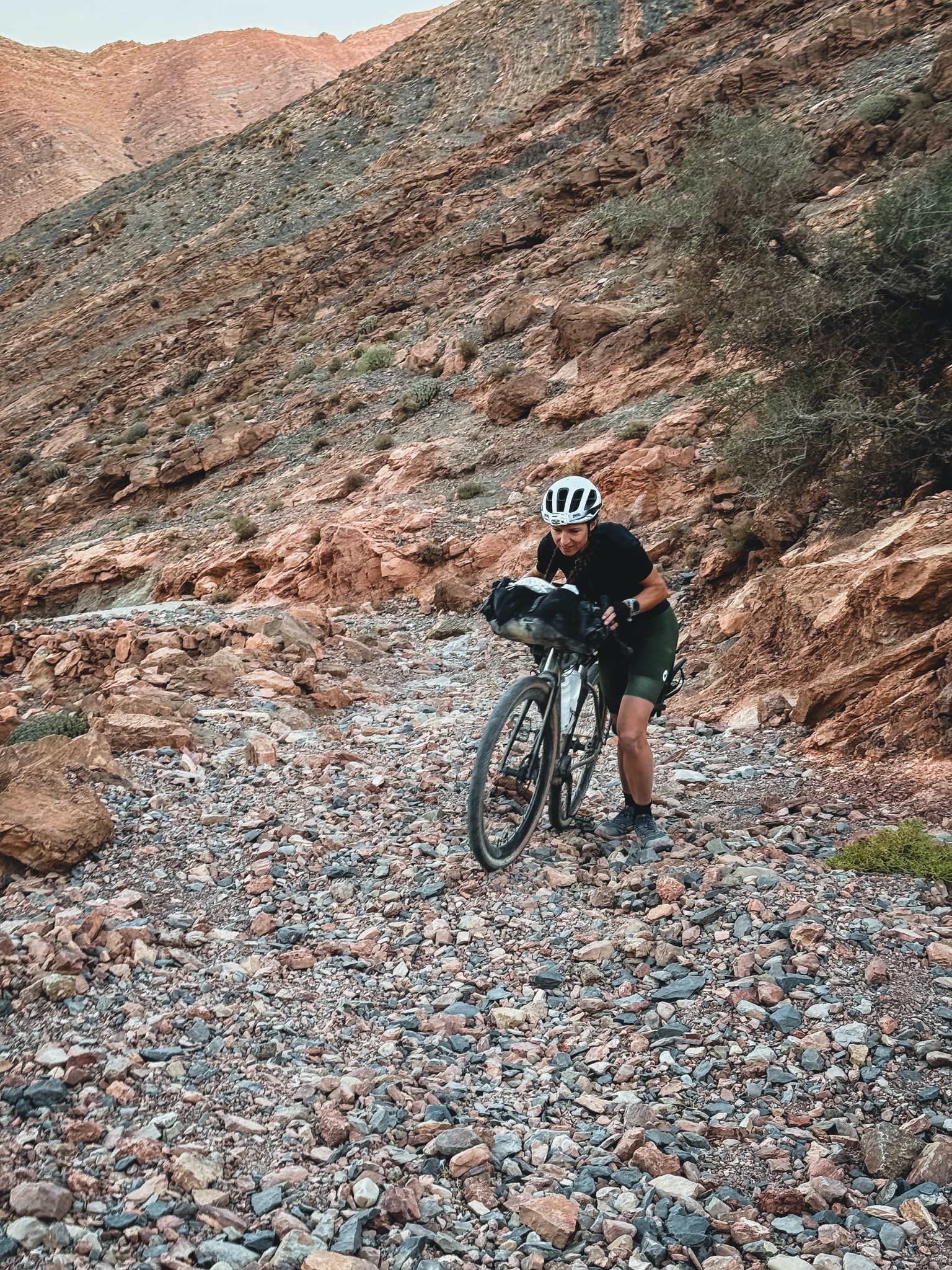
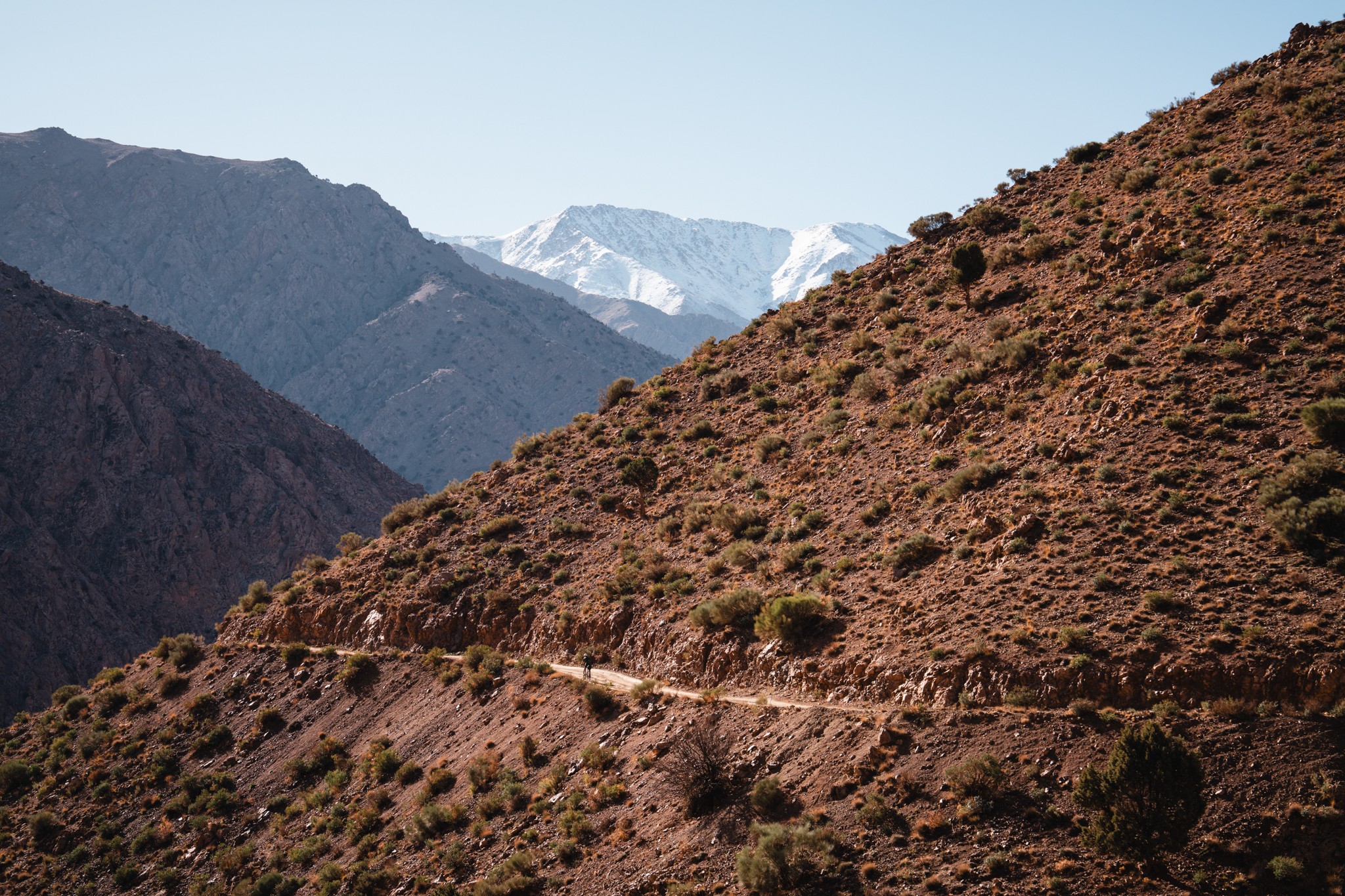
From Tiznit, the landscapes started to change. We slowly left the coast behind and entered a drier, quieter, more mineral Morocco. These mountains felt nothing like the Northern Alps where we come from. At times, it felt like riding through a desert with relief everywhere around us. The tracks were beautiful, isolated and often technical. We thought we would move fast. Instead, we had to learn a different rhythm.

Remote track in the Anti-Atlas

During the day, we met very few people. It created an immense feeling of freedom, but also a strong sense of responsibility. Resupply points were rare and water was not always drinkable. When we knew we would not have access to water for a long time, we carried up to 10 liters each. On climbs above 15 percent, that extra weight was impossible to ignore. At the top, every sip felt like a small victory.

Hospitality as a compass

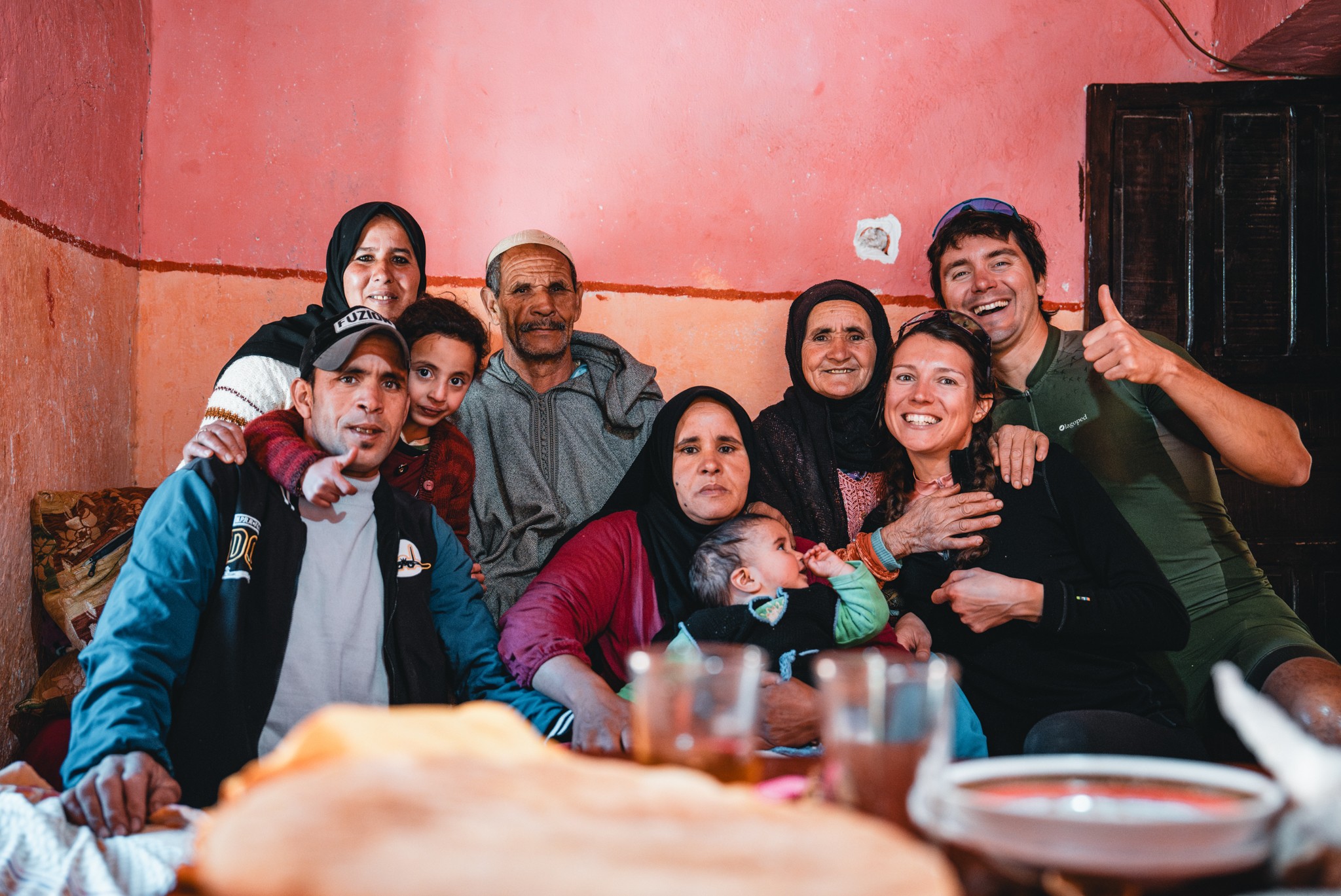
Every now and then, in the middle of those wide open spaces, we crossed a village. Each time, the welcome stayed with us. After hours, sometimes days, without reaching any real settlement, these encounters meant a lot.

One evening, after a stage of 120 km and 2,400 m of climbing almost entirely on mountain bike tracks, we arrived completely exhausted. It was cold, raining, night was falling and the only hotel nearby was full. We were also told that camping in the area was forbidden. The suggested solution was not exactly what we had dreamed of: pitching the tent in front of the police station.

So we went for something to eat, feeling a little defeated. During the meal, a man came to see us. He told us to follow him, that he had found a place for us to sleep. He was the head of the village. He opened the cultural hall for the night. We were warm, sheltered, and even had access to a bit of water to wash. In those moments, comfort becomes very simple. A roof. A dry floor. A smile. And an immense feeling of gratitude.

Sharing a meal with a family in Morocco

Foum Zguid, the Sahara and the sand

We then rode toward Foum Zguid, the starting point of what would become the hardest part of the journey: crossing the Sahara by bike.

We thought we had already experienced the highest level of technical riding. We were wrong. On a map, 150 km can look like a big but possible day. On the ground, it was something else entirely. The beginning of the crossing was brutal. Huge rocks made riding almost impossible. We pushed the bikes for hours, sometimes feeling like we were barely moving. That first section lasted around 50 km.

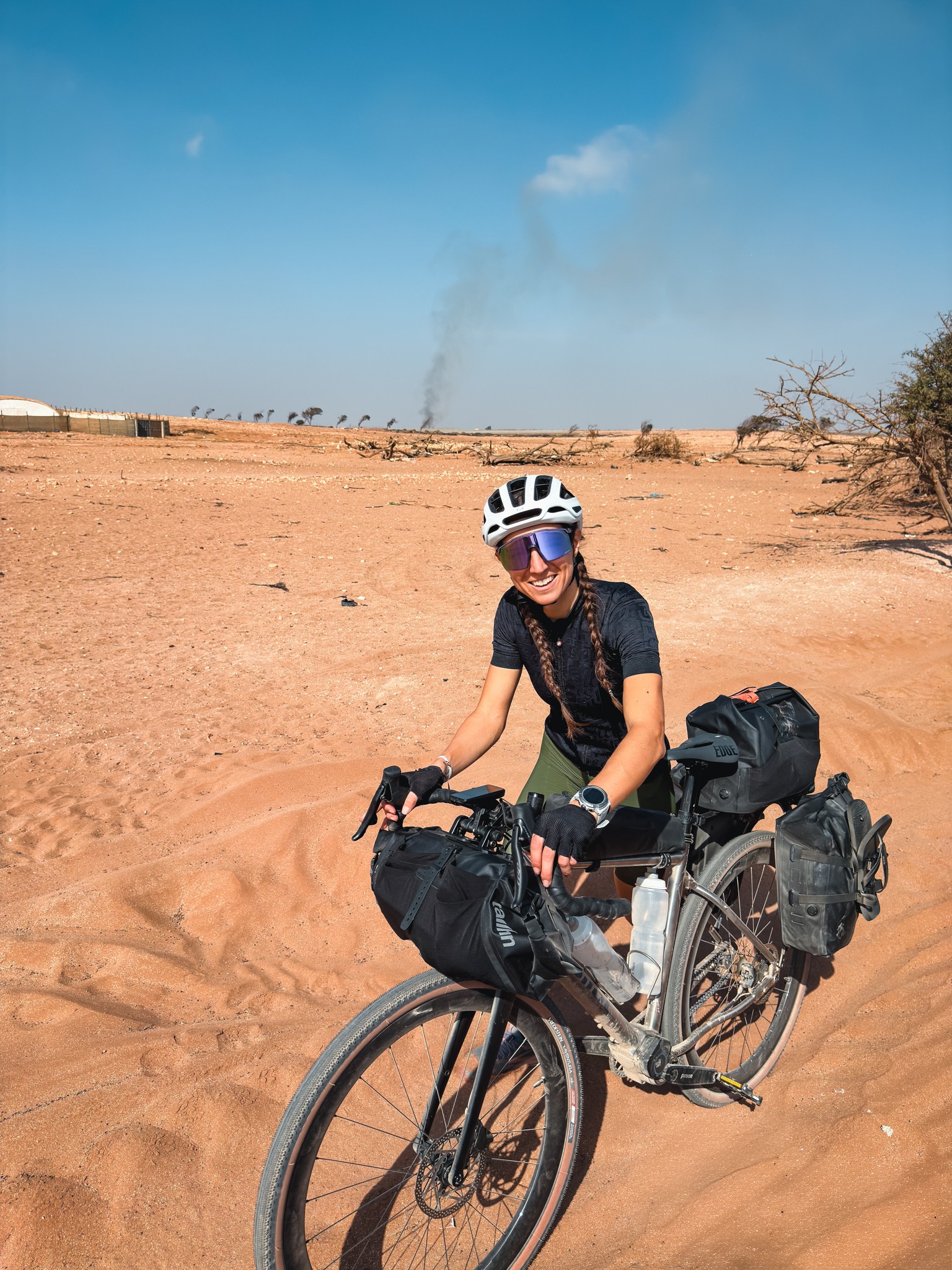
Then, suddenly, the terrain changed. For about 20 km, we rode on hard sand, fast and smooth, with the desert stretching endlessly around us. It was one of those moments that erases part of the fatigue. We felt tiny, lucky and fully alive.

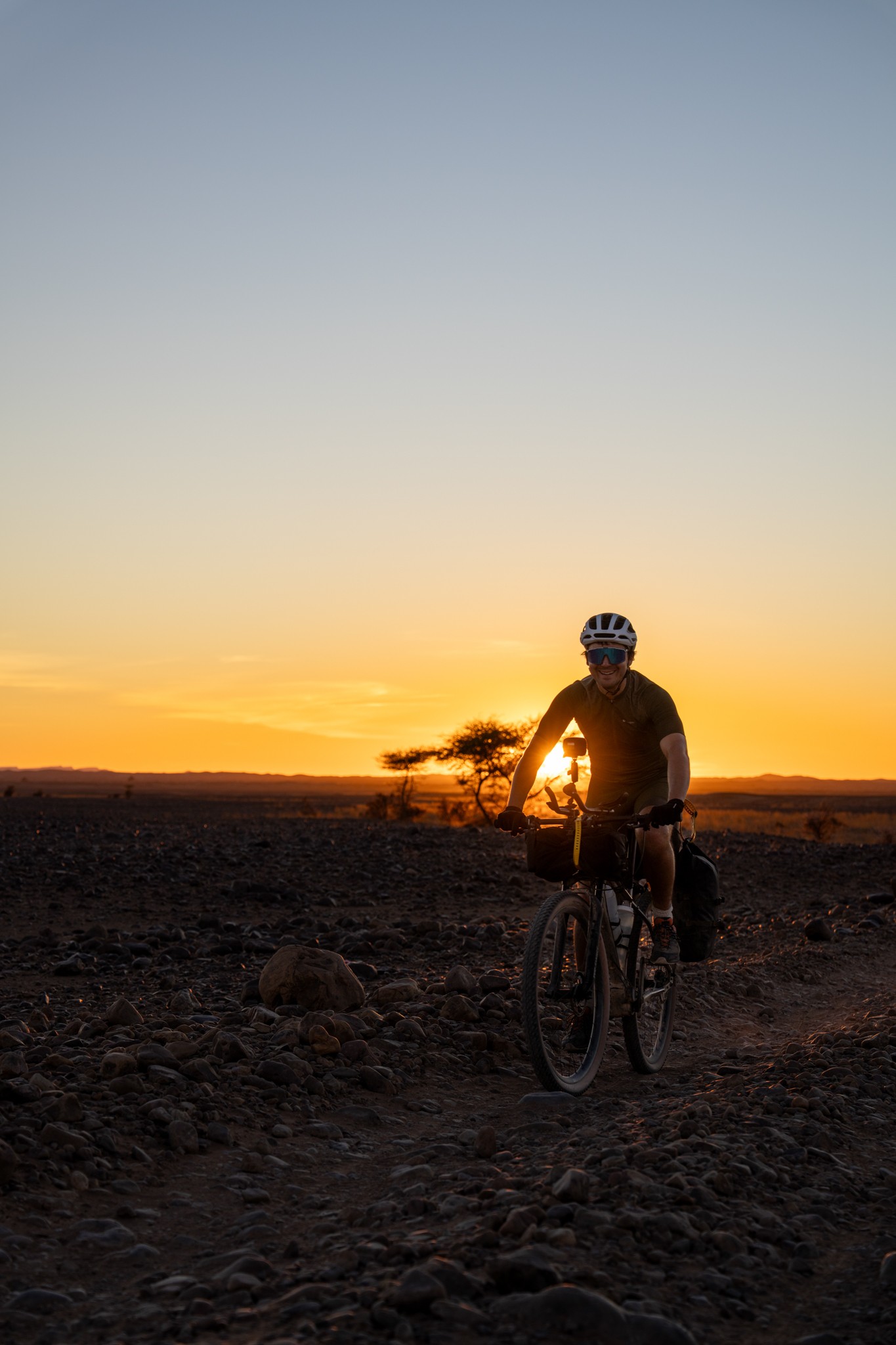
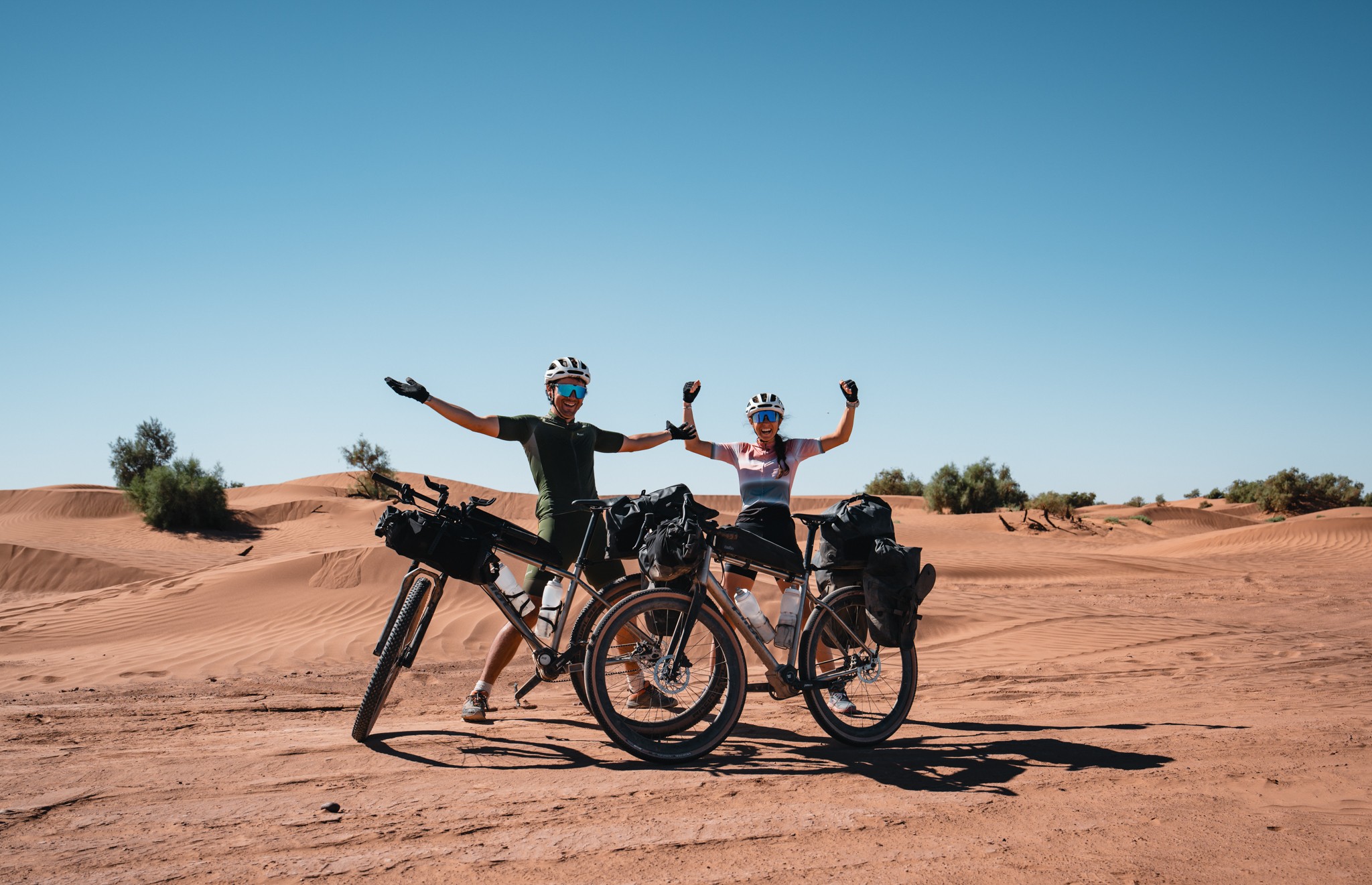
Loaded bikes at sunset in the Sahara

But soon the dunes came closer. The tires started sinking. Even putting the bike down became tiring. The day was moving on and we understood that we would never reach the other side before nightfall. So be it. The desert gave us a breathtaking sunset and even a group of antelopes crossing ahead of us. The difficulty was still there, but the beauty made it almost unreal.

The next day, we finally completed the crossing. We were starving, exhausted and happy. If we had to do it again, we would. Not because it was easy. Precisely because it was not. Crossing the desert by bike is one of those experiences that shifts something inside you.

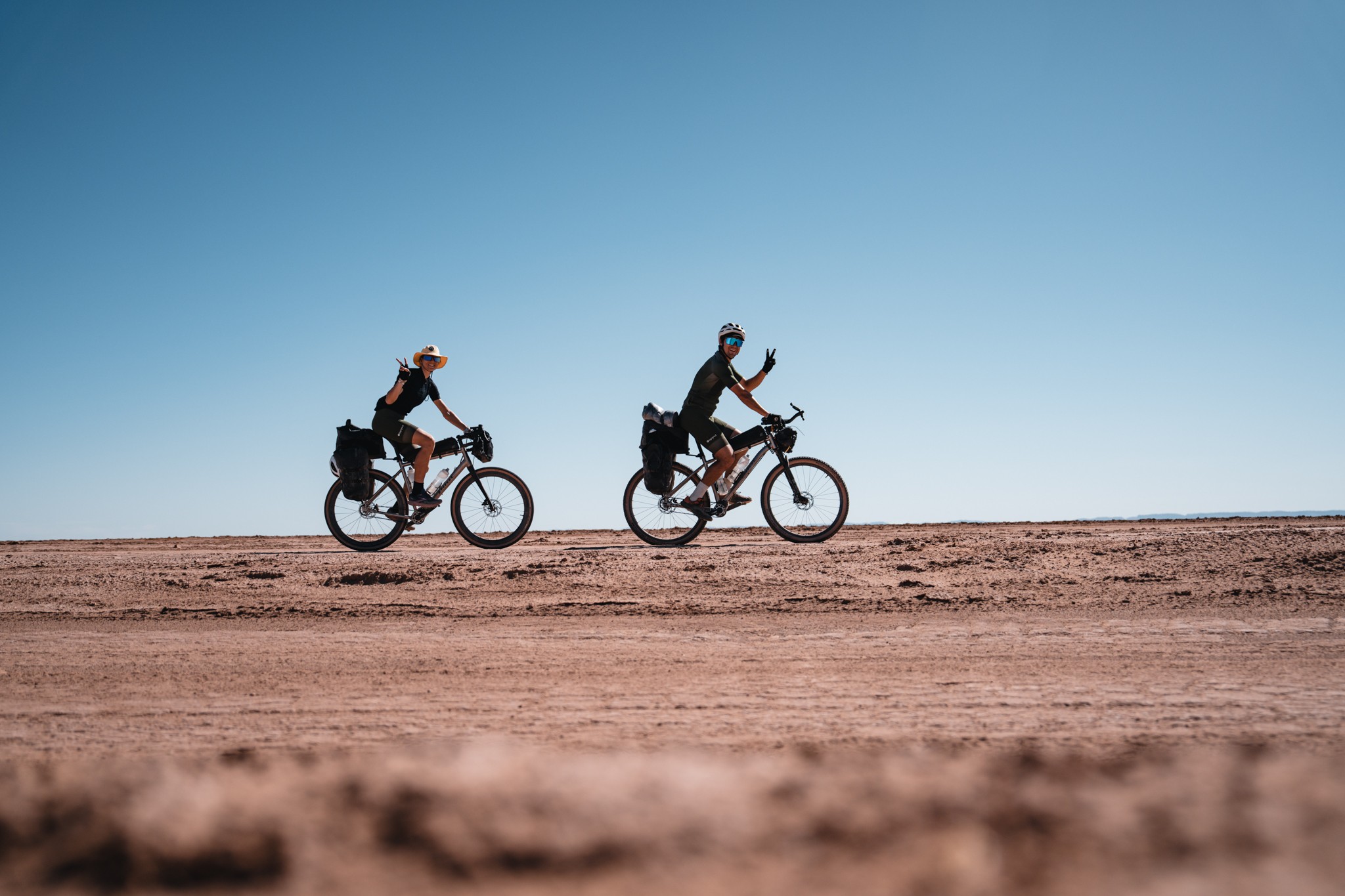
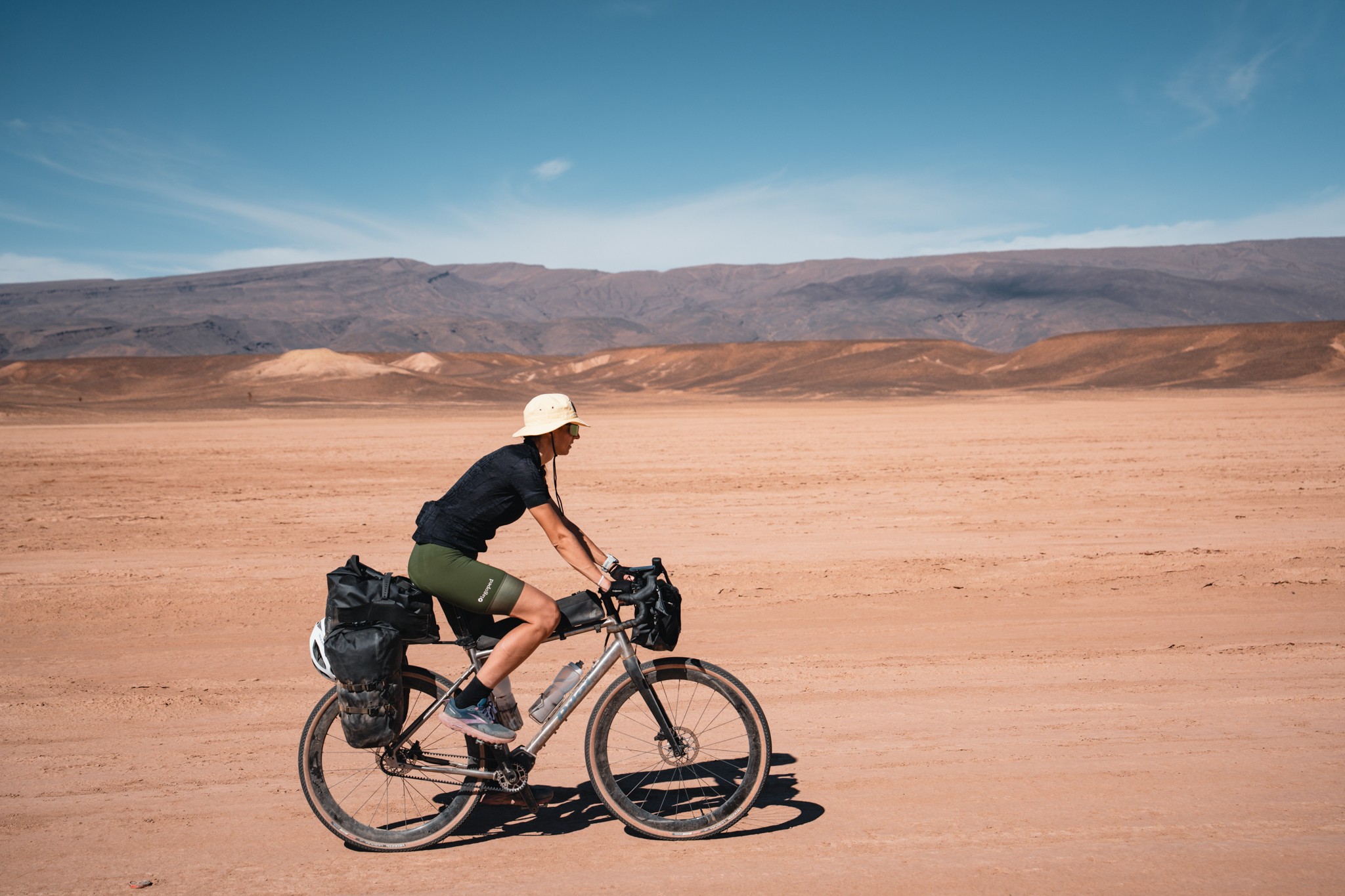
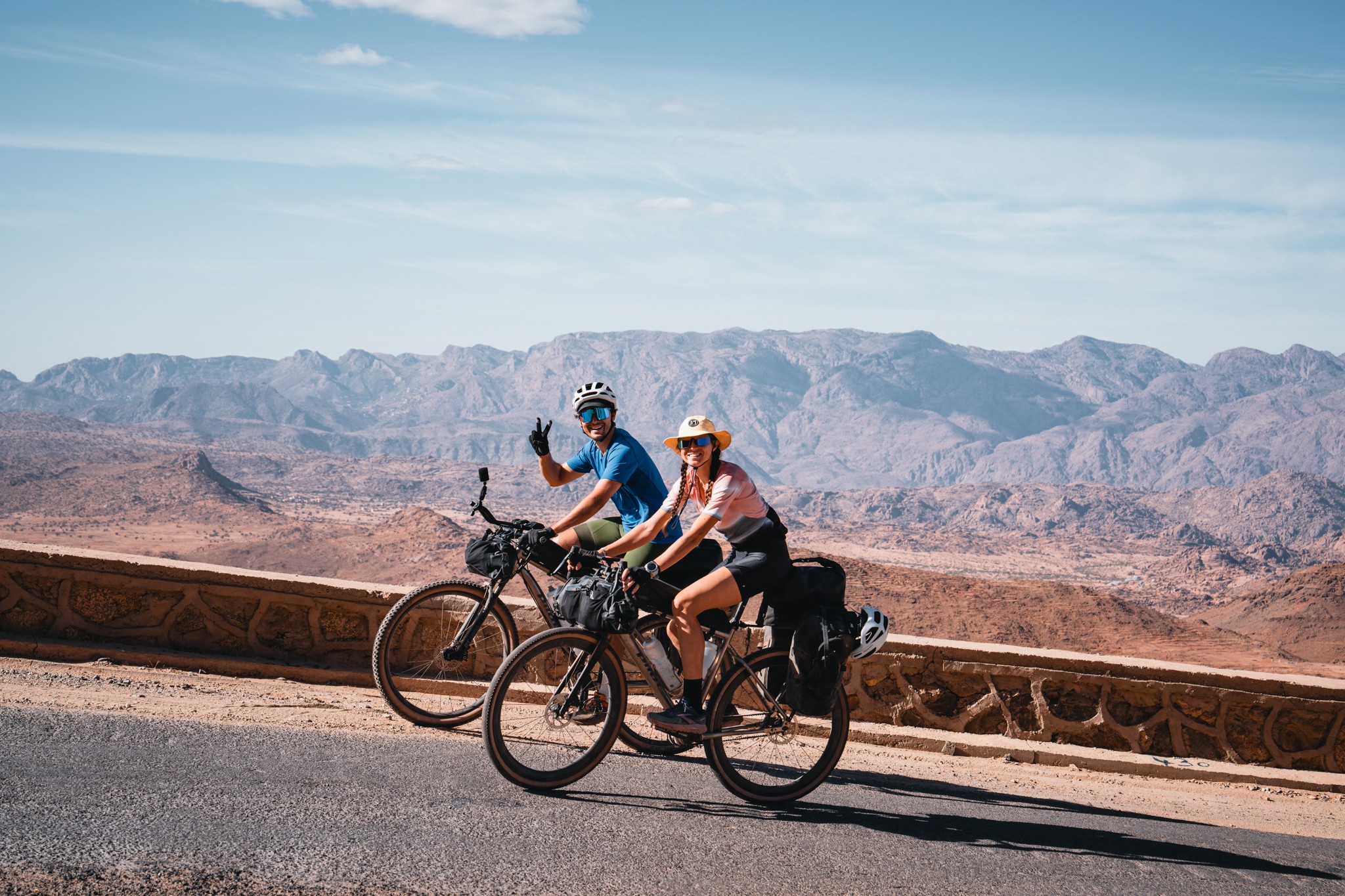
Riding across the desert in Morocco

Mohamed, the camels and a memorable fall

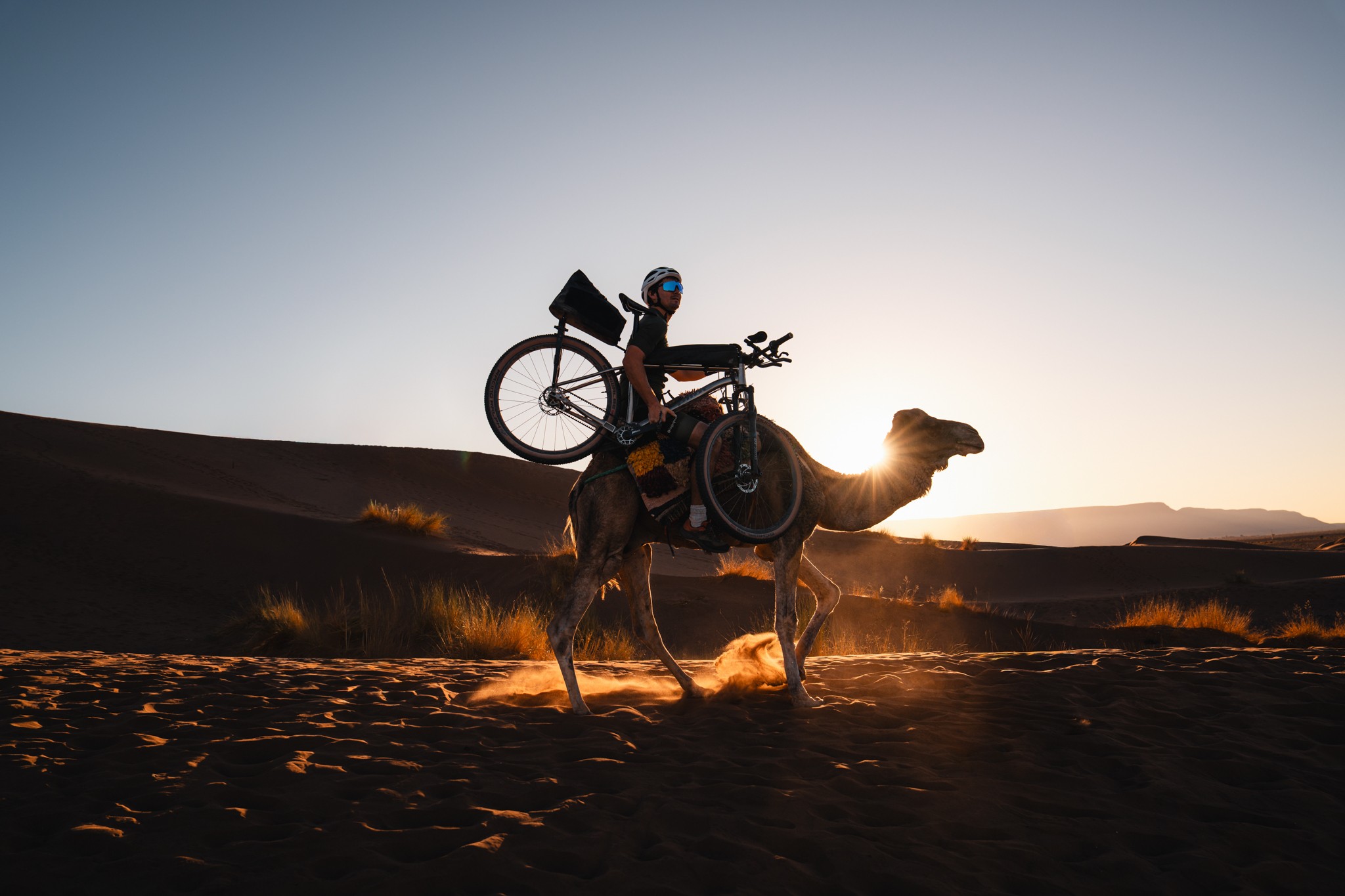
The following evening, we met Mohamed. He wanted to take us for a camel ride. We explained that we had already tried it when we were younger and did not really have time. He insisted, then simply asked if we could take a few photos for his website. We had spent a lovely moment together, so we accepted.

The next morning, there we were, sitting on camels. The experience did not last long. Nico's camel suddenly decided to speed up, which ended in a proper fall. Luckily, it was more fear than harm, just a few bruises and a memory that will keep making us laugh for a long time.

After that, we got back on the bikes. To give our bodies and minds a break, we chose a more road-based day. But in Morocco, even a day that is supposed to be easy can change its face. The wind joined in, head-on, constant and exhausting. We were barely moving. Mentally, it can be as hard as climbing.

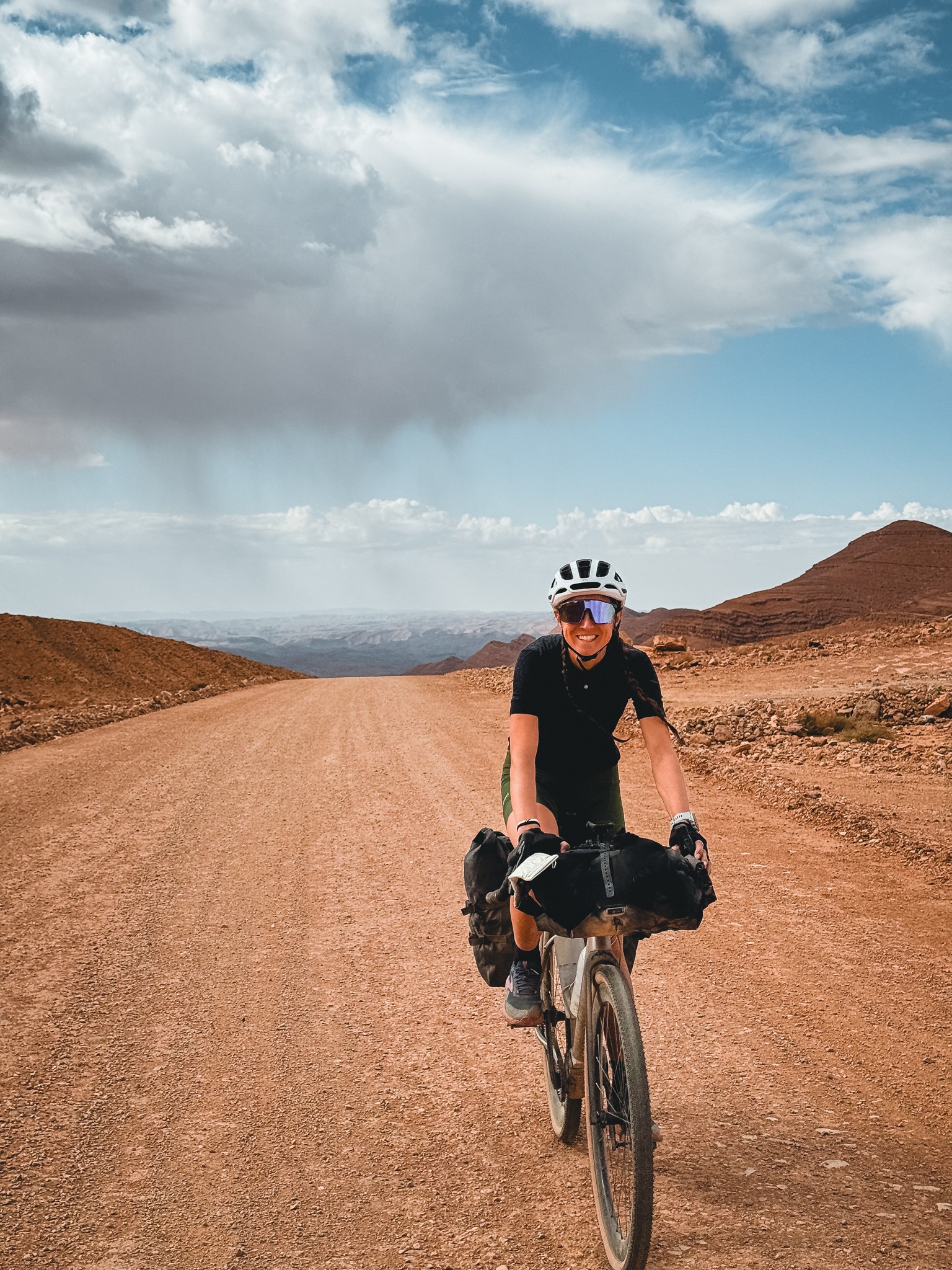
Long desert track in Morocco

From southern heat to Atlas cold

Little by little, we left the south behind. The landscapes changed completely. The desert gave way to greener valleys, more villages, fields, apple trees and fig trees. We crossed less isolated areas and could stop more often to talk, ask questions, understand agricultural practices and prepare our scouting work for RISE.

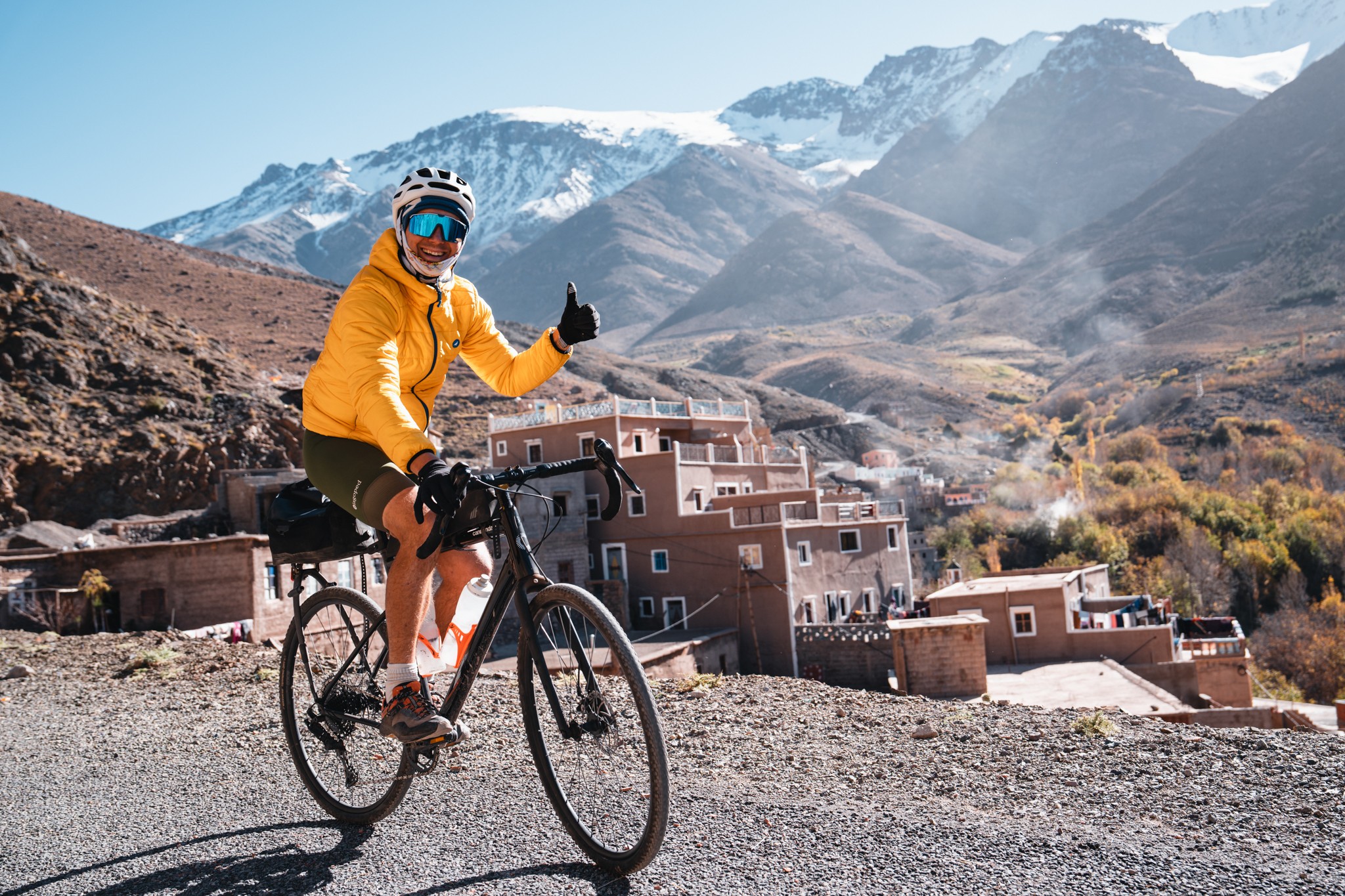
Cycling toward the Atlas mountains

Then came the Atlas. We crossed a pass at around 3,000 m of elevation. Because mechanical issues and slower-than-expected days had cost us time, we had to keep moving. One day reached 150 km. That evening, we ate a huge plate of pasta knowing that the next day would be long again.

In the morning, it was -2°C. The contrast with the 34°C heat of the south was brutal. The first hours were difficult. We used freezer bags to insulate our feet and hands. After three hours, the body finally warmed up. And then the landscapes took over. Mountains, light, villages, winding roads: everything felt bigger.

We also met another group of bike travelers and were invited to eat with a local family. We did not really share a language, but that moment became one of our favorite memories of the trip. This is exactly what we love about cycling: it slows you down enough for encounters to happen.

Road and mountains in the Atlas

Mechanical issues are part of the story

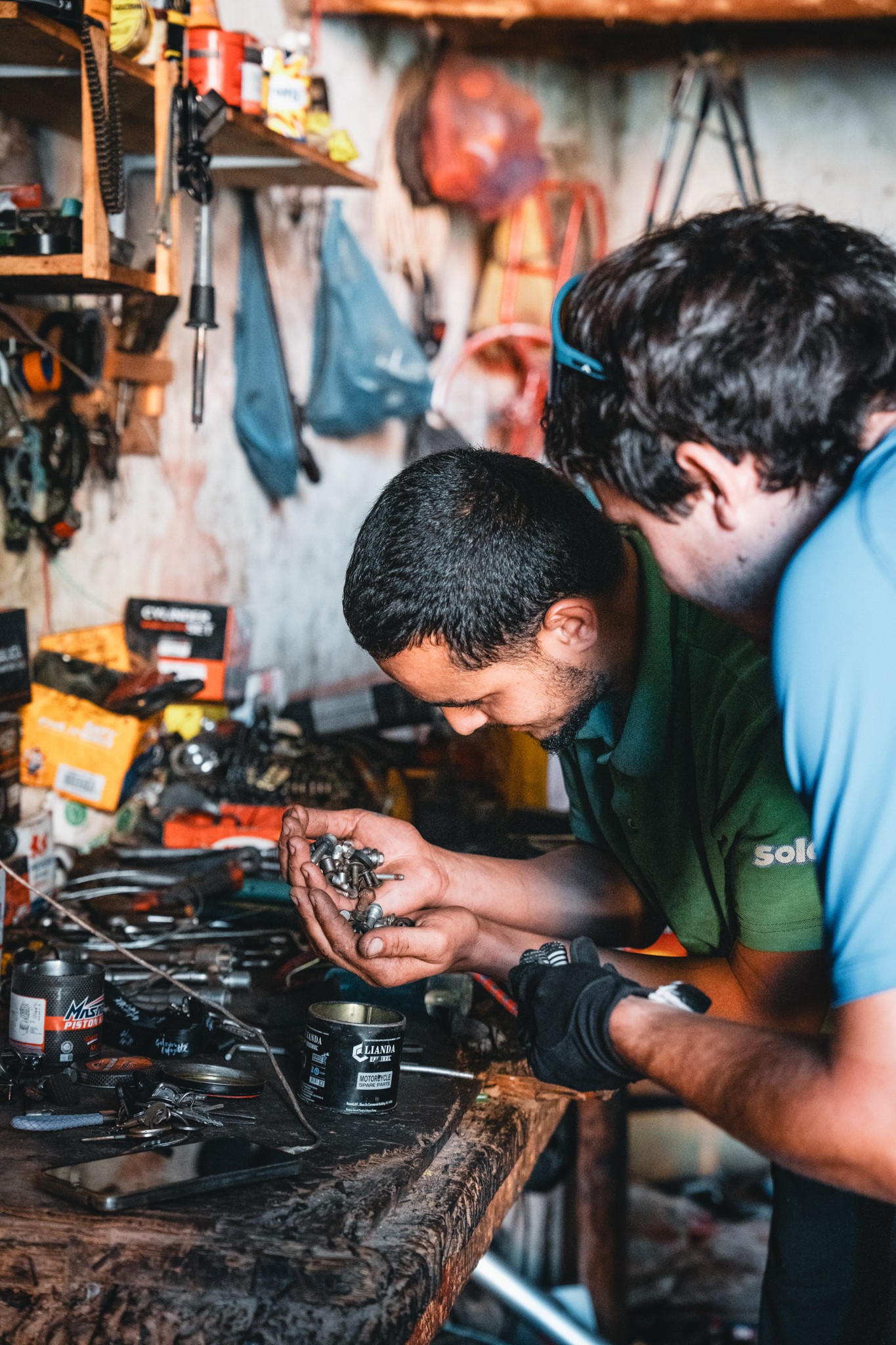
A crossing like this puts everything to the test: bodies, relationships, clothes, brakes, tires, bags and logistics. A few mechanical issues cost us a lot of time. In the moment, it was frustrating. But those delays also opened doors. We found workshops, asked for help, talked, waited and watched.

This journey reminded us of one simple rule: in bikepacking, efficiency is not only measured in kilometers per day. It is also measured in your ability to accept what happens, find a solution with what you have, and keep moving without turning every unexpected moment into a problem.

Bike repair in a Moroccan village workshop

Sleeping outside, returning to what matters

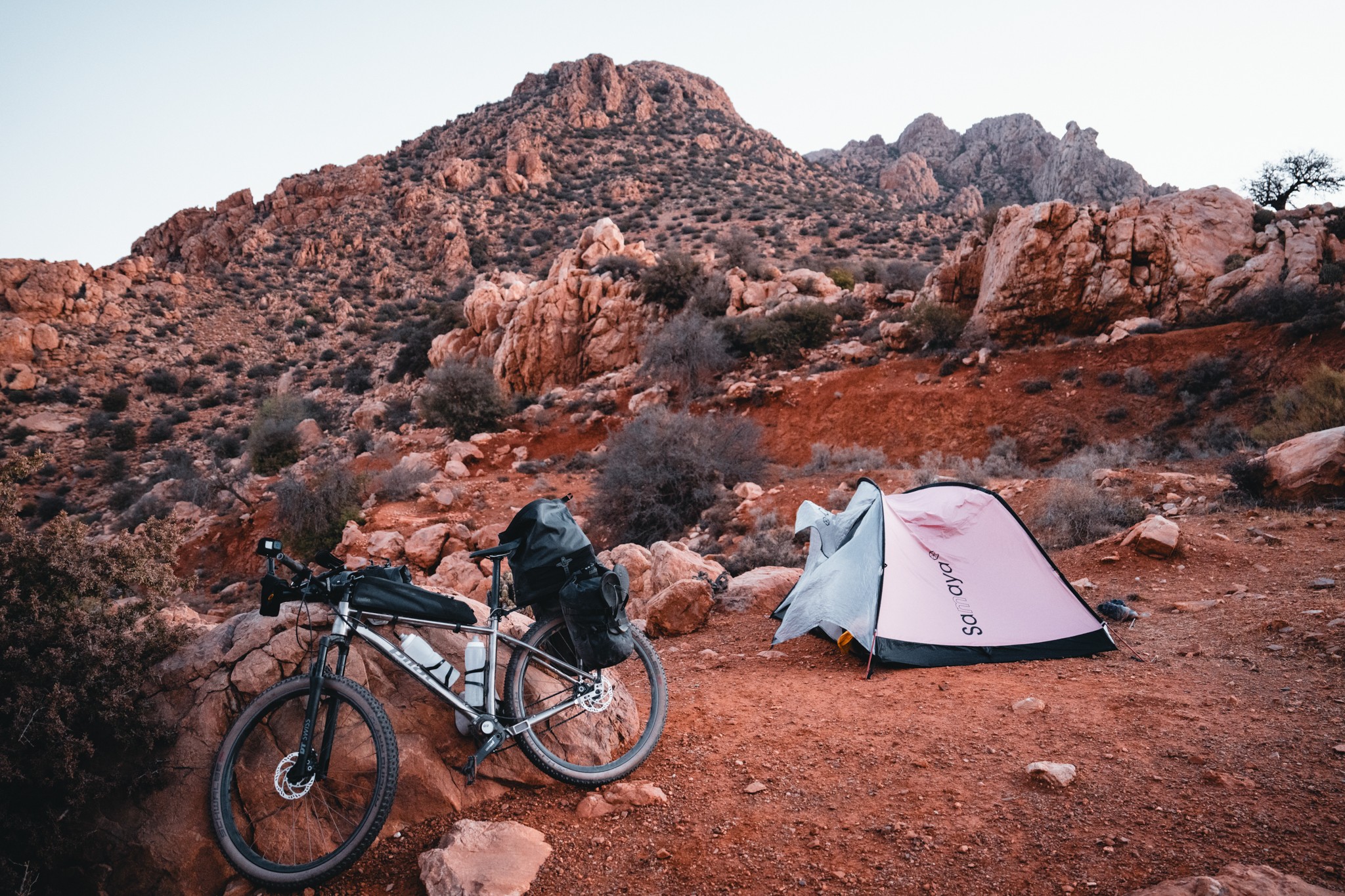
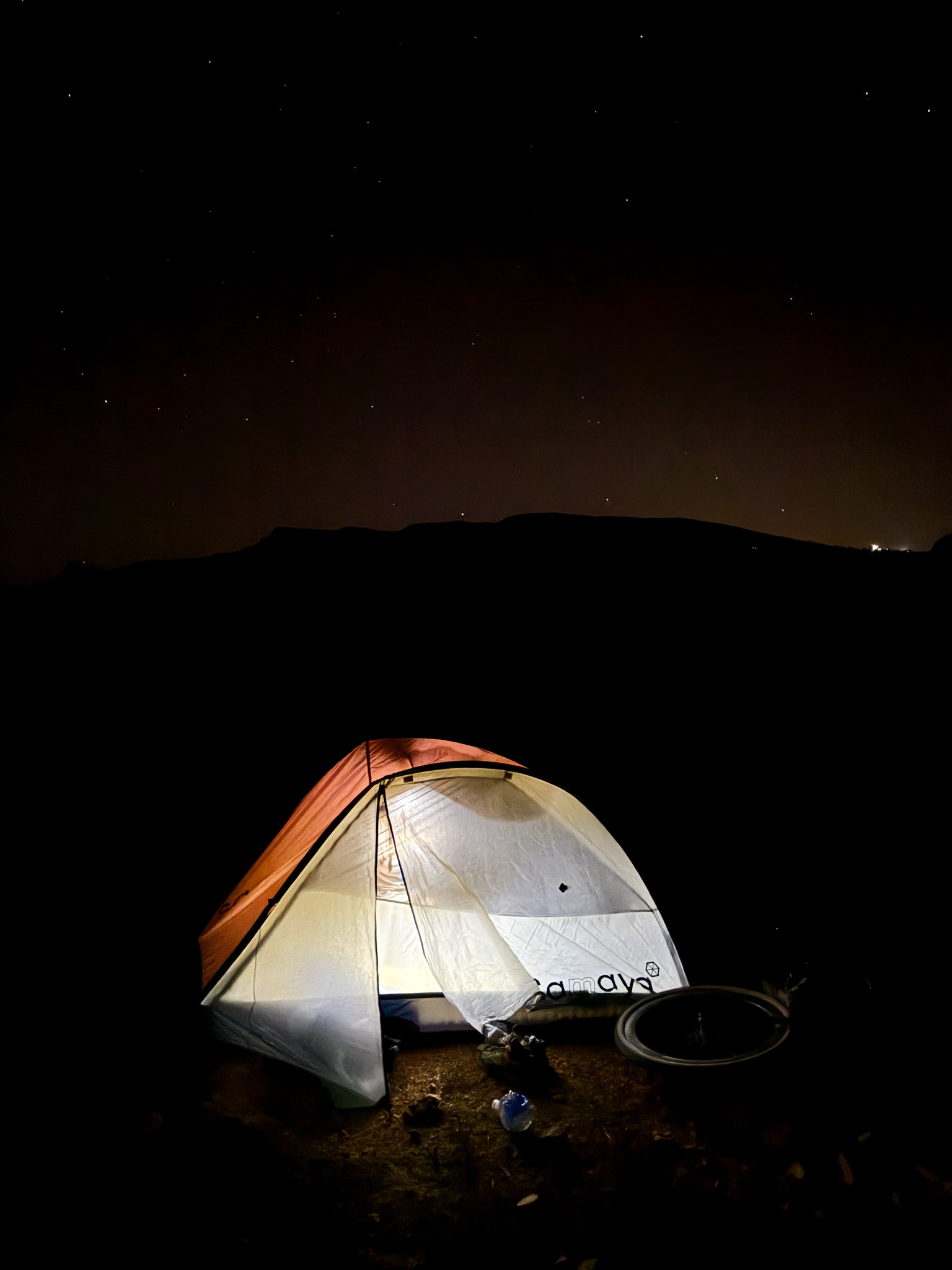
The bivouacs are some of our strongest memories from this crossing. Some nights are magical, under an enormous sky. Others are colder, less comfortable, wetter. But each one brings you back to the essentials.

After several days in the saddle, a shower becomes a luxury. A hot meal becomes a reward. A dry place to put your mattress feels like a palace. Bike travel resets priorities. It is tiring, of course. But it also simplifies everything.

Bikepacking camp in the Anti-Atlas

The northern medinas and the approach to Tangier

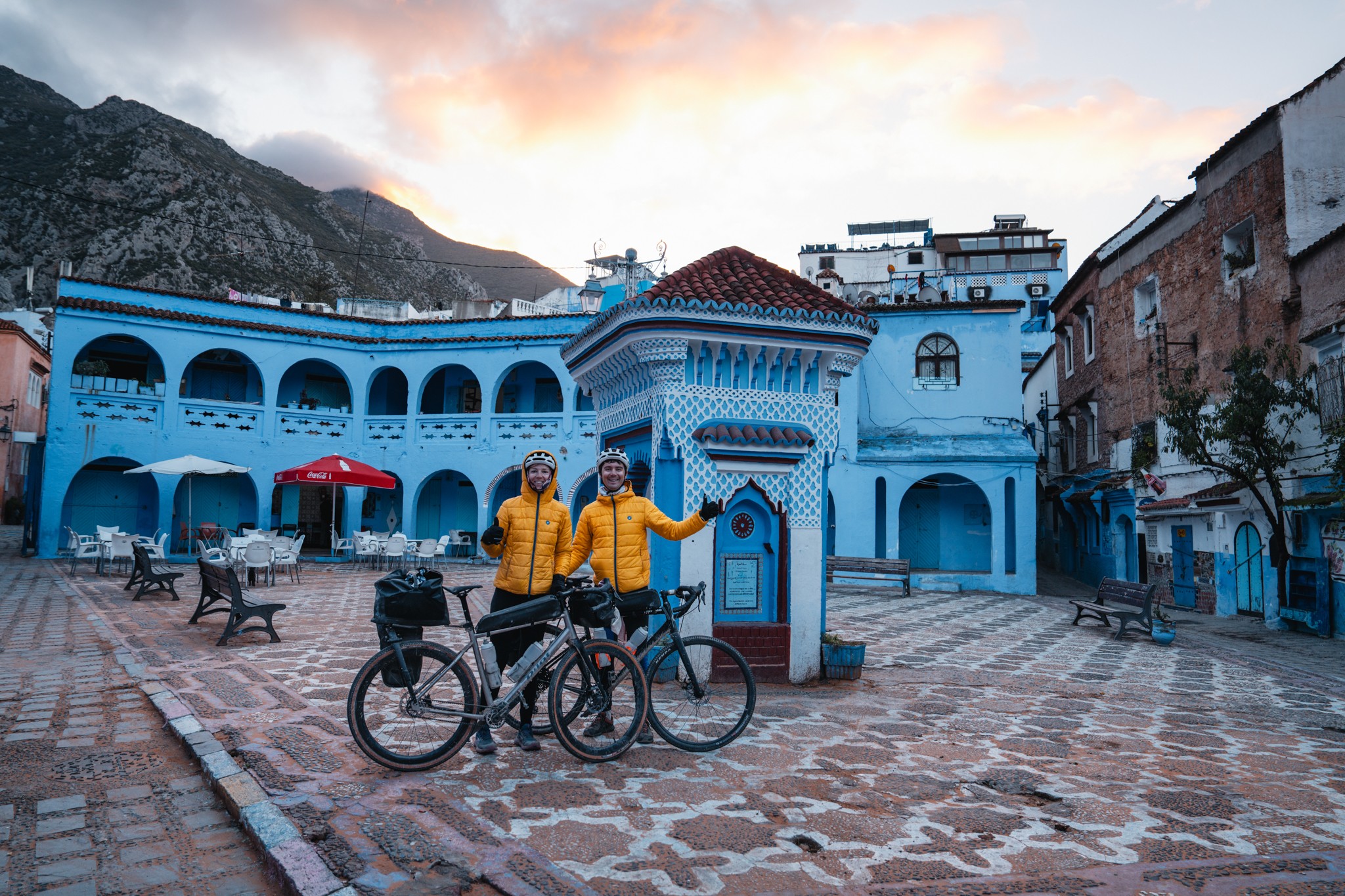
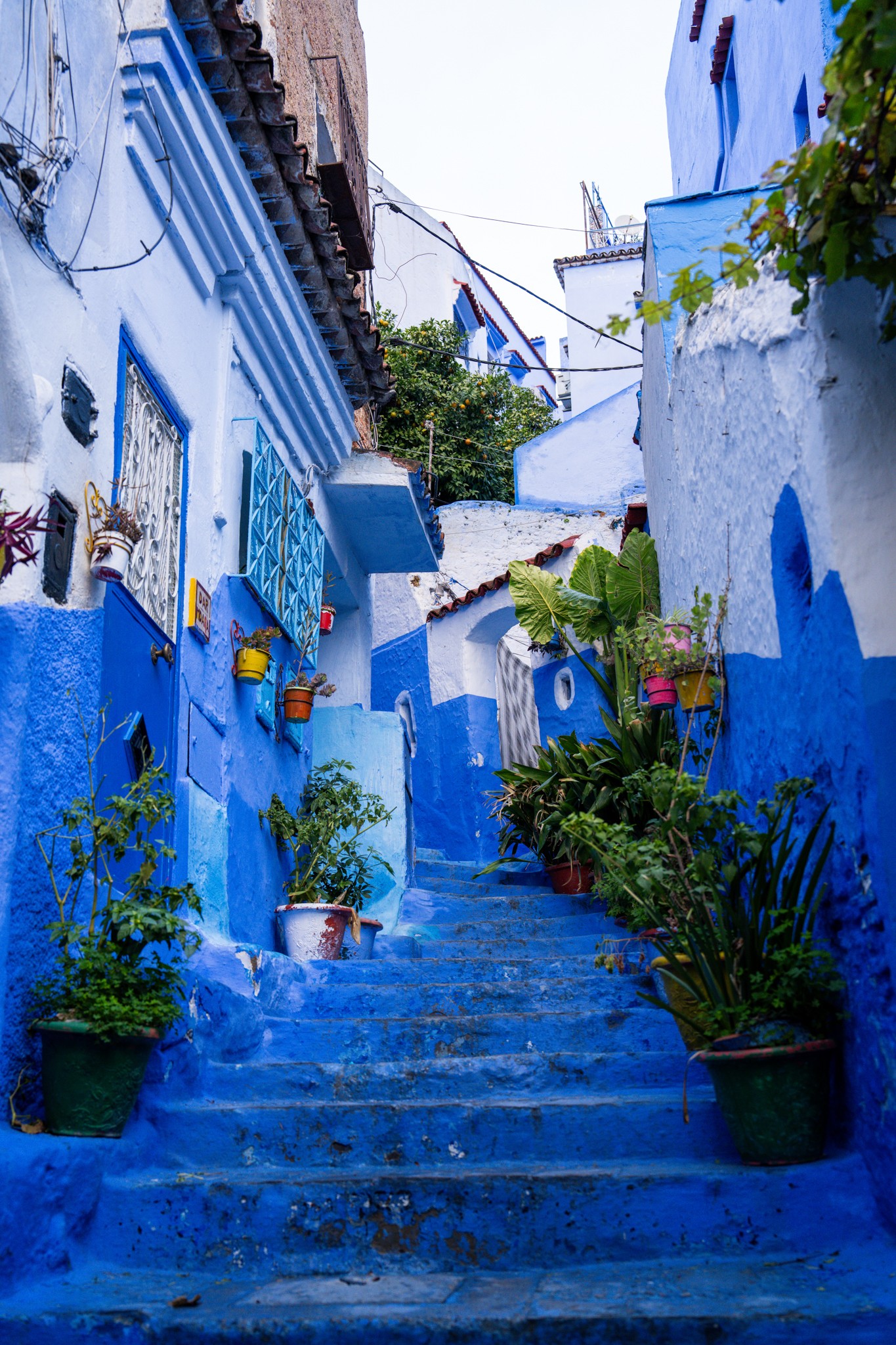
Because we eventually managed to make good progress, we could slow down a little before the end. We took time to visit the northern medinas. Fes, Chefchaouen, Tetouan. After the tracks, the sand, the cold and the endless days, the cities brought another kind of comfort: color, smells, food, people and history.

Between the cities, the tracks remained incredible. Sometimes smooth, sometimes very technical, often isolated. Morocco never lets you cross it in a straight emotional line. It alternates between stone and life, silence and noise, emptiness and encounters.

As we approached Tangier, we could feel the end of the journey coming. Seeing the Strait of Gibraltar after so many days of pedaling felt strange. On one side, the joy of having crossed the country. On the other, already, the desire to leave again.

What Morocco taught us

This adventure will stay in our minds as a physical challenge, of course. 2,000 km and 28,500 m of climbing is not nothing. But if we had to remember only one thing, it would not be the distance, the elevation gain or even the Sahara.

It would be the encounters.

The people who open a door when night falls. Those who share a meal even when you do not speak the same language. The children laughing at the loaded bikes. The mechanics looking for a solution. The villages appearing like shelters after hours of riding. Morocco reminded us that bicycle travel is a powerful accelerator of human connection.

For RISE, this crossing also confirmed something we deeply believe: slowness helps you see better. By bike, you understand distances, water constraints, the harshness of the soil, the fragility of valleys and the strength of local practices. You do not just cross a landscape. You learn to listen to it.

The hardest day was the Sahara crossing. Everything was difficult: the heat, the terrain, the length, the sand. But it is also a day we would do again without hesitation, because the beauty of the landscapes and the magic of being there with two bikes outweighed everything.

— Charlotte & Nico

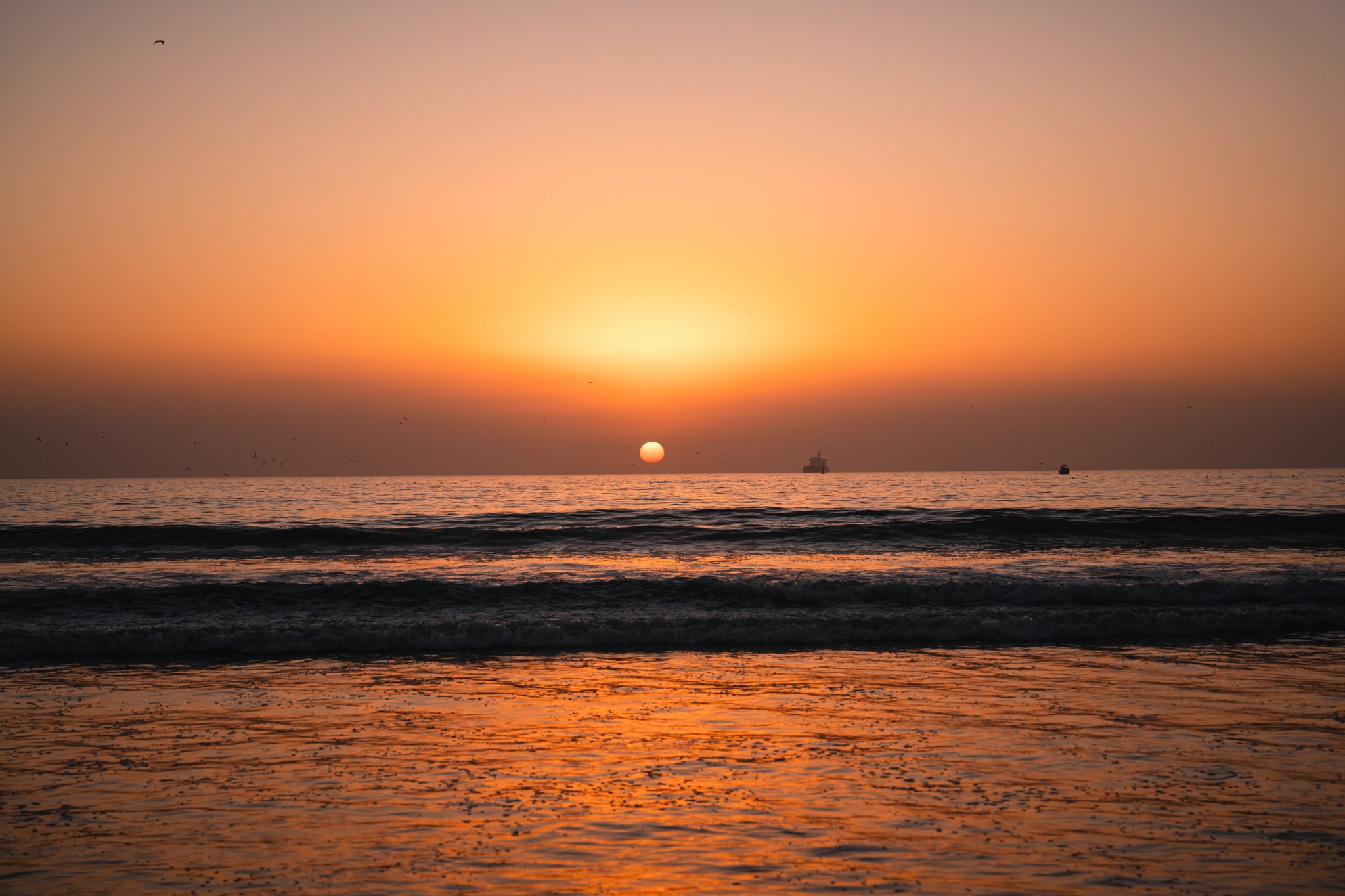
Cyclist riding into sunset in the SaharaGravel track under a storm in MoroccoTechnical mountain track in MoroccoSandy track near Foum ZguidTent glowing at night during the bikepacking tripLoaded bikes in the blue medina of ChefchaouenBlue alley in ChefchaouenEnd of the journey in Tangier with loaded bikesSunset over the sea near Tangier
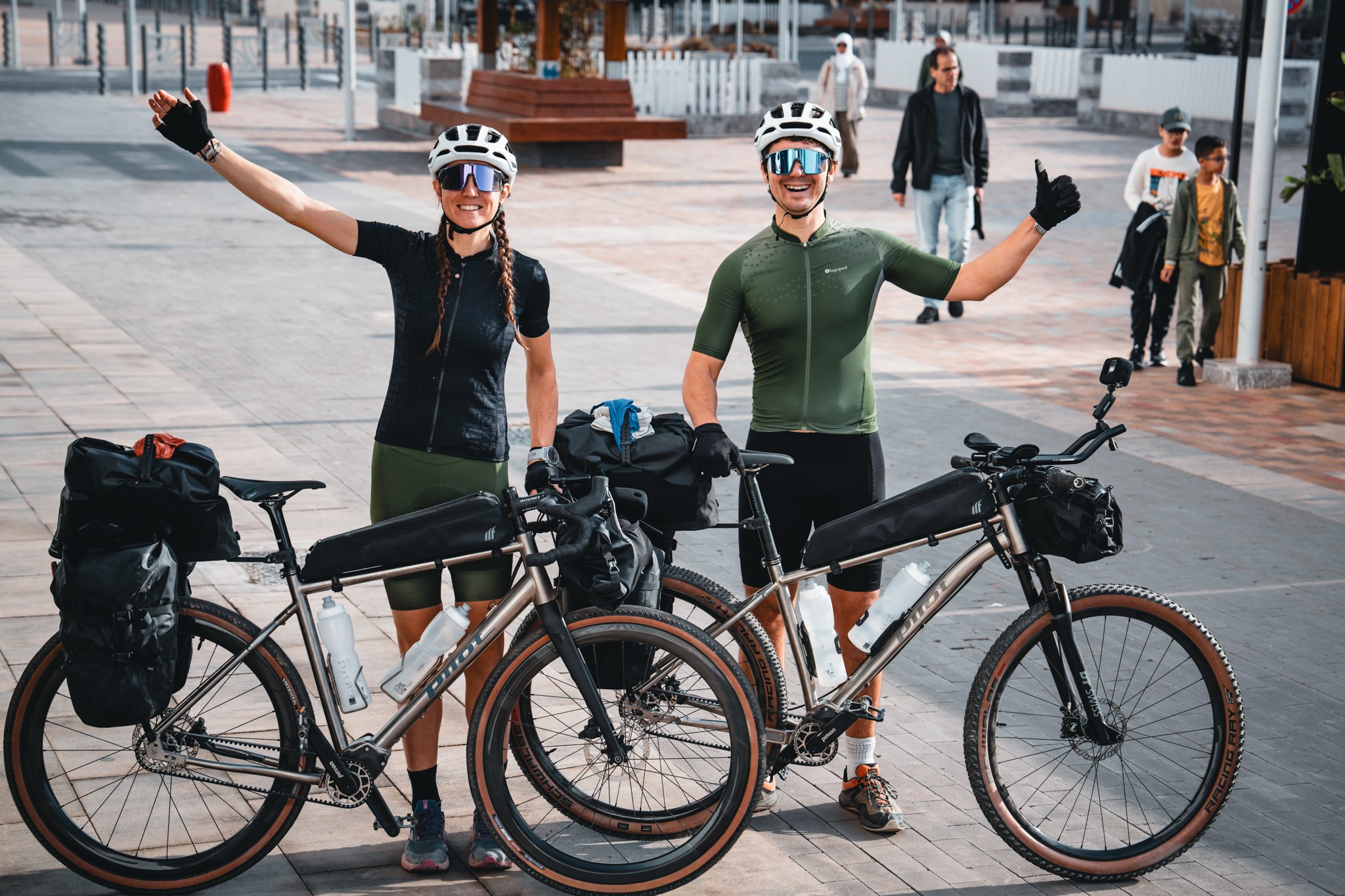
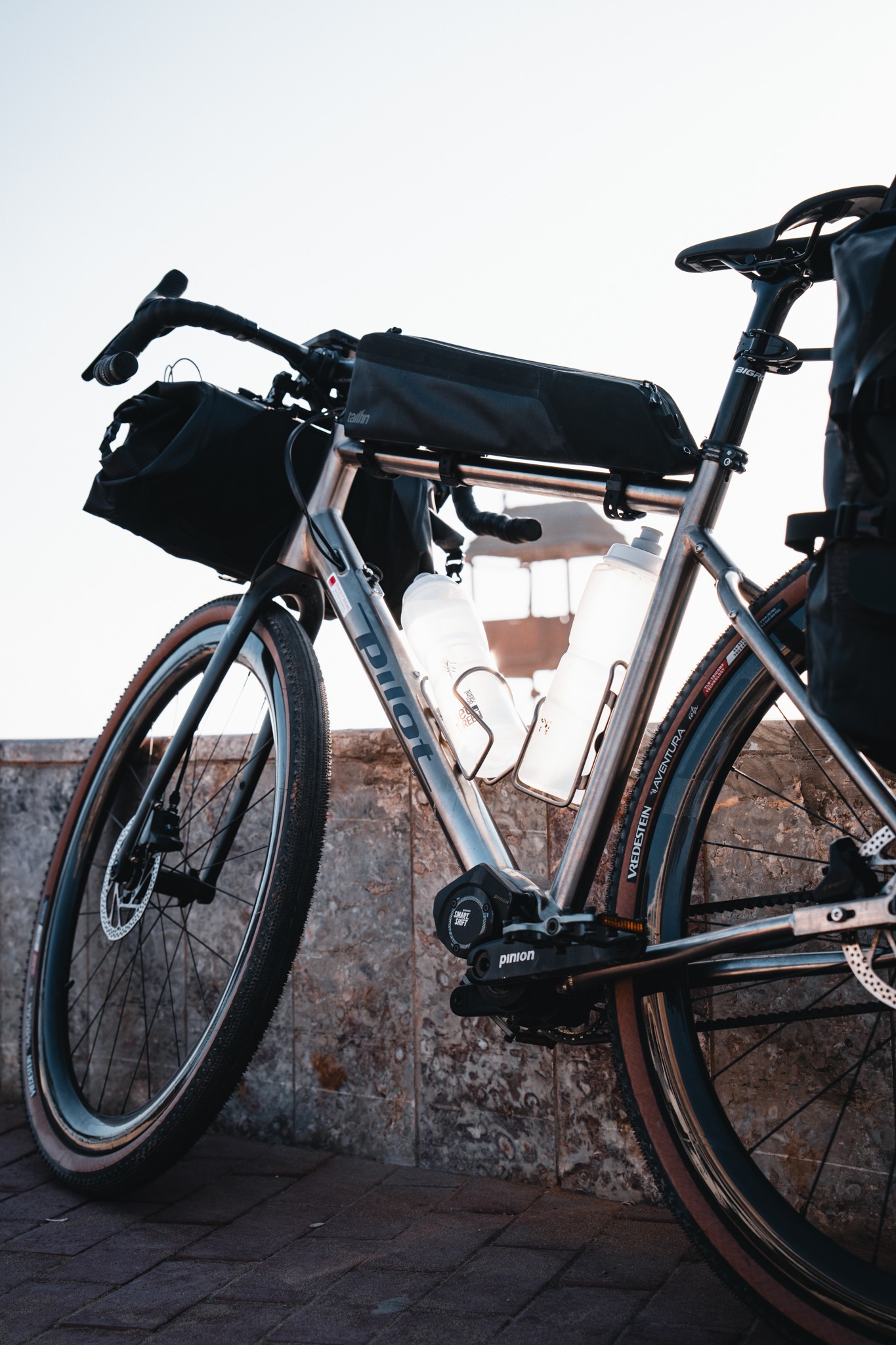
Pilot Cycles bikepacking setup detail

The bikes

Pilot Cycles — SCRAM IT & Locum

For this adventure, we rode two Pilot Cycles bikes: a SCRAM IT gravel bike and a Locum with a more mountain bike oriented setup. Both impressed us with their comfort and efficiency, with a real crush on the Locum for this type of rough route, often closer to mountain biking than classic gravel.

We wanted to slow down. We crossed a country. And we came back with one certainty: adventure often begins when the original plan stops working.

Follow the expedition

New stories, routes and behind-the-scenes moments are added as the journey unfolds.